RRR
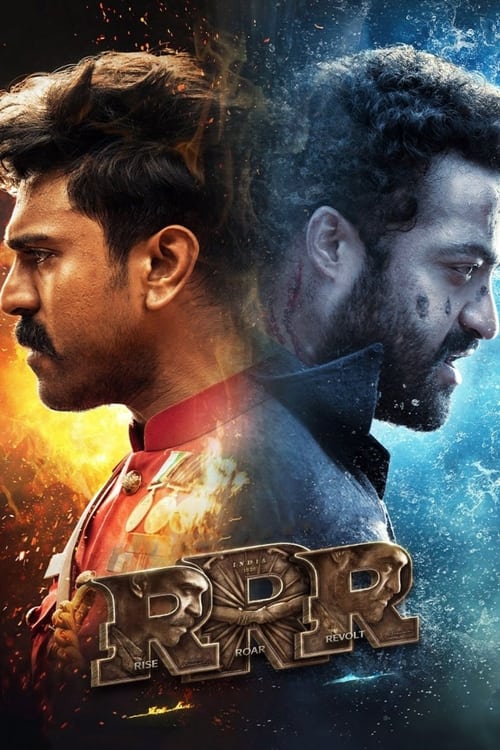
A mythic symphony of fire and water where two legendary revolutionaries forge an unbreakable bond. Amidst the crushing weight of the British Raj, their friendship becomes the spark that ignites a nation's roar for freedom.
RRR

RRR

రౌద్రం రణం రుధిరం

"Rise, Roar, Revolt."

24 March 2022 India 185 min ⭐ 7.7 (1,521)
Director: S. S. Rajamouli
Cast: N.T. Rama Rao Jr., Ram Charan, Olivia Morris, Ray Stevenson, Alison Doody
Drama Action Adventure
Fire and Water (Duality) Friendship (Dosti) Duty vs. Emotion Anti-Colonialism & Pride
Budget: $69,000,000
Box Office: $160,000,000

Overview

Set in 1920s pre-independence India, RRR is a fictionalized epic that imagines a meeting between two real-life revolutionaries, Alluri Sitarama Raju and Komaram Bheem, who historically never crossed paths. The story begins with the abduction of a young tribal girl, Malli, by the cruel British Governor Scott and his wife. Bheem, the tribe's protector, travels to Delhi in disguise to rescue her. Meanwhile, Raju, a fiercely dedicated officer in the British Indian police, is tasked with tracking down this mysterious tribal threat to prove his loyalty and earn a promotion.

Unaware of each other's opposing identities, the two men meet while saving a boy from a train accident and form a deep, brotherly bond. As their friendship blossoms, they inadvertently help each other towards their goals—Raju aiding Bheem's romance with a British woman, and Bheem supporting Raju's inner strength. However, when Bheem's mission to rescue Malli is revealed, Raju is forced to choose between his duty to his uniform and his loyalty to his dearest friend, leading to a tragic confrontation that tests their bond and their patriotism.

Core Meaning

At its heart, RRR is a story about the unifying power of friendship and the moral complexity of revolution. Director S. S. Rajamouli posits that individual heroism is powerful, but unity is unstoppable. The film explores the idea that different paths—Bheem's raw, emotional force (Water) and Raju's calculated, stoic patience (Fire)—can converge to destroy oppression. It suggests that true patriotism isn't just about fighting the enemy, but about understanding and uplifting one's own people.

Thematic DNA

Fire and Water (Duality) 30%
Friendship (Dosti) 30%
Duty vs. Emotion 20%
Anti-Colonialism & Pride 20%

Fire and Water (Duality)

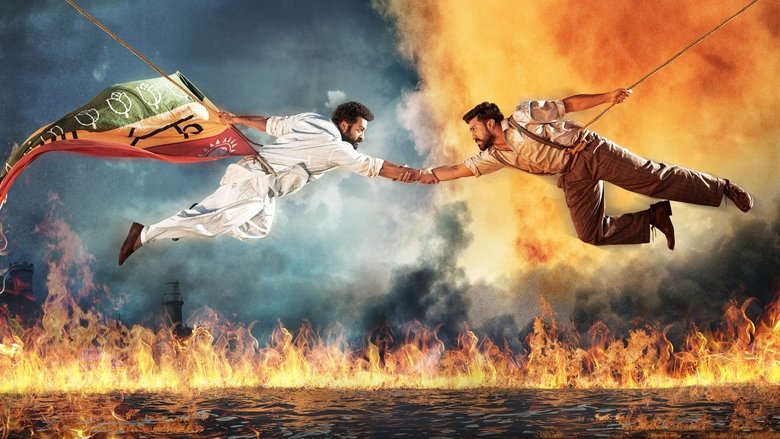
The film explicitly categorizes Raju as 'Fire' (destructive, purifying, simmering rage) and Bheem as 'Water' (nurturing, adaptable, extinguishing force). Their unity represents a perfect balance of nature's most powerful elements needed to cleanse the land of tyranny.

Friendship (Dosti)

The bond between Raju and Bheem is the emotional anchor of the film. The song 'Dosti' and their interactions highlight a brotherhood that transcends caste, region, and even opposing duties, suggesting that personal loyalty can fuel national liberation.

Duty vs. Emotion

Raju embodies the burden of a long-term strategic goal (duty), willing to be branded a traitor for the greater good. Bheem represents immediate, heartfelt action (emotion), driven by the need to protect the innocent. The film resolves this tension by showing both are necessary.

Anti-Colonialism & Pride

The film serves as a loud, unapologetic critique of British colonial brutality, reclaiming agency through spectacle. It celebrates Indian culture, strength, and history, culminating in a literal dance of resistance ('Naatu Naatu').

Character Analysis

Komaram Bheem

N.T. Rama Rao Jr. (Jr NTR)

Archetype: The Noble Savage / The Protector
Key Trait: Innocence and Brute Strength (Water)

Motivation

To rescue his 'sister' Malli and return her to their tribe.

Character Arc

Starts as a simple tribal guardian seeking a lost child. Through his journey, he learns the complexity of the greater political struggle and eventually becomes a symbol of resistance for the masses, inspiring even his friend Raju.

Alluri Sitarama Raju

Ram Charan

Archetype: The Tragic Hero / The Strategist
Key Trait: Focus and Tactical Genius (Fire)

Motivation

To steal guns from the British to arm his village and fulfill his father's vow.

Character Arc

Initially appears as a ruthless servant of the Empire. It is revealed he is a 'mole' gathering weapons to arm his people. He moves from solitary stoicism to realizing he needs a partner, eventually revealing his true self to Bheem.

Sita

Alia Bhatt

Archetype: The Faithful Partner
Key Trait: Patience and Sacrifice

Motivation

To support Raju's revolution and wait for his return.

Character Arc

She waits for Raju, understanding his burdensome mission when no one else does. She becomes the bridge that eventually reunites the two heroes by revealing Raju's true motive to Bheem.

Symbols & Motifs

The Flag

Meaning:

Represents the unified India and the ultimate goal of freedom.

Context:

Used in the climax where Raju and Bheem fight together; Raju writes 'Vande Mataram' in Sanskrit on a flag, symbolizing the birth of a nation's spirit from their struggle.

Malli (The Child)

Meaning:

Symbolizes the innocence of the motherland and the catalyst for revolution.

Context:

Her song 'Komuram Bheemudo' inspires the crowd during Bheem's public flogging, turning a moment of defeat into a spark for rebellion.

Animals

Meaning:

The untamed, raw power of nature and the Indian land itself rising against the colonizers.

Context:

Bheem unleashes a truckload of tigers, leopards, and deer onto the British garden party, turning the oppressors' organized luxury into chaotic survival.

The Bow and Arrow

Meaning:

Raju's transformation into the mythological deity Lord Rama.

Context:

In the final battle, Raju dons saffron robes and wields a bow found at a Rama shrine, visually and spiritually embodying the god of dharma destroying evil.

Memorable Quotes

Load. Aim. Shoot.

— Alluri Sitarama Raju

Context:

Flashbacks showing his father's training and later when he trains the British soldiers (and Bheem) to conserve ammunition.

Meaning:

Represents the cold, calculated focus Raju must maintain, valuing the cost of a bullet (and the revolution) over individual lives, even his own humanity at times.

Jaan se bhi pyari tumhari dosti hai, par mere desh se nahi.

— Alluri Sitarama Raju

Context:

Spoken (or implied in action) when Raju arrests Bheem, choosing his mission over his best friend.

Meaning:

Translates to: 'Your friendship is dearer to me than life, but not more than my country.' highlights the central conflict of the film.

Not salsa, not flamenco, my brother. Do you know Naatu?

— Alluri Sitarama Raju

Context:

Right before the iconic 'Naatu Naatu' dance-off where the heroes out-dance the British bullies.

Meaning:

A declaration of cultural pride and a challenge to British elitism, asserting that Indian joy and energy are superior to colonial rigidity.

Philosophical Questions

Does the end justify the means?

Raju sacrifices thousands of his own people and tortures his best friend to maintain his cover, believing that stealing guns will save millions later. The film challenges the audience to decide if his 'cold' utilitarian approach is superior to Bheem's immediate, 'warm' empathetic action.

Is violence necessary for liberation?

Unlike the Gandhian non-violent movement often depicted in Indian history, RRR unapologetically endorses armed revolution ('Load, Aim, Shoot'). It posits that against a brutal, dehumanizing force like the British Raj, physical strength and violence are valid and necessary tools for freedom.

Alternative Interpretations

The Queer Theory Reading: Many Western critics and LGBTQ+ audiences interpreted the intense, tactile, and emotionally vulnerable friendship between Raju and Bheem as a queer romance, despite the director's intent of portraying platonic brotherhood.
The Nationalist Propaganda Reading: Some critics view the film's climax, where Raju literally becomes a Hindu god to save the day, as aligning with the current political climate of Hindutva in India, marginalized other religious contributions to the freedom struggle.
The Caste Dynamic: A critique exists that the upper-caste Raju (Kshatriya archetype) is shown as the 'brain' and leader who must 'civilize' or educate the tribal Bheem (Gond), who is depicted as the 'brawn' or noble savage, reinforcing traditional caste hierarchies.

Cultural Impact

RRR became a global phenomenon, shattering the barrier between 'Tollywood' (Telugu cinema) and the West. While Indian cinema has always had a massive diaspora following, RRR broke into the mainstream American and European consciousness, earning over $170 million worldwide. The 'Naatu Naatu' dance challenge went viral on TikTok and Instagram, introducing millions to the high-energy style of South Indian mass cinema. Culturally, it sparked debates about the portrayal of British colonialism, with Western audiences finding its unapologetic anti-imperialism refreshing. Domestically, it fueled discussions on Hindu nationalism due to its heavy use of Hindu iconography in the climax, though many argued it was simply rooting the story in Indian cultural epics.

Audience Reception

Praised: The film received universal acclaim for its visual spectacle, the chemistry between the leads, and the exhilarating action sequences. The 'bromance' was a huge hit, as was the dance choreography.
Criticized: Some reviewers found the runtime (3 hours) exhausting. A minority of critics pointed out the simplistic, cartoonish villainy of the British characters and the potential political undertones regarding caste and religion.
Verdict: Generally regarded as a masterpiece of action cinema that brings the 'mass' movie genre to its highest artistic potential.

Interesting Facts

  • The film was shot over 300 days, with the interval action sequence alone taking 65 nights to film.
  • The song 'Naatu Naatu' made history by becoming the first song from an Indian film to win the Academy Award for Best Original Song.
  • Director S. S. Rajamouli makes a cameo appearance in the end credits song 'Etthara Jenda'.
  • Although the two main characters are real historical figures, they never actually met in real life; the film is a 'what if' historical fiction.
  • The 'Naatu Naatu' sequence was filmed in front of the Mariinskyi Palace in Kyiv, Ukraine, months before the war began.
  • Ram Charan and Jr NTR dubbed their own lines for the film in multiple languages, including Hindi, Tamil, and Kannada.
  • The film is one of the most expensive Indian films ever made, with a budget of approximately ₹550 crore (US$69 million).

Easter Eggs

Mythological Parallels

Raju transforms into Lord Rama (bow/saffron robes) and Bheem represents Hanuman (strength/devotion). In the climax, Bheem carries Raju on his shoulders, mirroring Hanuman carrying Rama in the Ramayana.

Fire and Water Title Cards

The title cards for the actors match their elements: Ram Charan's name appears with fire effects, and Jr NTR's name appears with water/wave effects, foreshadowing their character dynamics.

End Credits Tributes

The song 'Etthara Jenda' features portraits and tributes to real Indian freedom fighters like Subhas Chandra Bose, Bhagat Singh, and Sardar Patel, anchoring the fantasy in real history.

⚠️ Spoiler Analysis

Click to reveal detailed analysis with spoilers

Frequently Asked Questions

Explore More About This Movie

Dive deeper into specific aspects of the movie with our detailed analysis pages

Comments (0)

Leave a comment

No comments yet. Be the first to share your thoughts!