るろうに剣心 伝説の最期編
Rurouni Kenshin Part III: The Legend Ends - Symbolism & Philosophy
Symbols & Motifs
The Ironclad Battleship (Purgatory)
It symbolizes the dark side of the Meiji Restoration: industrialization, westernization, and the destructive power of modern warfare that threatens to consume the "soul" of Japan.
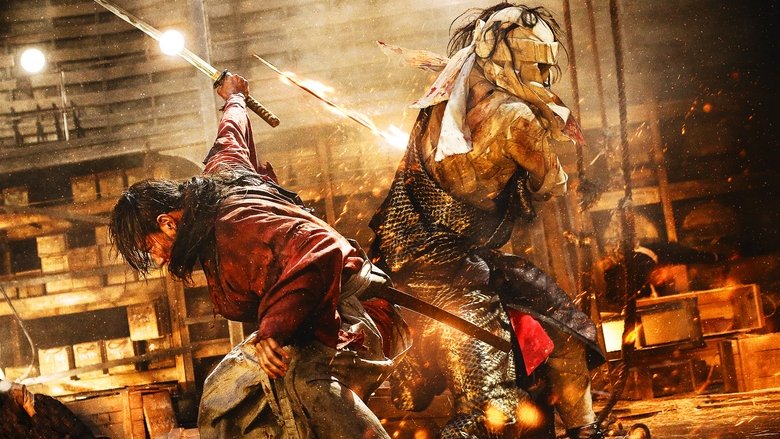
The final act takes place entirely on this ship, serving as a literal and metaphorical battleground between the old ways (swords) and the new world (cannons/steel).
Fire
Represents Shishio's consuming rage, his literal physical condition (overheating), and the hell he intends to unleash on Japan. It is a destructive, purifying force that contrasts with Kenshin's restraint.
Shishio is constantly surrounded by fire, his sword ignites, and he ultimately perishes by his own internal fire (spontaneous combustion) rather than by Kenshin's blade.
The Sakabato (Reverse-Blade Sword)
A symbol of penance and the "will to live" without taking life. It is a paradox: a weapon designed not to kill, representing the difficult path of peace in a violent world.
Kenshin clutches this sword throughout his recovery and uses it to deliver the final, non-lethal blow, proving that one can win without becoming a murderer.
Philosophical Questions
Is a life of atonement worth living if it requires constant suffering?
The film explores this through Kenshin's depression. Hiko challenges him to see that 'atonement' that leads to death is meaningless; true atonement requires the resilience to live on and continue doing good, which is a harder path than dying.
Does the government have the right to sacrifice individuals for the 'greater good'?
Through Ito Hirobumi's decision to execute Kenshin to appease Shishio, the film questions political utilitarianism. It ultimately rejects this, showing that a peace built on the betrayal of a hero is fragile and unjust.
Core Meaning
The central message of the film is the triumph of the will to live over the glory of self-sacrifice. Director Keishi Otomo deconstructs the romanticized samurai ideal of dying for a cause (bushido), arguing instead that true strength lies in the courage to survive and protect the future. While Shishio represents a social Darwinist view where the strong consume the weak, Kenshin proves that strength is a responsibility to nurture and protect life, starting with one's own.