るろうに剣心 最終章 The Final
"The Future Starts Here"
Rurouni Kenshin: The Final - Symbolism & Philosophy
Symbols & Motifs
Tomoe's Diary
Symbolizes the objective truth and the enduring power of love over hate. It serves as the catalyst that breaks Enishi's delusion, revealing that his sister's final wish was not for revenge, but for Kenshin's life.
Kaoru hands the diary to Enishi after his defeat, allowing him to hear his sister's true voice for the first time in years.
The Cross-Shaped Scar
A physical manifestation of Kenshin's guilt and his bond with Tomoe. The first cut was dealt by her fiancé, the second by Tomoe herself, sealing Kenshin's fate to never forget his sins.
The scar is constantly referenced visually and thematically, bleeding metaphorically throughout the film as the past resurfaces.
White Hair
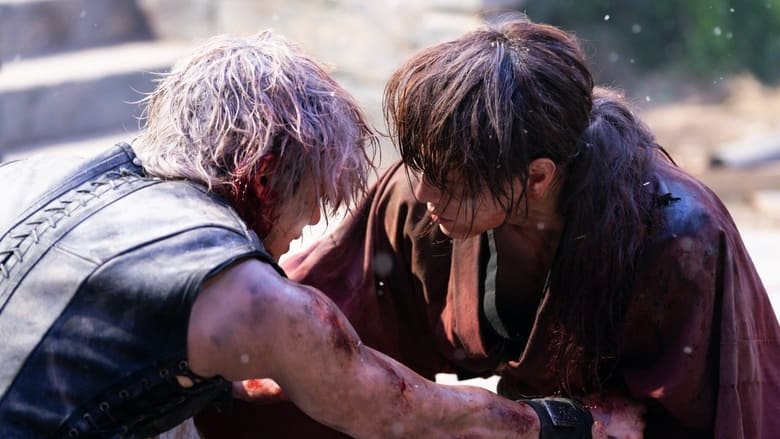
Represents the physical toll of consuming grief and stress. Enishi's hair turned white after witnessing his sister's death, marking him as a ghost living only for the past.
Enishi's striking appearance contrasts with Kenshin's, highlighting his deviation from humanity into a vessel of pure vengeance.
Hot Air Balloons
Represents the terrifying modernization of warfare and the indiscriminate nature of Enishi's wrath. It brings the threat from the ground to the sky, raining destruction on the innocent.
Enishi uses them to bombard Tokyo, showcasing his resources and his willingness to destroy the entire city to hurt Kenshin.
Philosophical Questions
Does a good life redeem a bad past?
The film asks if Kenshin's years of saving people truly balance out the lives he took. Enishi argues no—that a murderer is always a murderer. The film ultimately sides with Kenshin, suggesting that redemption is not a transaction, but a continuous commitment to the present.
Is revenge a form of justice?
Through the concept of Jinchu (Man's Justice), the film explores the futility of vengeance. Enishi's revenge destroys the innocent and brings him no peace, illustrating that retributive justice often perpetuates the very suffering it seeks to resolve.
Core Meaning
The film explores the profound difference between atonement through death and redemption through living. Director Keishi Otomo posits that true justice isn't found in revenge (Jinchu) or divine retribution (Tenchu), but in the courageous act of carrying one's scars while protecting the future. It deconstructs the "samurai death wish" by asserting that preserving life—including one's own—is the ultimate act of strength.