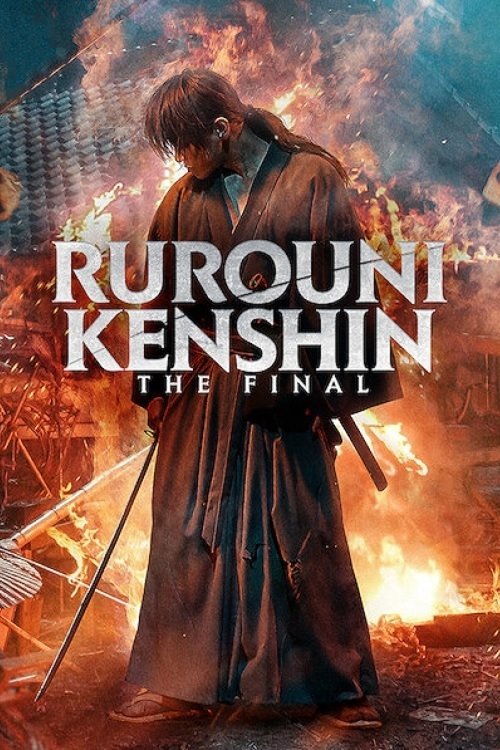
Rurouni Kenshin: The Final
A high-octane ballet of steel and sorrow where a wandering samurai confronts his deepest scar. Amidst burning cities and falling snow, the ghosts of the past clash with the resolve to live for the future.
Rurouni Kenshin: The Final

Rurouni Kenshin: The Final

るろうに剣心 最終章 The Final

"The Future Starts Here"

23 April 2021 Japan 138 min ⭐ 7.7 (532)
Director: Keishi Otomo
Cast: Takeru Satoh, Emi Takei, Mackenyu, Munetaka Aoki, Yu Aoi
Drama History Action Adventure
Redemption vs. Revenge The Weight of the Past The Will to Live
Box Office: $33,457,923

Overview

In this explosive conclusion to the live-action saga, Himura Kenshin faces his most personal battle yet. A mysterious arms dealer named Yukishiro Enishi arrives in Tokyo, orchestrating a series of devastating attacks on Kenshin's allies. Enishi is not driven by political ambition, but by a consuming Jinchu (human judgment)—a vendetta to punish Kenshin for the death of his sister, Tomoe, Kenshin's former wife.

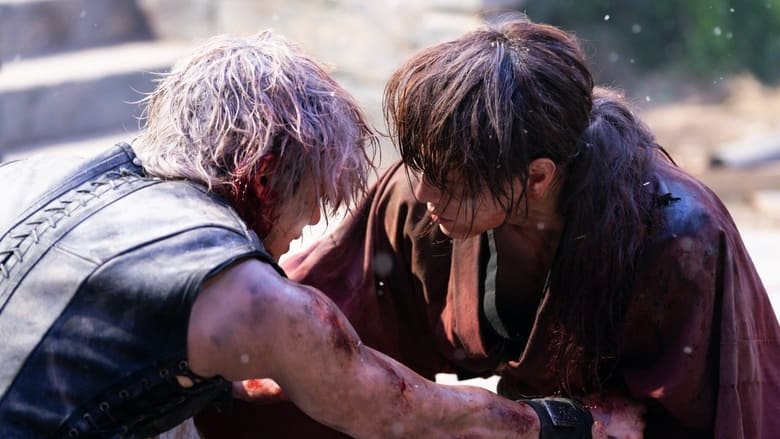
As Tokyo burns, Kenshin must confront the sins of his past as the "Battosai." He reveals the tragic story of his marriage and the origin of his cross-shaped scar to his friends. The conflict culminates in a desperate duel where Kenshin fights not to kill, but to save Enishi from his own hatred, striving to prove that the only true atonement lies in living to protect the happiness of others.
Core Meaning

The film explores the profound difference between atonement through death and redemption through living. Director Keishi Otomo posits that true justice isn't found in revenge (Jinchu) or divine retribution (Tenchu), but in the courageous act of carrying one's scars while protecting the future. It deconstructs the "samurai death wish" by asserting that preserving life—including one's own—is the ultimate act of strength.

Thematic DNA

Redemption vs. Revenge 40%
The Weight of the Past 30%
The Will to Live 30%

Redemption vs. Revenge

Contrasts Kenshin's path of using his sword to protect life against Enishi's path of destroying it for personal grievance. While Kenshin seeks to build a future to pay for his past, Enishi seeks to burn the present to avenge it.

The Weight of the Past

Both protagonist and antagonist are trapped by the same tragic event from years ago. The film examines how trauma can either refine a person into a protector or twist them into a monster.

The Will to Live

Kenshin's philosophy shifts from a willingness to die for his cause to a determination to live for his loved ones. This challenges the traditional bushido code where death is often seen as the ultimate honorable act.

Character Analysis

Himura Kenshin

Takeru Satoh

Archetype: The Redeemed Hero
Key Trait: Unwavering Pacifism

Motivation

To atone for the lives he took by protecting the peace of the new era and ending the cycle of hatred.

Character Arc

He transitions from a man ready to die for his sins to one who fights to live. He finally shares the full burden of his past with his new family, allowing him to face Enishi not with guilt, but with the resolve to save him.

Yukishiro Enishi

Mackenyu

Archetype: The Tragic Villain / The Avenger
Key Trait: Obsessive Grief

Motivation

To make Kenshin suffer a living hell for the death of his beloved sister, Tomoe.

Character Arc

Consumed by a decade of hatred, he seeks to inflict 'Jinchu' on Kenshin. His journey ends when he is forced to confront the reality that his revenge contradicts his sister's will, leaving him broken but alive.

Kamiya Kaoru

Emi Takei

Archetype: The Heart / The Anchor
Key Trait: Compassionate Strength

Motivation

To support Kenshin and protect the values of the Kamiya Kasshin style—swords that give life.

Character Arc

She becomes the bridge between Kenshin's past and future. By accepting Kenshin's tragic history and reaching out to Enishi with compassion, she embodies the forgiveness that Kenshin seeks.

Symbols & Motifs

Tomoe's Diary

Meaning:

Symbolizes the objective truth and the enduring power of love over hate. It serves as the catalyst that breaks Enishi's delusion, revealing that his sister's final wish was not for revenge, but for Kenshin's life.

Context:

Kaoru hands the diary to Enishi after his defeat, allowing him to hear his sister's true voice for the first time in years.

The Cross-Shaped Scar

Meaning:

A physical manifestation of Kenshin's guilt and his bond with Tomoe. The first cut was dealt by her fiancé, the second by Tomoe herself, sealing Kenshin's fate to never forget his sins.

Context:

The scar is constantly referenced visually and thematically, bleeding metaphorically throughout the film as the past resurfaces.

White Hair

Meaning:

Represents the physical toll of consuming grief and stress. Enishi's hair turned white after witnessing his sister's death, marking him as a ghost living only for the past.

Context:

Enishi's striking appearance contrasts with Kenshin's, highlighting his deviation from humanity into a vessel of pure vengeance.

Hot Air Balloons

Meaning:

Represents the terrifying modernization of warfare and the indiscriminate nature of Enishi's wrath. It brings the threat from the ground to the sky, raining destruction on the innocent.

Context:

Enishi uses them to bombard Tokyo, showcasing his resources and his willingness to destroy the entire city to hurt Kenshin.

Memorable Quotes

The only atonement you will ever realize will be that of your own death.

— Yukishiro Enishi

Context:

Spoken to Kenshin as Enishi declares the start of his 'Jinchu' (man's judgment) campaign.

Meaning:

Enishi rejects Kenshin's life of pacifism, asserting that only blood can pay for blood. It encapsulates his warped definition of justice.

The dead don't desire revenge, but the happiness of the living.

— Himura Kenshin

Context:

During the final confrontation, as Kenshin tries to reach the human buried beneath Enishi's rage.

Meaning:

This is the core philosophy of the film. Kenshin tries to convince Enishi that his path of destruction dishonors the memory of the sister he claims to love.

You took my sister... You destroyed her happiness... SUFFER KENSHIN, DIE!

— Yukishiro Enishi

Context:

Screamed during the climax of their duel, as Enishi unleashes his full power.

Meaning:

A raw explosion of the grief that has driven Enishi for ten years. It reveals that his crusade is not about politics or justice, but the pain of a broken little brother.

Philosophical Questions

Does a good life redeem a bad past?

The film asks if Kenshin's years of saving people truly balance out the lives he took. Enishi argues no—that a murderer is always a murderer. The film ultimately sides with Kenshin, suggesting that redemption is not a transaction, but a continuous commitment to the present.

Is revenge a form of justice?

Through the concept of Jinchu (Man's Justice), the film explores the futility of vengeance. Enishi's revenge destroys the innocent and brings him no peace, illustrating that retributive justice often perpetuates the very suffering it seeks to resolve.

Alternative Interpretations

Some critics interpret Enishi not just as a villain, but as a tragic mirror to Kenshin—proof that Kenshin's pacifism is a privilege afforded only to those who have already survived their wars. Enishi represents the collateral damage of Kenshin's "heroic" past revolution. Furthermore, the ending can be read not just as Enishi's defeat, but as his liberation; by failing to kill Kenshin, he is finally freed from the obligation of hatred that consumed his youth.

Cultural Impact

Rurouni Kenshin: The Final solidified the franchise's reputation as the gold standard for live-action anime adaptations. In an industry notorious for poor adaptations (e.g., Dragonball Evolution, Attack on Titan), this series is critically acclaimed for respecting the source material while elevating the action to cinematic heights. It influenced modern Japanese action cinema by popularizing Kenji Tanigaki's high-speed, kinetic choreography. The film was a box office success in Japan despite pandemic restrictions and found a massive global audience via Netflix, introducing the story of the Meiji Restoration to international viewers.

Audience Reception

The film received high praise from both critics and fans, particularly for its action choreography, which is widely considered some of the best in the genre. Mackenyu's performance as Enishi was singled out as a highlight, bringing a terrifying physicality and emotional vulnerability to the role. Criticism was mostly directed at the pacing; adapting a long manga arc into a single film meant some side characters (like the Ten Swords or Enishi's comrades) felt underdeveloped compared to the source material. However, the emotional conclusion was widely regarded as a satisfying end to the saga.

Interesting Facts

  • Filming was completed in 2019, but the release was delayed to 2021 due to the COVID-19 pandemic.
  • Mackenyu, who plays Enishi, is the son of the legendary Japanese action star Sonny Chiba.
  • The film adapts the 'Jinchu' arc of the manga but condenses the timeline and alters specific plot points, such as the 'fake corpse' storyline involving Kaoru.
  • Action Director Kenji Tanigaki utilized a 'sword-action' style that minimized CGI, relying heavily on wirework and the actors' physical speed.
  • Takeru Satoh (Kenshin) did many of his own stunts, including the wall-running sequences.

Easter Eggs

Aoshi Drinking Tea

In the film, Aoshi is seen drinking tea. This is a subtle nod to a manga scene where he declines sake, stating he prefers tea, reinforcing his stoic and disciplined character.

Kaoru's Ancestor's Painting

A painting seen in the Kamiya dojo resembles one that Kaoru sells in the manga to buy food, a deep-cut reference for source material fans.

⚠️ Spoiler Analysis

Click to reveal detailed analysis with spoilers

Frequently Asked Questions

Explore More About This Movie

Dive deeper into specific aspects of the movie with our detailed analysis pages

Comments (0)

Leave a comment

No comments yet. Be the first to share your thoughts!