
るろうに剣心 明治剣客浪漫譚
Rurouni Kenshin - Symbolism & Philosophy
Symbols & Motifs
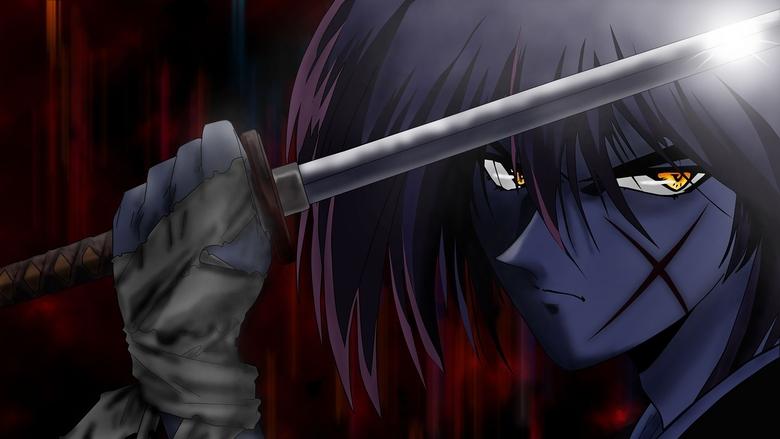
Sakabatō (The Reverse-Blade Sword)
The Sakabatō is the ultimate symbol of Kenshin's vow to never kill again. With its cutting edge on the back of the blade, it is designed for non-lethal combat. It represents his complete rejection of his past as an assassin and his commitment to using his immense strength only for the protection of others. It is a physical manifestation of his core philosophy of redemption and peace.
Kenshin carries the Sakabatō throughout the entire series. It is the only weapon he uses, forcing him to find ways to defeat deadly enemies without resorting to lethal force. The sword is often a point of confusion or mockery for his enemies, who see it as a foolish handicap, but it ultimately proves to be a symbol of a greater, more profound strength.
Kenshin's Cross-Shaped Scar
Kenshin's iconic scar symbolizes the weight of his past sins and the pain he has both caused and endured. The first part of the scar was given to him by a man he killed, and the second by that man's fiancée, Tomoe, just before she died. It is a permanent reminder of the lives he has taken and the personal tragedy that solidified his resolve to change his ways. It represents love, loss, and the inescapable nature of one's past.
The scar is a prominent physical feature on Kenshin's face throughout the series. Its origin is a central mystery for much of the early story, with the full, tragic tale being revealed much later (primarily in the OVA and manga). It serves as a constant, visual representation of the burden he carries and the reason for his vow of non-violence.
Philosophical Questions
Can true atonement for past violence ever be achieved?
The series explores this question through Kenshin's entire life. He dedicates himself to saving lives to balance the scales for the ones he took. However, the show repeatedly questions if this is possible. Characters like Enishi Yukishiro argue that the only true atonement is death. Kenshin ultimately concludes that he must continue to live, as his death would not bring back those he killed, but his life can be used to protect the happiness of the living. The series suggests that atonement is not a final destination but a lifelong process of responsible action.
What is the true nature of strength?
"Rurouni Kenshin" presents a constant dialogue on this topic. Villains like Shishio Makoto champion a form of Social Darwinism: the strong live and the weak perish, and that is the natural law. Kenshin, conversely, argues that true strength is not the power to destroy, but the power to protect the weak. His mastery of the Hiten Mitsurugi-ryū, a deadly sword style, combined with his vow not to kill, embodies this philosophy. He demonstrates that choosing compassion and restraint, even when one has immense power, is the greater form of strength.
Is violence justified if used to create peace?
This is the paradox of Kenshin's past. He was an assassin who killed for the sake of creating a new, more peaceful era. The series grapples with the morality of this 'ends justify the means' argument. Kenshin himself is deeply tormented by it, which is why he renounces killing entirely. His journey shows the immense personal cost of such violence. While the Meiji era is portrayed as generally peaceful, the lingering shadows and enemies from the war suggest that a peace built on bloodshed is inherently fragile and haunted by its own creation.
Core Meaning
The core meaning of "Rurouni Kenshin" is a profound exploration of atonement and redemption. It questions whether a person can truly escape a violent past and forge a new, peaceful identity. Kenshin's entire journey is a testament to the belief that a life, no matter how stained by past sins, has value and can be used for good. The series posits that true strength is found not in the power to take a life, but in the courage to protect it, even at great personal cost. It argues that the will to live and to protect the happiness of others is the ultimate path to overcoming one's inner demons and finding true peace.