Rurouni Kenshin
るろうに剣心 明治剣客浪漫譚
Overview
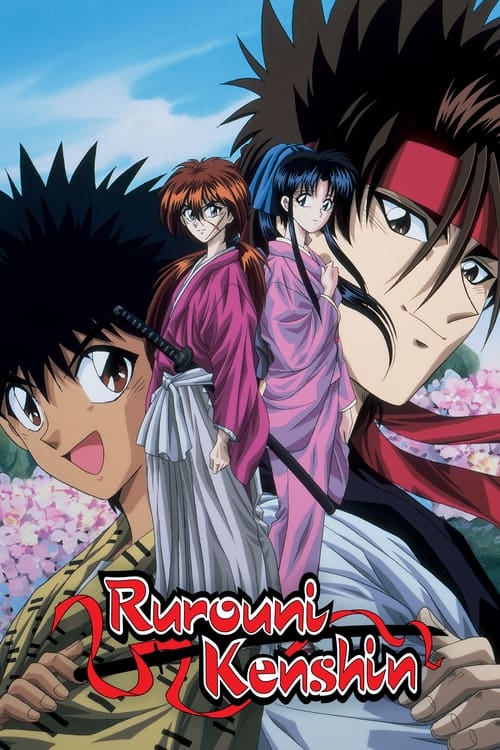
Set in the early Meiji Era of Japan, "Rurouni Kenshin" follows the journey of Himura Kenshin, a wandering swordsman who was once the legendary assassin known as Hitokiri Battōsai. Haunted by the lives he took, Kenshin has vowed never to kill again and wanders the countryside protecting the innocent as a form of atonement. His travels lead him to Tokyo, where he meets Kamiya Kaoru, the determined instructor of a struggling kendo dojo.
After Kenshin helps Kaoru defend her dojo's honor, she invites him to stay, providing him with a home and a found family that includes the hot-headed fighter Sagara Sanosuke and the young, aspiring swordsman Myojin Yahiko. However, Kenshin's past is not easily escaped. Figures from his former life, including old rivals and those seeking revenge, continually emerge, forcing him to draw his reverse-blade sword (sakabatō) to protect his new life and the fragile peace of the new era, all while desperately clinging to his vow not to kill. The series chronicles his struggle to maintain his pacifist ideals against relentless threats that challenge his resolve and force him to confront the man he used to be.
Core Meaning
The core meaning of "Rurouni Kenshin" is a profound exploration of atonement and redemption. It questions whether a person can truly escape a violent past and forge a new, peaceful identity. Kenshin's entire journey is a testament to the belief that a life, no matter how stained by past sins, has value and can be used for good. The series posits that true strength is found not in the power to take a life, but in the courage to protect it, even at great personal cost. It argues that the will to live and to protect the happiness of others is the ultimate path to overcoming one's inner demons and finding true peace.
Thematic DNA
Atonement and Redemption
This is the central theme of the entire series. Kenshin's journey is a continuous quest for atonement for his actions as the Hitokiri Battōsai. He dedicates his life to protecting the innocent with his reverse-blade sword as a way to repent. This theme is not exclusive to Kenshin; other characters, like Takani Megumi, a former opium producer who becomes a doctor, are also inspired by Kenshin to seek redemption for their past mistakes. The series constantly tests Kenshin's resolve, questioning if his vow is enough to balance the scales of his past, making his path to redemption a lifelong struggle rather than a destination.
The Meiji Era: Change vs. Tradition
The series is set against the backdrop of the Meiji Restoration, a turbulent period of rapid modernization and Westernization in Japan. This setting creates a constant tension between the old samurai ways and the new world. Many of Kenshin's adversaries are figures from the old era who cannot or will not adapt to the new peace. The conflict explores the struggles of former warriors to find their place in a world that no longer needs them, with some clinging to violence while Kenshin strives to embody a new kind of strength suited for the peaceful era.
The Will to Live vs. The Embrace of Death
Throughout his journey, Kenshin initially believes his life is forfeit and that it doesn't matter when he dies as long as he can protect others. However, his master, Hiko Seijuro, teaches him that the will to live is the strongest power of all. This theme evolves as Kenshin realizes that sacrificing himself would only bring sadness to those he protects. He learns that living on, embracing his life, and continuing to atone is a greater form of strength and responsibility than simply dying for a cause. This contrasts sharply with villains like Shishio, who believe only the strong should survive.
The Nature of a Sword
A recurring philosophical debate in the series is the purpose of a sword. Kenshin begins by stating that a sword is a weapon and its art is the art of killing. Kaoru, on the other hand, champions her father's belief in the "katsujin-ken" or "the sword that gives life," a philosophy of protecting people, not harming them. Kenshin's journey is an attempt to reconcile these two beliefs. He comes to prefer Kaoru's idealistic view, and his use of the reverse-blade sword is the physical manifestation of this desire to use a weapon of death as a tool for life.
Character Analysis
Himura Kenshin
Mayo Suzukaze
Motivation
Kenshin's primary motivation is to atone for the countless lives he took during the Bakumatsu war. This drives him to wander Japan and protect the weak. This motivation evolves from a simple desire to repent into a profound will to live for the sake of his friends and the new era of peace he helped create. He fights to ensure that the sacrifices of the past were not in vain and to build a future where swords are no longer needed.
Character Arc
Kenshin begins the series as a cheerful but haunted wanderer, his goofy demeanor a mask for the deep guilt he carries from his past as the assassin Battōsai. Initially, he keeps an emotional distance from others, believing he doesn't deserve happiness. As he forms bonds with Kaoru, Yahiko, and Sanosuke, he slowly learns to value his own life. His arc culminates in the Kyoto arc, where he must confront the strongest embodiment of his past, Shishio Makoto. To defeat him, Kenshin must not only master his sword techniques but also master his own philosophy, embracing the will to live rather than seeking death as a final act of atonement. By the end of the series, he has found a home and a reason to live for the future, not just to atone for the past.
Kamiya Kaoru
Miki Fujitani
Motivation
Her initial motivation is to restore the honor of her father's dojo and his life-affirming swordsmanship style, which has been tarnished by a killer. This quickly evolves into a deep-seated desire to protect Kenshin from his own past. She wants to create a peaceful home for him where he can finally lay down his burdens and understand that he is more than his former identity as an assassin.
Character Arc
Kaoru starts as the feisty, independent, and somewhat lonely master of a failing dojo. Her entire world is built around her father's philosophy of "katsujin-ken" (the sword that gives life), an ideal that seems naive in a world still rife with violence. When she meets Kenshin, she finds someone who desperately needs to believe in her philosophy. Her arc is one of emotional maturation; she transitions from a somewhat naive girl into a strong woman who becomes Kenshin's emotional anchor. She learns to trust him completely, even when he must leave to face his past, and her unwavering belief in his new self is what gives him the strength to persevere and a home to return to.
Sagara Sanosuke
Yuji Ueda
Motivation
Initially, Sanosuke is motivated by a deep-seated hatred for the Ishin Shishi (the imperialists Kenshin fought for) and the government they created. He feels betrayed and seeks to vent his frustration through fighting. After befriending Kenshin, his motivation shifts entirely. He is driven by his loyalty to his friends and a simple, powerful desire to smash evil wherever he finds it, becoming the group's unwavering frontline fighter.
Character Arc
Sanosuke is introduced as a cynical fighter-for-hire who despises the Meiji government, blaming them for the death of his mentor, Captain Sagara, and the disbandment of the Sekihō Army. His initial fight with Kenshin is ideological. After his defeat, Kenshin's ideals and refusal to kill despite his strength earn Sanosuke's respect and loyalty. His arc is about finding a new purpose and a new family. He evolves from a bitter and directionless brawler into a fiercely loyal and dependable friend who finds a new cause to fight for: protecting the innocent alongside Kenshin and the residents of the Kamiya dojo.
Myojin Yahiko
Mina Tominaga
Motivation
Yahiko's core motivation is his fierce desire to become as strong as Kenshin. As the son of a samurai who died in the war, he is determined to live up to his heritage and be someone who can defend the weak. He constantly pushes himself to prove his worth and contribute to the group's fights, eager to move beyond being the kid who needs protection to becoming a protector himself.
Character Arc
Yahiko, a proud orphan from a samurai family, is introduced as a thief forced to work for the yakuza. He is rescued by Kenshin and becomes Kaoru's first and only student at the Kamiya Dojo. His arc is a classic coming-of-age story. He starts as an arrogant, loud-mouthed kid but grows into a skilled and courageous young swordsman. He internalizes Kenshin's strength and Kaoru's philosophy, striving to become strong enough to protect the people he cares about. His development reflects the series' hope for the next generation, one that can learn the ways of the sword without being stained by the bloodshed of the past.
Symbols & Motifs
Sakabatō (The Reverse-Blade Sword)
The Sakabatō is the ultimate symbol of Kenshin's vow to never kill again. With its cutting edge on the back of the blade, it is designed for non-lethal combat. It represents his complete rejection of his past as an assassin and his commitment to using his immense strength only for the protection of others. It is a physical manifestation of his core philosophy of redemption and peace.
Kenshin carries the Sakabatō throughout the entire series. It is the only weapon he uses, forcing him to find ways to defeat deadly enemies without resorting to lethal force. The sword is often a point of confusion or mockery for his enemies, who see it as a foolish handicap, but it ultimately proves to be a symbol of a greater, more profound strength.
Kenshin's Cross-Shaped Scar
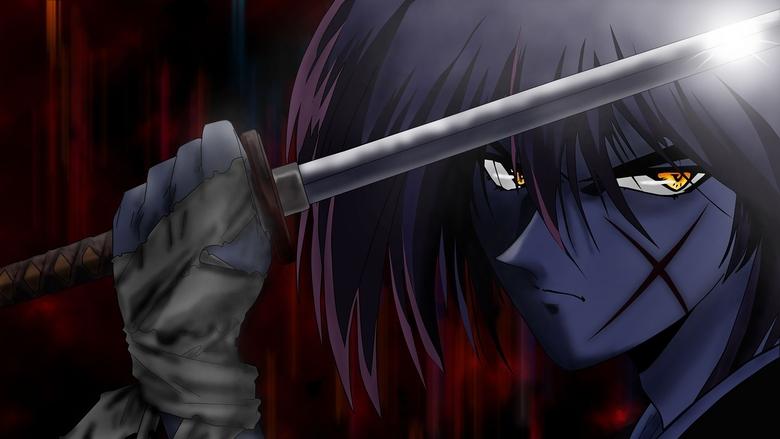
Kenshin's iconic scar symbolizes the weight of his past sins and the pain he has both caused and endured. The first part of the scar was given to him by a man he killed, and the second by that man's fiancée, Tomoe, just before she died. It is a permanent reminder of the lives he has taken and the personal tragedy that solidified his resolve to change his ways. It represents love, loss, and the inescapable nature of one's past.
The scar is a prominent physical feature on Kenshin's face throughout the series. Its origin is a central mystery for much of the early story, with the full, tragic tale being revealed much later (primarily in the OVA and manga). It serves as a constant, visual representation of the burden he carries and the reason for his vow of non-violence.
Memorable Quotes
A sword is a weapon. The art of swordsmanship is learning how to kill. That is the truth. What Miss Kaoru says is sweet and innocent talk... But, to tell you the truth, I much prefer Miss Kaoru's sweet and innocent talk over the truth, indeed I do.
— Himura Kenshin
Context:
This is said in Episode 1, "The Legendary Swordsman... A Man Who Fights for Love", after Kenshin defeats the fake Battōsai and explains his worldview to a stunned Kaoru, who believed swords were only for protecting people.
Meaning:
This quote encapsulates the core conflict of the series. Kenshin acknowledges the brutal reality of his past and the nature of his skills, but he consciously chooses to embrace a more hopeful and idealistic philosophy. It's his first major step in aligning himself with Kaoru's world and rejecting his own dark history.
The dead don't desire revenge, but the happiness of the living.
— Himura Kenshin
Context:
Kenshin says this to a young boy, Eiji, in the Tokyo arc, who is seeking revenge for the murder of his parents. Kenshin tries to steer him away from the path of hatred and violence.
Meaning:
This quote is central to Kenshin's philosophy of atonement. He rejects the cycle of vengeance that defines many of his enemies. He believes that continuing to live and creating a peaceful world is the only way to truly honor the memory of those who have died, including those he killed.
The will to live is stronger than anything else.
— Himura Kenshin / Seijuro Hiko
Context:
This philosophy is taught to Kenshin during his training to master the final techniques of the Hiten Mitsurugi-ryū in the Kyoto arc, specifically as he learns the Amakakeru Ryū no Hirameki.
Meaning:
This is the ultimate lesson Kenshin learns from his master, Hiko Seijuro. It represents a major shift in Kenshin's character, from someone willing to sacrifice his life for atonement to someone who understands that he must live on to protect the future. It reframes his struggle as one of survival and endurance, not self-destruction.
You can always die. It's living that takes real courage.
— Himura Kenshin
Context:
This line is often spoken by Kenshin to characters who have lost hope and see death as their only option, urging them to find the strength to continue living and fighting for what they believe in.
Meaning:
A concise and powerful expression of the series' core message. Kenshin understands that taking the easy way out through death is a form of escape. The true challenge and the more meaningful path is to face the hardships of life, endure the pain of the past, and continue to strive for a better future.
Episode Highlights
The Legendary Swordsman... A Man Who Fights for Love
The first episode introduces the main characters, Himura Kenshin and Kamiya Kaoru, and establishes the series' core premise. Kenshin, the wandering former assassin, saves Kaoru and her dojo from an imposter using his name. It perfectly sets up Kenshin's vow of non-violence and his iconic reverse-blade sword.
This episode lays the foundation for the entire series. It introduces the central conflict between Kenshin's dark past and his desired peaceful future, and it establishes the Kamiya dojo as the sanctuary where his journey of redemption will truly begin.
Deathmatch Under the Moon! Protect the One You Love
Kenshin confronts Jine Udo, a fellow hitokiri from the revolution who has kidnapped Kaoru to force Kenshin back into his killer persona. To save a paralyzed Kaoru, Kenshin is pushed to the brink and almost reverts to the Battōsai, but Kaoru's strong will helps him regain control at the last second.
This is the first major test of Kenshin's vow. It demonstrates the immense power of the Battōsai persona lurking within him and establishes that his connection with Kaoru is the key to keeping his humanity and preventing him from succumbing to his past.
Prelude to the Impending Fight: The Shadow of the Wolf Draws Near!
The beginning of the acclaimed Kyoto Arc. The peace at the dojo is shattered by the arrival of Saito Hajime, Kenshin's former rival from the Shinsengumi, now working as a police officer. His brutal fighting style and deep knowledge of Kenshin's past pose a serious and deadly threat, signaling a shift to a much darker and more serious tone for the series.
This episode marks the end of the introductory phase of the series and launches into its most celebrated storyline. Saito's appearance forces Kenshin to confront the reality that his past is not just something to atone for, but an active threat to the new era.
The Time-Honored Master: The Clash Between Hiko Seijuro and Kenshin
Seeking to become stronger to defeat Shishio, Kenshin finds his master, Hiko Seijuro XIII. This episode delves into their complex relationship and begins the intense training for Kenshin to learn the final secret technique of the Hiten Mitsurugi-ryū. Hiko is revealed as an immensely powerful and cynical master who is displeased with his 'idiot apprentice'.
This episode is crucial for Kenshin's development. It provides vital backstory on his training and philosophy, while introducing a key mentor figure who challenges Kenshin's self-sacrificial mindset and teaches him the ultimate lesson: the will to live.
The Juppongatana, a Choice for Life: Sojiro Seta's Past
During his rematch with Kenshin, the emotionless prodigy Sojiro Seta finally breaks. Kenshin's philosophy causes Sojiro's repressed traumatic past—enduring horrific abuse until he snapped and killed his abusers—to surface. His emotional breakdown reveals the tragic source of his mantra that 'the strong live and the weak die'.
This episode is a masterclass in character development, providing a powerful and sympathetic backstory for one of the arc's main antagonists. It deeply explores the philosophical clash between Kenshin's and Shishio's ideologies by showing the tragic consequences of the latter.
The Final Battle! Kenshin vs. Shishio
The climax of the Kyoto Arc. Kenshin, having surpassed his limits and weakened from previous fights, faces the formidable Makoto Shishio in a final, desperate battle. The fight is not just physical but a clash of ideals for the future of Japan.
This is the culmination of the series' most important storyline. Kenshin's victory, achieved through his will to live and the mastery of his art, solidifies his path of redemption and defeats the greatest threat to the Meiji government, effectively saving the nation.
Philosophical Questions
Can true atonement for past violence ever be achieved?
The series explores this question through Kenshin's entire life. He dedicates himself to saving lives to balance the scales for the ones he took. However, the show repeatedly questions if this is possible. Characters like Enishi Yukishiro argue that the only true atonement is death. Kenshin ultimately concludes that he must continue to live, as his death would not bring back those he killed, but his life can be used to protect the happiness of the living. The series suggests that atonement is not a final destination but a lifelong process of responsible action.
What is the true nature of strength?
"Rurouni Kenshin" presents a constant dialogue on this topic. Villains like Shishio Makoto champion a form of Social Darwinism: the strong live and the weak perish, and that is the natural law. Kenshin, conversely, argues that true strength is not the power to destroy, but the power to protect the weak. His mastery of the Hiten Mitsurugi-ryū, a deadly sword style, combined with his vow not to kill, embodies this philosophy. He demonstrates that choosing compassion and restraint, even when one has immense power, is the greater form of strength.
Is violence justified if used to create peace?
This is the paradox of Kenshin's past. He was an assassin who killed for the sake of creating a new, more peaceful era. The series grapples with the morality of this 'ends justify the means' argument. Kenshin himself is deeply tormented by it, which is why he renounces killing entirely. His journey shows the immense personal cost of such violence. While the Meiji era is portrayed as generally peaceful, the lingering shadows and enemies from the war suggest that a peace built on bloodshed is inherently fragile and haunted by its own creation.
Alternative Interpretations
While the series presents Kenshin's path as one of noble atonement, an alternative interpretation suggests his vow is an act of profound self-deception. This reading posits that the 'Hitokiri Battōsai' is Kenshin's true nature, and his wanderer persona is merely a fragile shell built to suppress his innate thirst for battle. The moments where he nearly reverts to his old self are not just moments of weakness, but glimpses of his true identity breaking free. From this perspective, his vow is not a path to redemption but a continuous, and perhaps ultimately futile, struggle against his unchangeable self.
Another interpretation focuses on the political message of the series. While on the surface it seems to endorse the new Meiji government, it can also be read as a critique of it. Kenshin, who fought to establish this government, refuses to work for it, recognizing that any political regime, no matter how idealistic, perpetuates violence to maintain power. His choice to remain a wanderer helping individuals rather than institutions suggests a belief that true peace cannot be achieved through politics or systems of power, but only through personal, moment-to-moment acts of compassion.
Cultural Impact
"Rurouni Kenshin" was a cornerstone of 1990s anime and played a significant role in popularizing anime and manga in the West. It appealed to a broad audience by masterfully blending historical fiction, intense action, romance, and deep philosophical themes.
Set during the Meiji Restoration, the series introduced a global audience to a pivotal and complex period of Japanese history, exploring the cultural shifts and the struggles of a nation moving from a feudal society to a modern one. Its themes of redemption, peace, and responsibility resonated deeply with viewers. Kenshin's character, a killer seeking to atone through pacifism, was a nuanced and compelling protagonist that broke from typical shonen molds.
The Kyoto arc (Season 2) is widely regarded by critics and audiences as one of the greatest story arcs in anime history, praised for its tight plotting, complex villain in Makoto Shishio, and profound philosophical debates. The first two seasons received critical acclaim, while the third, filler-heavy season was met with widespread criticism, leading many fans to turn to the manga for the story's true conclusion. The series has had an enduring legacy, inspiring numerous OVAs, a series of highly successful live-action films, and a 2023 anime remake, proving its timeless appeal.
However, the series' legacy has been complicated by the 2017 conviction of its creator, Nobuhiro Watsuki, for possession of child pornography. This has sparked ongoing debate among fans about separating the art from the artist and has cast a dark shadow over the franchise.
Audience Reception
"Rurouni Kenshin" (1996) was met with widespread acclaim from audiences and is considered a classic of the decade. Viewers praised its compelling characters, particularly the complex and nuanced protagonist, Himura Kenshin. The series' blend of high-stakes sword fights, historical drama, comedy, and romance appealed to a very broad demographic.
The first two seasons, which adapt the Tokyo Arc and the Kyoto Arc from the manga, are almost universally praised. The Kyoto Arc, in particular, is often cited as one of the best arcs in anime history, lauded for its intricate plot, emotional depth, and the compelling philosophical conflict between Kenshin and the antagonist, Makoto Shishio.
However, the reception of the third season is drastically different. This season consists of anime-original filler arcs that deviate from the manga's canon storyline. Most fans and critics view these arcs as a significant drop in quality, with weaker plots and less compelling villains. This led to the anime's cancellation before it could adapt the final, and crucial, 'Jinchuu' (Revenge) arc from the manga. This decision was a major point of criticism, with many viewers feeling the televised story was left incomplete.
Interesting Facts
- The creator, Nobuhiro Watsuki, is a big fan of American comics, and some character designs were inspired by them. For example, the villain Jin-e Udo's design was partially based on Gambit from the X-Men.
- The main character, Himura Kenshin, is loosely based on the historical figure Kawakami Gensai, one of the four great hitokiri (manslayers) of the Bakumatsu era. After the revolution, Gensai was executed by the Meiji government he helped bring to power.
- Kenshin's signature phrase "Oro?" is a meaningless expression of confusion or surprise, similar to "Huh?". The female voice actress, Mayo Suzukaze, reportedly came up with it during recording, and it became an iconic character trait.
- The third season of the anime, from episode 63 onwards, is composed entirely of filler arcs that are not present in the original manga. This departure from the source material is a common point of criticism among fans.
- Nobuhiro Watsuki mentored several other famous manga artists, including Eiichiro Oda (creator of One Piece) and Hiroyuki Takei (creator of Shaman King).
- Two characters who appear frequently in the anime's early episodes, the young girls Ayame and Suzume, were anime-only characters and do not appear in the manga.
⚠️ Spoiler Analysis
Click to reveal detailed analysis with spoilers
Frequently Asked Questions
Explore More About This Movie
Dive deeper into specific aspects of the movie with our detailed analysis pages
Comments (0)
No comments yet. Be the first to share your thoughts!