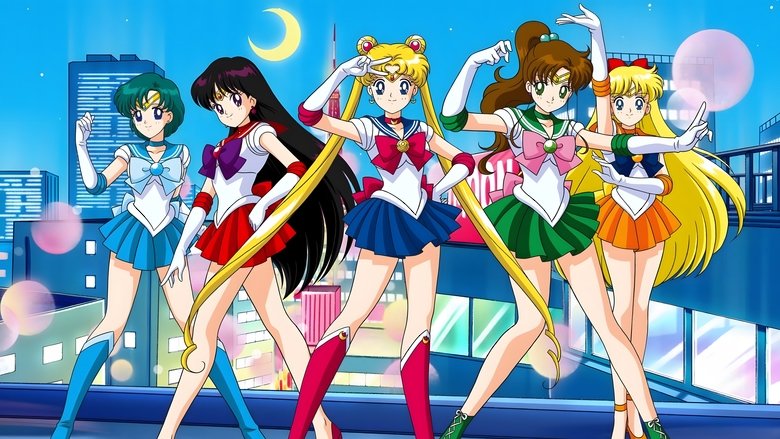
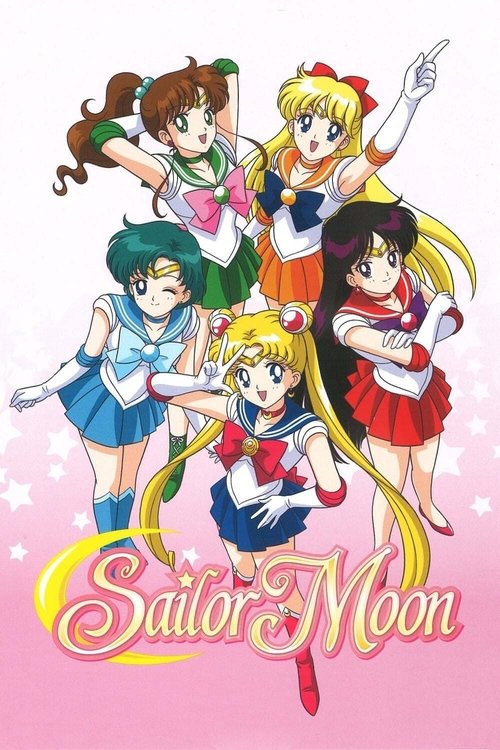
Sailor Moon
A radiant symphony of pastel dreams and cosmic destiny, where teenage anxieties collide with ancient tragedy. It is a celebration of feminine power, proving that love and healing are mightier than any weapon in the galaxy.
Sailor Moon
Sailor Moon

美少女戦士セーラームーン

"In the name of the Moon, I'll punish you!"

07 March 1992 — 08 February 1997 Japan 5 season 200 episode Ended ⭐ 8.4 (998)
Cast: Kotono Mitsuishi, Aya Hisakawa, Michie Tomizawa, Emi Shinohara, Rica Fukami
Animation Sci-Fi & Fantasy Action & Adventure Comedy Kids
The Power of Healing over Violence Destiny vs. Self-Determination Female Friendship and Sisterhood Growth and Maturation

Sailor Moon - Ending Explained

⚠️ Spoiler Analysis

Season 1 (Classic): The biggest twist is that the goofy protagonist Usagi is the Moon Princess everyone is searching for. The finale kills off all main characters, only to resurrect them with amnesia—a shocking move for a kids' show.

Season 2 (R): Introduces Chibiusa, who is revealed to be Usagi and Mamoru's future daughter from the 30th Century, turning the romance into a timeline-spanning dynasty.

Season 3 (S): Reveals that the 'Messiah of Silence' destined to destroy the world is the frail girl Hotaru Tomoe (Sailor Saturn). The twist is that Usagi saves the world not by killing her, but by allowing her to awaken and reset the world peacefully.

Season 5 (Stars): The ultimate villain, Sailor Galaxia, is revealed to be a fallen hero—the strongest Sailor Guardian who sealed Chaos within herself to save the universe but was eventually corrupted by it. The series ends with Usagi embracing Chaos itself, accepting that light and dark must coexist.

Alternative Interpretations

The 'Dream' Ending of Season 1: Some critics analyze the end of the first season, where the girls lose their memories and return to normal life, as a meta-commentary on the loss of childhood innocence. The 'happy ending' of forgetting the trauma is actually a tragedy because it erases their growth, which they must painfully regain in Sailor Moon R.

Chibiusa as an Electra Complex: The 'Black Lady' arc in Sailor Moon R, where Chibiusa ages up and tries to replace her mother to be with her father (Tuxedo Mask), is often interpreted through a Freudian lens as a literal manifestation of the Electra complex, representing a girl's jealousy of her mother.

Galaxia as Usagi's Shadow: Sailor Galaxia is often viewed as a dark mirror of Sailor Moon—a guardian who gave into despair and the belief that power is the only way to save the galaxy. Her defeat represents Usagi conquering her own potential for cynicism.