
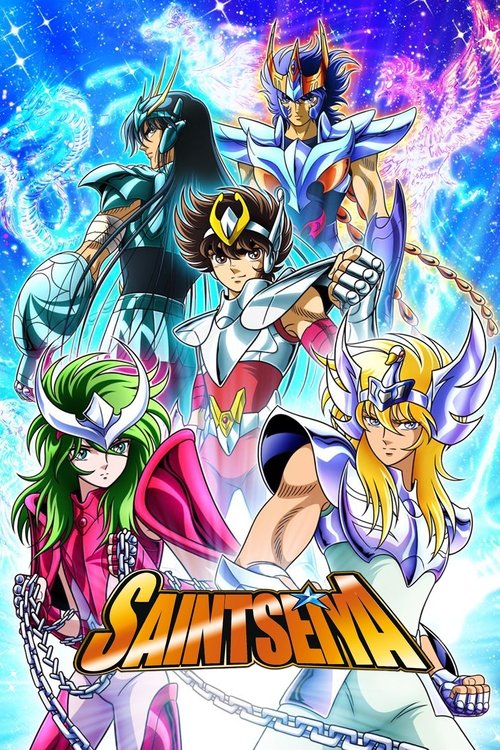
聖闘士星矢
Saint Seiya - Symbolism & Philosophy
Symbols & Motifs
The Cloths (Sacred Armors)
The Cloths symbolize the Saints' power, duty, and the constellations they represent. More than just armor, they are living entities with their own will, choosing their wielders. The act of donning a Cloth represents the acceptance of one's destiny as a protector of Athena. Their evolution and repair throughout the series mirror the growth and resilience of the Saints themselves.
The Cloths are central to every battle. They are introduced in the first arc, with the Bronze Saints earning theirs through intense training. A key plot point is the theft of the Gold Sagittarius Cloth. The armors are damaged and subsequently repaired and upgraded multiple times, notably after the battle of the twelve temples, signifying the Saints' increasing power and experience.
Cosmo (小宇宙)
Cosmo represents the inner universe and life force within every being, an energy born from the Big Bang. It is the source of a Saint's power. To "burn your Cosmo" means to push one's spiritual and physical energy to its absolute limit and beyond. It symbolizes the limitless potential of the human spirit and the idea that true strength comes from within.
The concept of Cosmo is fundamental to the entire series. The Saints' training involves learning to sense and ignite their Cosmo. Key turning points in battles often occur when a Saint awakens a higher level of Cosmo, such as the legendary "Seventh Sense," which allows them to rival the god-like speed and power of the Gold Saints.
The Twelve Zodiac Temples
The twelve temples of the Zodiac in the Sanctuary arc symbolize the ultimate trial and a metaphorical ascent towards truth and enlightenment. Each temple represents a stage of the journey, guarded by a figure embodying a different philosophy or challenge, forcing the heroes to grow stronger and prove their worth not just physically, but morally.
The Sanctuary arc (episodes 1-73) is defined by the Bronze Saints' desperate race against time through the twelve temples. Each battle with a Gold Saint tests them in a unique way, forcing them to awaken their Seventh Sense and understand the true meaning of justice before they can reach the Pope's chambers and save Athena.
Philosophical Questions
What is the true nature of a god, and what is humanity's place in relation to the divine?
The series consistently explores this question by juxtaposing the flawed, ambitious Olympian gods with the unwavering, self-sacrificing human Saints. Athena is portrayed as a benevolent deity who chooses to suffer alongside humanity, while gods like Poseidon and Hades see mortals as flawed creations to be ruled or eradicated. The Saints, mere mortals, repeatedly achieve miracles and defeat gods by elevating their inner "Cosmo," suggesting that the potential for divinity lies within humanity itself and is defined not by power, but by love and sacrifice.
Is unwavering faith in a cause or person always justified?
"Saint Seiya" examines the complexities of loyalty and faith. The Bronze Saints' absolute faith in Athena is portrayed as their greatest strength. In contrast, the Gold Saints' and other antagonists' loyalty to their own leaders (the Pope, Hilda, Poseidon) leads them to commit atrocities. The series suggests that faith must be directed towards true justice, not just authority. It forces characters like the Gold Saints to question their allegiance and ultimately choose between their duty to an institution and their personal conscience, highlighting the idea that true loyalty is to ideals, not to individuals or titles.
Core Meaning
At its heart, "Saint Seiya" is a powerful allegory for the indomitable nature of the human spirit. It posits that through unwavering friendship, immense sacrifice, and the sheer will to never give up, mortals can achieve the impossible—even defying and surpassing the gods themselves. The series champions the idea that one's true power, or "Cosmo," is an internal universe of limitless potential that can be ignited for a greater cause, suggesting that heroism is not a birthright but a choice forged in the crucible of adversity and loyalty.