Saint Seiya
An epic odyssey where youthful warriors, fueled by cosmic energy and bound by brotherhood, shatter divine fates under starry constellations.
Saint Seiya

Saint Seiya

聖闘士星矢

11 October 1986 — 01 April 1989 Japan 1 season 114 episode Ended ⭐ 8.5 (1,347)
Cast: Toru Furuya, Hirotaka Suzuoki, Ryo Horikawa, Koichi Hashimoto, Hideyuki Hori
Drama Animation Sci-Fi & Fantasy Action & Adventure
Friendship and Brotherhood Perseverance and Never Giving Up Sacrifice Destiny vs. Free Will

Overview

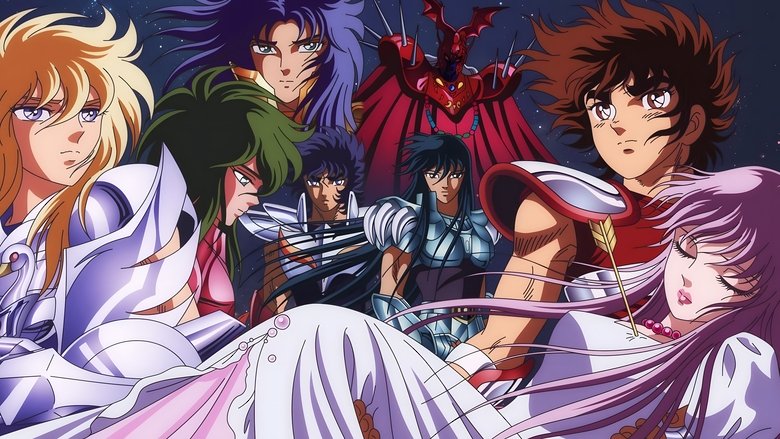
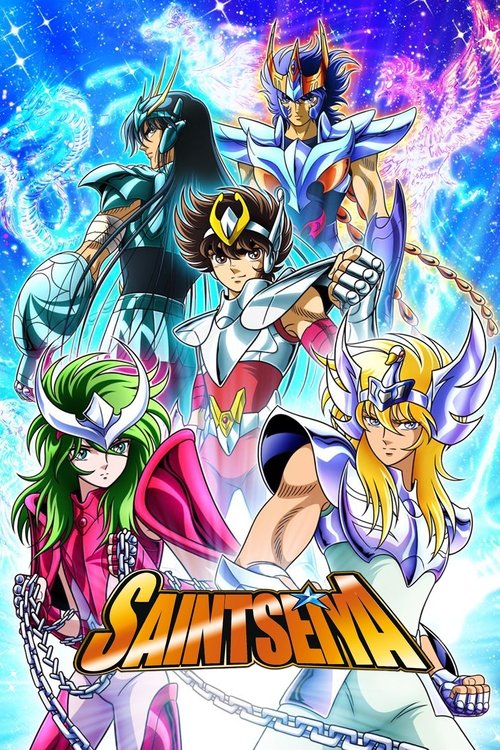
"Saint Seiya" chronicles the saga of five young orphans—Seiya, Shiryu, Hyoga, Shun, and Ikki—who are sent across the globe to train and earn sacred armors known as "Cloths," granting them superhuman abilities. They become the Bronze Saints, sworn protectors of Saori Kido, the reincarnation of the Greek goddess Athena.

The series is broadly divided into three major arcs. The first is the "Sanctuary Arc," where the Saints must battle through twelve temples, each guarded by a powerful Gold Saint, to save Athena from a traitor within her own ranks. Following this is the anime-exclusive "Asgard Arc," where they travel to the icy northern lands to confront the God Warriors of Asgard, who are manipulated by a malevolent force. The final arc of the original TV series is the "Poseidon Arc," which sees the Saints descending into the undersea kingdom to battle the Marine Generals of the sea god Poseidon, who aims to flood the world.
Core Meaning

At its heart, "Saint Seiya" is a powerful allegory for the indomitable nature of the human spirit. It posits that through unwavering friendship, immense sacrifice, and the sheer will to never give up, mortals can achieve the impossible—even defying and surpassing the gods themselves. The series champions the idea that one's true power, or "Cosmo," is an internal universe of limitless potential that can be ignited for a greater cause, suggesting that heroism is not a birthright but a choice forged in the crucible of adversity and loyalty.

Thematic DNA

Friendship and Brotherhood 35%
Perseverance and Never Giving Up 30%
Sacrifice 20%
Destiny vs. Free Will 15%

Friendship and Brotherhood

This is the central pillar of the series. The bond between the five Bronze Saints is their greatest weapon, allowing them to overcome insurmountable odds. They repeatedly sacrifice themselves for one another, and their collective strength, born from deep camaraderie, allows them to push their Cosmo to divine levels. This theme is consistently reinforced in every arc, as their unity is tested against powerful foes who often fight alone or out of selfish ambition.

Perseverance and Never Giving Up

A quintessential shonen theme, "Saint Seiya" takes perseverance to an extreme. The protagonists are constantly beaten to the brink of death but always rise again, fueled by their duty to Athena and their bonds with each other. Seiya, in particular, embodies this spirit, refusing to surrender no matter how hopeless the situation seems. This theme suggests that human will is a force capable of challenging fate and divine power.

Sacrifice

Sacrifice is a recurring and vital element throughout the narrative. Characters frequently make ultimate sacrifices, such as Shiryu blinding himself or Hyoga risking his life to freeze an opponent. These acts are portrayed not as tragedies but as the highest expressions of loyalty and heroism. The willingness of the Saints to lay down their lives for Athena and for humanity is what elevates them beyond mere warriors into true heroes.

Destiny vs. Free Will

The Saints are bound by their guardian constellations and their duty to Athena, suggesting a preordained path. However, they constantly defy expectations and forge their own destinies through sheer force of will. They challenge the authority of corrupt leaders within the Sanctuary and even stand against the will of gods like Poseidon, demonstrating that destiny is not a fixed path but something that can be shaped by one's actions and convictions.

Character Analysis

Pegasus Seiya

Toru Furuya

Archetype: The Indomitable Hero
Key Trait: Relentless Determination

Motivation

Initially, his sole motivation is to find his sister, Seika. This later expands to a fierce loyalty to his friends and a deep, unwavering devotion to protecting Saori Kido (Athena), whom he comes to care for deeply. His motivation becomes the embodiment of a Saint's duty: to fight for love and justice on Earth.

Character Arc

Seiya begins as a hot-headed and reluctant teenager, motivated primarily by the personal quest to find his long-lost sister. His initial participation is transactional. As he fights alongside his friends and understands Saori's true identity as Athena, his motivation evolves. He transforms from a self-interested fighter into a selfless and unwavering leader, embodying the spirit of never giving up and becoming the ultimate protector of the goddess and the world, even at the cost of his own life.

Dragon Shiryu

Hirotaka Suzuoki

Archetype: The Stoic Lancer
Key Trait: Self-Sacrifice

Motivation

Shiryu is driven by a profound sense of loyalty, honor, and duty to his master, his friends, and Athena. He views his role as a Saint with the utmost seriousness and is always prepared to make the ultimate sacrifice to ensure his comrades' victory and uphold justice.

Character Arc

Shiryu starts as a calm, confident, and highly skilled warrior, perhaps the most mature of the group. His journey is one of learning the true meaning of sacrifice and strength. He frequently endures immense physical hardship, including sacrificing his sight, which teaches him to rely on his other senses and his Cosmo. His arc demonstrates that true power lies not in invulnerability (symbolized by his shield) but in the willingness to sacrifice everything for a greater cause.

Phoenix Ikki

Hideyuki Hori

Archetype: The Anti-Hero/Lone Wolf
Key Trait: Resilience

Motivation

Initially fueled by hatred for the world and the people who sent him to his personal hell, Ikki's core motivation transforms into the fierce protection of his brother, Shun. While he claims to walk his own path, his actions are consistently driven by a deep-seated love for his brother and, eventually, a grudging respect and loyalty to his fellow Bronze Saints.

Character Arc

Ikki is introduced as the series' first major antagonist, consumed by hatred after his brutal training on Death Queen Island. His initial arc is one of redemption, moving from a vengeful villain to a reluctant but powerful ally. He maintains his lone-wolf persona but repeatedly appears at critical moments to save his younger brother Shun and the other Saints. His journey is about overcoming immense trauma and channeling his rage into a protective force, demonstrating that even the most broken soul can find redemption through love and loyalty.

Andromeda Shun

Ryo Horikawa

Archetype: The Reluctant Warrior/Pure Heart
Key Trait: Compassion

Motivation

Shun's primary motivation is to protect innocent life and his friends without causing unnecessary harm. He is driven by love and compassion, and only fights when there is no other choice to prevent a greater tragedy. His bond with his brother, Ikki, is a central part of his motivation.

Character Arc

Shun begins the series as a pacifist who despises fighting, a stark contrast to his peers. His character arc is about reconciling his gentle nature with his immense power and duty as a Saint. Throughout the series, he is forced into situations where he must fight to protect those he loves, proving that true strength is not about aggression but about the will to protect. He learns to accept his power, demonstrating that compassion and strength are not mutually exclusive.

Saori Kido (Athena)

Keiko Han

Archetype: The Damsel-in-Distress/Divine Leader
Key Trait: Divine Compassion

Motivation

After awakening as Athena, her motivation is absolute: to protect the Earth and its inhabitants from the selfish ambitions of other gods. She is driven by love for humanity and a deep sense of duty and affection for her Saints, whom she guides and supports with her divine Cosmo.

Character Arc

Saori's arc is one of the most dramatic, starting as a spoiled, arrogant heiress who treats the orphans poorly. Upon discovering she is the reincarnation of Athena, she undergoes a profound transformation. She matures into a compassionate, wise, and courageous leader who is willing to sacrifice herself for the world and her Saints. Her journey is about embracing her divine destiny and learning to bear the immense weight of her responsibility, evolving from a figure who needs protection into a source of divine inspiration and power for her warriors.

Symbols & Motifs

The Cloths (Sacred Armors)

Meaning:

The Cloths symbolize the Saints' power, duty, and the constellations they represent. More than just armor, they are living entities with their own will, choosing their wielders. The act of donning a Cloth represents the acceptance of one's destiny as a protector of Athena. Their evolution and repair throughout the series mirror the growth and resilience of the Saints themselves.

Context:

The Cloths are central to every battle. They are introduced in the first arc, with the Bronze Saints earning theirs through intense training. A key plot point is the theft of the Gold Sagittarius Cloth. The armors are damaged and subsequently repaired and upgraded multiple times, notably after the battle of the twelve temples, signifying the Saints' increasing power and experience.

Cosmo (小宇宙)

Meaning:

Cosmo represents the inner universe and life force within every being, an energy born from the Big Bang. It is the source of a Saint's power. To "burn your Cosmo" means to push one's spiritual and physical energy to its absolute limit and beyond. It symbolizes the limitless potential of the human spirit and the idea that true strength comes from within.

Context:

The concept of Cosmo is fundamental to the entire series. The Saints' training involves learning to sense and ignite their Cosmo. Key turning points in battles often occur when a Saint awakens a higher level of Cosmo, such as the legendary "Seventh Sense," which allows them to rival the god-like speed and power of the Gold Saints.

The Twelve Zodiac Temples

Meaning:

The twelve temples of the Zodiac in the Sanctuary arc symbolize the ultimate trial and a metaphorical ascent towards truth and enlightenment. Each temple represents a stage of the journey, guarded by a figure embodying a different philosophy or challenge, forcing the heroes to grow stronger and prove their worth not just physically, but morally.

Context:

The Sanctuary arc (episodes 1-73) is defined by the Bronze Saints' desperate race against time through the twelve temples. Each battle with a Gold Saint tests them in a unique way, forcing them to awaken their Seventh Sense and understand the true meaning of justice before they can reach the Pope's chambers and save Athena.

Memorable Quotes

君は小宇宙(コスモ)を感じたことがあるか?

— Narrator/Various Characters

Context:

This line is used frequently throughout the series, often in narration or by mentors, to introduce the core concept of the Saints' power source. It encapsulates the mystical and philosophical foundation of the show's power system.

Meaning:

"Have you ever felt your Cosmo?" This iconic question serves as the series' central thesis. It challenges both the characters and the audience to look beyond the physical world and understand the limitless potential that lies within the human spirit.

聖闘士に同じ技は二度も通用しない

— Various Saints

Context:

This phrase is stated by many Saints throughout the series, usually after an opponent repeats a powerful attack that was effective the first time. The Saint, having analyzed the attack, is then able to completely nullify or counter it, often turning the tide of the battle.

Meaning:

"The same technique will not work on a Saint twice." This quote establishes a key rule of combat in the series and symbolizes the Saints' incredible ability to learn, adapt, and evolve. It highlights their intelligence and resilience, showing they grow stronger from every attack they endure.

ペガサス流星拳!

— Pegasus Seiya

Context:

Seiya shouts this in nearly every battle he participates in across all 114 episodes. It is his most used and most iconic technique, from his first fight for the Pegasus Cloth to his final battles against gods.

Meaning:

"Pegasus Meteor Fist!" This is not just an attack name; it's Seiya's signature battle cry and a symbol of his relentless spirit. It represents his primary method of overcoming obstacles: a barrage of seemingly endless strikes that break through even the most powerful defenses through sheer force of will.

Episode Highlights

Burn! Phoenix of Hell

S1E15

This episode marks the climax of the first mini-arc, featuring the final confrontation between the Bronze Saints and the vengeful Phoenix Ikki. It fully establishes the deep bond between the brothers Shun and Ikki and showcases the combined power of the four main heroes as they fight together for the first time to overcome a seemingly invincible foe.

Significance:

This episode is crucial as it transforms Ikki from the primary antagonist into a powerful, recurring anti-hero. It solidifies the theme of brotherhood and redemption that becomes central to his character arc and the series as a whole.

The Decisive Battle! Athena's Crisis

S1E41

The Bronze Saints finally arrive at the Sanctuary to find Saori struck by a golden arrow. They are given twelve hours to traverse the twelve Zodiac temples, each guarded by a Gold Saint, to reach the Pope and save Athena. This episode kicks off the legendary Sanctuary arc in earnest.

Significance:

This episode establishes the high-stakes, race-against-time premise of the most iconic arc in the series. It sets the stage for the epic battles that will force the protagonists to grow exponentially and awaken their Seventh Sense.

Shaka! The Man Closest to God

S1E56

The Saints face Virgo Shaka, renowned as the man closest to God. Shaka easily defeats Seiya, Shiryu, and Shun. In a climactic confrontation, Phoenix Ikki arrives and engages Shaka in a battle of immense cosmic power, culminating in a mutual sacrifice to defeat the powerful Gold Saint.

Significance:

This episode showcases the overwhelming power of the Gold Saints and establishes Shaka as one of the most formidable characters. Ikki's sacrifice is a pivotal moment in his arc, cementing his role as the ultimate protector of his brother and friends.

The Final Fight! The Secret of the Pope

S1E72

Seiya, empowered by the cosmos of his friends, confronts the Pope, who is revealed to be the Gold Saint Gemini Saga. The battle is one of the most intense in the series, as Seiya pushes his power to its absolute limit to defeat the tyrannical ruler of the Sanctuary.

Significance:

This episode features the long-awaited reveal of the main villain's identity. Seiya's victory, achieved through the power of friendship, is a powerful thematic statement that concludes the Sanctuary arc's primary conflict.

Friends! Let Us Die Together

S1E73

The finale of the Sanctuary arc. With Gemini Saga defeated but his evil spirit still raging, Saori Kido as Athena confronts him. Saga's good side briefly regains control, and he ultimately chooses to take his own life to atone for his sins, bringing a tragic and poignant end to the holy war for the Sanctuary.

Significance:

This episode resolves the Sanctuary saga, restores Athena to her rightful place, and provides a complex, tragic end for the antagonist, exploring themes of duality and redemption. It marks the end of the first and most celebrated major storyline of the series.

Odin! A Holy War of the Norse Gods

S1E97

In the climax of the Asgard arc, the Saints face Hilda's final and most powerful God Warrior, Siegfried. The battle pushes the heroes to their limits, and the lore of the Norse gods plays a crucial role in the fight against a warrior descended from the legendary hero.

Significance:

This episode represents the peak of the anime-original Asgard arc, featuring a compelling antagonist and a desperate struggle that highlights the teamwork of the Bronze Saints. It sets the stage for the final confrontation with Hilda.

Shine! The Golden Bronze Cloths

S1E112

Facing the impossibly powerful Sea God Poseidon, the Bronze Saints are on the verge of defeat. In a moment of divine intervention, the spirits of the deceased Gold Saints send their Gold Cloths to protect Seiya, Shiryu, and Hyoga, allowing them to fight on equal footing with a god.

Significance:

This episode is a fan-favorite moment, bridging the Sanctuary and Poseidon arcs. The appearance of the Gold Cloths is a symbol of the legacy and brotherhood passed down from the previous generation of Saints, empowering the heroes for their final battle.

Friendship Forever! The Legend of the Saints

S1E114

The final episode of the original TV series. Seiya, with the help of his friends, manages to break the Main Breadwinner pillar and seal Poseidon's soul within Athena's Amphora. The world is saved, and the Saints, though battered, stand victorious, their legend solidified.

Significance:

This episode provides a conclusive end to the Poseidon arc and the 1986 anime series. It reaffirms the core themes of friendship and perseverance, leaving the heroes as the undisputed protectors of peace on Earth until their next battle.

Philosophical Questions

What is the true nature of a god, and what is humanity's place in relation to the divine?

The series consistently explores this question by juxtaposing the flawed, ambitious Olympian gods with the unwavering, self-sacrificing human Saints. Athena is portrayed as a benevolent deity who chooses to suffer alongside humanity, while gods like Poseidon and Hades see mortals as flawed creations to be ruled or eradicated. The Saints, mere mortals, repeatedly achieve miracles and defeat gods by elevating their inner "Cosmo," suggesting that the potential for divinity lies within humanity itself and is defined not by power, but by love and sacrifice.

Is unwavering faith in a cause or person always justified?

"Saint Seiya" examines the complexities of loyalty and faith. The Bronze Saints' absolute faith in Athena is portrayed as their greatest strength. In contrast, the Gold Saints' and other antagonists' loyalty to their own leaders (the Pope, Hilda, Poseidon) leads them to commit atrocities. The series suggests that faith must be directed towards true justice, not just authority. It forces characters like the Gold Saints to question their allegiance and ultimately choose between their duty to an institution and their personal conscience, highlighting the idea that true loyalty is to ideals, not to individuals or titles.

Alternative Interpretations

One popular alternative interpretation views the series through a lens of anti-authoritarianism. The Sanctuary arc, in particular, can be read as a rebellion against a corrupt and dogmatic religious/political institution. The Bronze Saints, branded as traitors, are fighting not against the Sanctuary itself, but against its corrupted leadership, suggesting that true justice sometimes requires challenging established authority from the outside.

Another reading focuses on the complex morality of the antagonists. Many of the Gold Saints, God Warriors, and Marina Generals are not purely evil; they are often tragic figures bound by duty, honor, or manipulation. This suggests a more nuanced interpretation where the conflict is not a simple battle of good versus evil, but a clash of differing, and sometimes equally valid, ideals of justice. Poseidon's desire to cleanse the world, for instance, stems from a genuine disappointment with humanity's corruption.

Cultural Impact

"Saint Seiya" had a monumental impact on anime and pop culture, particularly outside of Japan. Created in the mid-1980s, it capitalized on the growing interest in shonen manga and fused it with a unique blend of Greek mythology, martial arts, and astrological lore.

Its influence on television was profound, especially in Europe and Latin America, where it became a cultural phenomenon in the early 90s. It helped popularize anime in these regions, paving the way for future series. The show's structure—a team of five color-coded young heroes with specialized powers and armor fighting for a greater cause—became a highly influential template, with echoes seen in later series like "Ronin Warriors" and even elements of "Power Rangers."

The series was praised for its dramatic storytelling, complex characters (including tragic villains), and its exploration of themes like friendship, sacrifice, and perseverance. The anime-original Asgard arc, which delved into Norse mythology, was particularly well-received for its compelling antagonists and somber tone. However, it also faced criticism in some Western markets for its level of violence, which led to censorship in certain broadcasts.

In pop culture, "Saint Seiya" left an indelible mark. The iconic Cloth designs by Shingo Araki are legendary, influencing character aesthetics in countless other manga, anime, and video games. The concept of "Cosmo" as an internal energy source has become a well-known trope. The series' legacy endures through sequels (like "Saint Seiya: Next Dimension"), spin-offs, video games, and a dedicated global fanbase that continues to celebrate the series decades after its debut.

Audience Reception

Upon its initial release in 1986, "Saint Seiya" quickly became a massive hit in Japan. However, its international reception, particularly in Europe and Latin America in the early 1990s, was where it achieved legendary status, creating an entire generation of anime fans.

Audiences overwhelmingly praised the series for its epic scope, emotional depth, and unique blend of action with Greek and Norse mythology. The character designs by Shingo Araki and the powerful, orchestral soundtrack by Seiji Yokoyama were frequently cited as high points. The Sanctuary arc is almost universally considered a masterpiece and the definitive "Saint Seiya" experience.

The main point of criticism often revolves around the repetitive formula of the battles, where the heroes are beaten nearly to death before making a miraculous comeback. Some viewers also found the character of Saori Kido/Athena to be a perennial "damsel in distress" in the early arcs, though others point to her significant character development in the Poseidon arc. The anime-original Asgard arc, while technically filler, was a controversial point that ultimately won over the vast majority of the audience with its strong character writing and somber atmosphere, with many fans now preferring it over the manga's subsequent arc.

Interesting Facts

  • The creator of the original manga is Masami Kurumada. The anime series was developed by Toei Animation.
  • The Asgard arc (episodes 74-99) is an anime-original storyline and does not appear in the manga. It was created to allow the manga artist, Masami Kurumada, more time to get ahead with the Poseidon storyline. Despite being 'filler', it is one of the most beloved arcs among fans.
  • The character designer for the anime, Shingo Araki, along with Michi Himeno, is credited with creating the iconic and beautiful aesthetic of the characters and their Cloths, which became a huge part of the series' appeal and enduring legacy.
  • "Saint Seiya" was a colossal international success, particularly in France, Spain, and throughout Latin America, where it is often known as "Les Chevaliers du Zodiaque" or "Los Caballeros del Zodíaco" respectively. For many, it was their introduction to Japanese anime.
  • The immense popularity of the series led to a massive and highly successful line of merchandise, most notably the "Saint Cloth Series" (later Saint Cloth Myth) action figures by Bandai, which were highly detailed and featured removable die-cast metal armor.

⚠️ Spoiler Analysis

Click to reveal detailed analysis with spoilers

Frequently Asked Questions

Explore More About This Movie

Dive deeper into specific aspects of the movie with our detailed analysis pages

Comments (0)

Leave a comment

No comments yet. Be the first to share your thoughts!