
"Death is failure."
Samurai Jack - Symbolism & Philosophy
Symbols & Motifs
The Katana
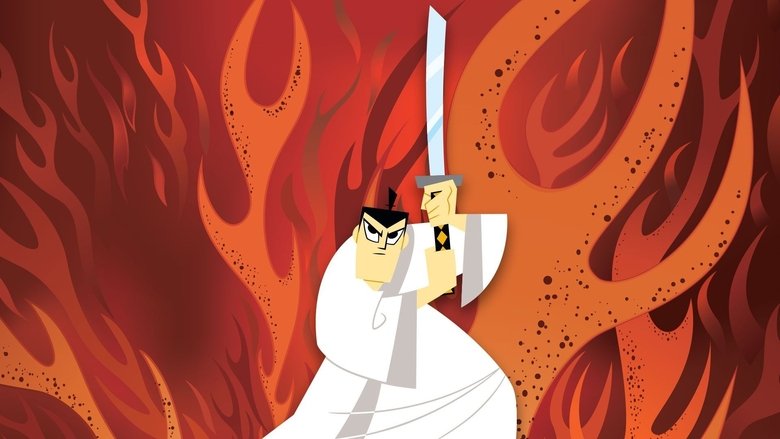
Jack's sword symbolizes righteousness, purity, hope, and his connection to his heritage and divine purpose. Forged by gods from the goodness of his father's spirit, it is the only weapon that can harm Aku. It represents the unwavering nature of good. Losing the sword in Season 5 is symbolic of Jack losing his hope, his purpose, and his connection to his past. Reclaiming it signifies his spiritual rebirth and readiness to complete his destiny.
The sword is Jack's constant companion throughout the series. Its divine power is demonstrated in nearly every episode as it effortlessly cuts through Aku's machines. Its loss and eventual recovery are the central plot points of the final season, marking the lowest and highest points of Jack's character arc.
Aku's Form
Aku's constantly shifting form symbolizes chaos, corruption, and the pervasive, adaptable nature of evil. He can become anything—a giant monster, a small animal, or even a beautiful woman—to deceive and destroy. His black, fiery appearance with sharp, angular features is the antithesis of the clean, simple lines of Jack and the natural world. He is the embodiment of a plague, a living darkness that infects everything it touches.
Aku's shapeshifting is a core element of his character and is used throughout the series. He uses it for combat, trickery (like his female guise, Ikra), and to spread his influence across the galaxy. His very essence being able to birth Ashi is the ultimate expression of his corrupting influence.
The Ladybug
The ladybug symbolizes innocence, nature's persistence, and the spark of hope. It is a small, simple creature of the natural world that endures even in Aku's corrupted future. It represents the goodness and beauty that Jack is fighting to protect.
A ladybug is first seen in Season 5 when its gentle landing on Ashi's hand stays Jack's hand from killing her, marking the beginning of her redemption. The series finale ends with Jack, mourning Ashi, seeing a ladybug land on his hand. This reminds him of her and the hope she represented, allowing him to find a moment of peace and a bittersweet smile, signifying that her memory and the goodness she embodied live on.
Philosophical Questions
What is the nature of heroism in a seemingly hopeless world?
The series explores this by repeatedly testing Jack's resolve. Is a hero defined by achieving their ultimate goal, or by their continuous actions in the face of failure? Jack consistently chooses to help others at the expense of his own quest, suggesting that heroism is a process, not a destination. His selfless acts, performed for strangers in a land he wants to erase, posit that true heroism is principled action without the promise of personal reward. The final season challenges this by showing that even the greatest hero can lose hope, and that heroism sometimes means needing to be saved yourself before you can save others.
Can one's purpose and identity survive the loss of the past and the corruption of the future?
Jack is a man literally unstuck in time, robbed of his past and trapped in a hostile future. The series examines how he clings to his identity—his honor, his Bushido code, his memories—as an anchor. His quest is not just to change the timeline but to preserve his own soul from being corrupted or broken by the world around him. His eventual despair in Season 5 shows the immense difficulty of this, suggesting that identity is not static but must be actively fought for and, if lost, rediscovered.
Is it possible to defeat an all-encompassing evil without sacrificing a part of oneself?
"Samurai Jack" answers this with a resounding "no." The entire series is a story of sacrifice. Jack sacrifices his home, his time, and countless opportunities to return to the past. The ultimate conclusion of this theme is the finale, where the final victory over Aku is intrinsically linked to the erasure of Ashi, the person Jack has come to love. The series posits that the cost of defeating a truly great evil is equally great, and that peace is often built upon a foundation of profound personal loss.
Core Meaning
The core meaning of "Samurai Jack" is an exploration of enduring hope and perseverance in the face of absolute despair. It is a story about holding onto one's principles, identity, and sense of purpose in a world that seeks to crush them. The series posits that true heroism lies not just in a single epic battle, but in the quiet, daily struggle to do what is right and to protect the innocent, even when one's ultimate goal seems unattainable. Ultimately, the creators convey that a journey is defined by the lives one touches and the integrity one maintains along the way, suggesting that even a bittersweet victory, filled with sacrifice, can restore balance and meaning to the world.