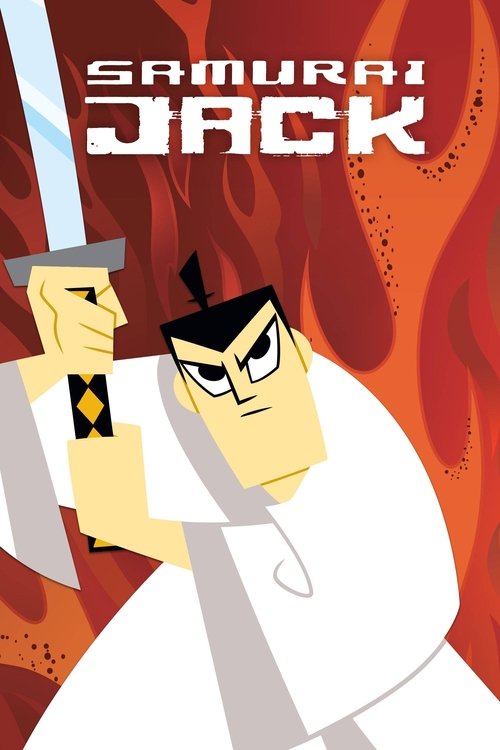
Samurai Jack
"Death is failure."
Overview
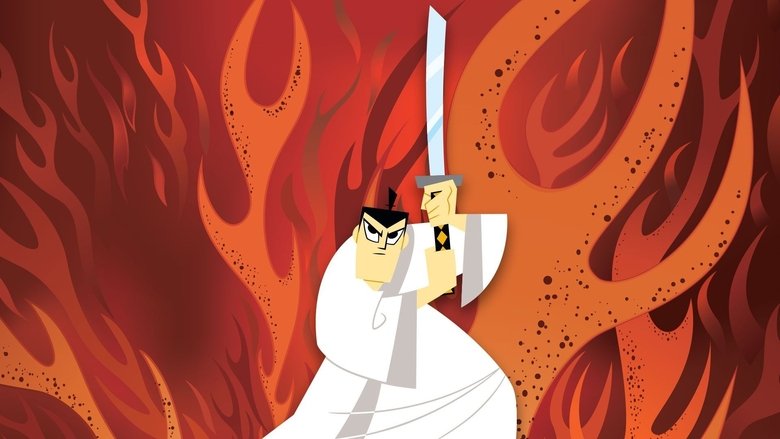
"Samurai Jack" tells the epic saga of a young, unnamed prince from feudal Japan whose kingdom is destroyed by the shape-shifting master of darkness, Aku. Just as the samurai is about to deliver the final blow with his mystical katana, Aku tears open a portal in time, flinging him into a distant, dystopian future where Aku's evil is law. Stranded, the samurai adopts the name "Jack" and begins a perilous quest to find a way back to his own time to undo the future that is Aku.
Across the first four seasons, the series follows an episodic format, with Jack wandering the retro-futuristic world, battling Aku's robotic minions, and helping the various oppressed inhabitants he encounters. His journey is a solitary one, marked by fleeting alliances and constant setbacks, as Aku thwarts his every attempt to return to the past. The narrative is renowned for its minimalist dialogue and emphasis on visual storytelling, blending action, humor, and moments of quiet reflection.
The series was revived for a fifth and final season, which takes place fifty years later. A weary, ageless Jack has lost his sword and his hope, haunted by his failures. This darker, more mature season introduces a serialized story arc, following Jack's journey to overcome his inner demons, his relationship with Ashi (a former enemy turned ally), and his final, climactic confrontation with Aku to fulfill his destiny.
Core Meaning
The core meaning of "Samurai Jack" is an exploration of enduring hope and perseverance in the face of absolute despair. It is a story about holding onto one's principles, identity, and sense of purpose in a world that seeks to crush them. The series posits that true heroism lies not just in a single epic battle, but in the quiet, daily struggle to do what is right and to protect the innocent, even when one's ultimate goal seems unattainable. Ultimately, the creators convey that a journey is defined by the lives one touches and the integrity one maintains along the way, suggesting that even a bittersweet victory, filled with sacrifice, can restore balance and meaning to the world.
Thematic DNA
Hope vs. Despair
This is the central theme of the entire series. Jack embodies hope, a singular point of light in a future completely dominated by Aku's despair. For four seasons, his hope is unwavering as he searches for a way back to the past. However, the fifth season delves deeply into Jack's despair after 50 years of failure. He has lost his sword, his connection to his ancestors, and his purpose. His journey with Ashi becomes one of rediscovering hope, not just for his quest, but within himself. The series argues that hope is not a constant state but a conscious choice that must be continually renewed, even after profound loss.
Tradition vs. Modernity / Nature vs. Technology
Jack is a figure of tradition, honor, and the natural world, thrust into a chaotic, technologically corrupt future. His simple white gi and reliance on a divinely forged sword stand in stark contrast to the flying cars, sprawling mega-cities, and robotic armies of Aku's world. Many episodes highlight this conflict, where Jack finds solace and strength in nature while his enemies are almost exclusively machines or perversions of technology. The series often portrays modernity under Aku as soulless and oppressive, while the past and the natural world represent a more honorable, balanced existence that Jack fights to restore.
The Journey vs. The Destination
While Jack's stated goal is always to "get back to the past," the series places immense value on the journey itself. Time and again, Jack forgoes a potential chance to return home in order to help strangers in need. These episodic adventures, which form the bulk of the first four seasons, build his legend and demonstrate that his heroism is defined by his actions in the present, not just his ultimate goal. The final season culminates this theme: the allies he made over his 50-year journey are the ones who come to his aid in the final battle, proving that the destination (defeating Aku) was only made possible by the countless selfless acts performed along the journey.
Confronting Inner Demons
The series often externalizes Jack's internal struggles. In the episode "Jack Versus Mad Jack," his own rage and frustration manifest as a physical opponent he must defeat by finding inner peace. This theme becomes central in Season 5, where a tormented Jack is haunted by a dark, taunting version of himself, representing his guilt and despair. His path to reclaiming his sword and his purpose requires a spiritual journey to defeat this inner demon, proving that the most significant battles are often the ones fought within oneself. Ashi also undergoes a similar arc, battling the indoctrination and literal darkness placed within her by Aku.
Character Analysis
Samurai Jack
Phil LaMarr
Motivation
Initially, his motivation is simple: fulfill his duty and destiny by returning to the past to vanquish Aku and save his family and kingdom. Over time, this motivation expands. He becomes a protector of all innocent life in the future, often putting their needs before his own. In the final season, his motivation becomes deeply personal again, not just to defeat evil, but to regain his own lost hope and, eventually, to protect Ashi.
Character Arc
Jack begins as a young, focused prince, trained for the sole purpose of defeating Aku. Flung into the future, his arc across the first four seasons is one of unwavering stoicism and righteous determination. He is an almost static paragon of virtue, defined by his willingness to sacrifice his own quest to help others. His true development occurs in Season 5. After 50 years of failure, he is broken, has lost his sword, and is consumed by despair and guilt, haunted by visions of those he couldn't save. Through his relationship with Ashi, he is forced to confront his inner demons and rediscover his hope. He evolves from a solitary, mythic figure into a man who experiences love, profound loss, and ultimately finds a bittersweet peace, having saved the world but lost a part of himself.
Aku
Mako Iwamatsu (Seasons 1-4), Greg Baldwin (Season 5)
Motivation
Aku's motivation is the straightforward desire for absolute power and the spread of his chaotic evil. He seeks to control the universe and eliminate any opposition, particularly the one threat to his existence: Jack and his divine sword. He is also motivated by a sadistic sense of amusement, often toying with Jack and his victims simply for his own entertainment. In the final season, his motivation shifts to simply wanting the eternal annoyance of Jack to finally end.
Character Arc
Aku is largely a static character, the embodiment of pure, ancient evil. However, the series does add layers to his tyranny. In early seasons, he is a menacing but often overconfident and almost comedic villain, delighting in his own evil. By Season 5, he too has changed. Fifty years of Jack's persistence has worn him down. He has become bored, depressed, and has stopped actively hunting Jack, finding their eternal conflict tiresome. This evolution makes him a dark mirror of Jack; both are trapped in a seemingly endless struggle that has cost them their original drive. His arc concludes with his ultimate, permanent destruction when Jack returns to the past.
Ashi
Tara Strong
Motivation
Her initial motivation is to kill Samurai Jack, a goal she was brutally conditioned to pursue since birth by her mother, the High Priestess. After Jack shows her the truth, her motivation completely transforms. She becomes dedicated to protecting Jack, helping him rediscover his hope, and aiding him in his quest to defeat Aku, the source of all her life's suffering.
Character Arc
Ashi is introduced in Season 5 as the most formidable of the Daughters of Aku, assassins raised from birth in a brutal cult to kill the samurai. Her arc is a dramatic journey from darkness to light. Initially a vessel of pure hatred and indoctrination, her experiences with Jack force her to see the beauty of the world and the truth of Aku's evil. She sheds her past, literally and figuratively, and becomes Jack's most crucial ally and eventually his love interest. Her arc takes a tragic turn when she discovers she is literally Aku's biological daughter, and he possesses her to fight Jack. She ultimately overcomes his influence through her love for Jack, using Aku's own power to send them to the past, which leads to her own erasure from existence—a final, self-sacrificial act of redemption.
The Scotsman
John DiMaggio
Motivation
The Scotsman is motivated by a love of freedom, a good fight, and fierce loyalty to his family (especially his wife) and friends. He fights Aku because he refuses to live under tyranny. He seeks out and helps Jack not only because he respects him as a warrior but because he genuinely considers him a friend. Even in death, his motivation is to aid Jack in the final battle.
Character Arc
The Scotsman serves as Jack's recurring friendly rival and closest friend in the future. He is introduced as a boisterous, boastful warrior who is Jack's equal in a fight. Their relationship evolves from a grudging respect to a deep, loyal friendship. He represents a different kind of strength from Jack—loud, emotional, and grounded in family. In Season 5, he appears as an old man leading a rebellion against Aku. He is killed but returns as a fiery ghost thanks to his enchanted Celtic runes, demonstrating his undying fighting spirit. His arc shows unwavering loyalty, as he gathers an army to fight for Jack even after his own death.
Symbols & Motifs
The Katana
Jack's sword symbolizes righteousness, purity, hope, and his connection to his heritage and divine purpose. Forged by gods from the goodness of his father's spirit, it is the only weapon that can harm Aku. It represents the unwavering nature of good. Losing the sword in Season 5 is symbolic of Jack losing his hope, his purpose, and his connection to his past. Reclaiming it signifies his spiritual rebirth and readiness to complete his destiny.
The sword is Jack's constant companion throughout the series. Its divine power is demonstrated in nearly every episode as it effortlessly cuts through Aku's machines. Its loss and eventual recovery are the central plot points of the final season, marking the lowest and highest points of Jack's character arc.
Aku's Form
Aku's constantly shifting form symbolizes chaos, corruption, and the pervasive, adaptable nature of evil. He can become anything—a giant monster, a small animal, or even a beautiful woman—to deceive and destroy. His black, fiery appearance with sharp, angular features is the antithesis of the clean, simple lines of Jack and the natural world. He is the embodiment of a plague, a living darkness that infects everything it touches.
Aku's shapeshifting is a core element of his character and is used throughout the series. He uses it for combat, trickery (like his female guise, Ikra), and to spread his influence across the galaxy. His very essence being able to birth Ashi is the ultimate expression of his corrupting influence.
The Ladybug
The ladybug symbolizes innocence, nature's persistence, and the spark of hope. It is a small, simple creature of the natural world that endures even in Aku's corrupted future. It represents the goodness and beauty that Jack is fighting to protect.
A ladybug is first seen in Season 5 when its gentle landing on Ashi's hand stays Jack's hand from killing her, marking the beginning of her redemption. The series finale ends with Jack, mourning Ashi, seeing a ladybug land on his hand. This reminds him of her and the hope she represented, allowing him to find a moment of peace and a bittersweet smile, signifying that her memory and the goodness she embodied live on.
Memorable Quotes
Long ago in a distant land, I, Aku, the shape-shifting Master of Darkness, unleashed an unspeakable evil. But a foolish samurai warrior wielding a magic sword stepped forth to oppose me. Before the final blow was struck, I tore open a portal in time and flung him into the future, where my evil is law! Now the fool seeks to return to the past, and undo the future that is Aku!
— Aku
Context:
This monologue, voiced by Mako, opens almost every episode of the original four seasons, becoming one of the most recognizable intros in modern animation.
Meaning:
This iconic opening narration perfectly encapsulates the entire premise of the series. It establishes the main conflict, the protagonist's goal, and the antagonist's absolute power in a succinct and memorable way. It sets a mythic, epic tone for every episode.
Gotta get back, back to the past, Samurai Jack.
— Chorus
Context:
This line is the chorus of the theme song composed by will.i.am, played at the end of the opening sequence in every episode of the original run.
Meaning:
This lyrical hook from the theme song is the thesis statement of Jack's quest. It's a simple, driving phrase that reinforces his singular, all-consuming goal.
The choices you make, and the actions that follow, are a reflection of who you are. You cannot hide from yourself.
— Emperor (Jack's Father)
Context:
This is said in a flashback sequence, as part of the teachings that shaped Jack into the warrior he is. It becomes particularly relevant in Season 5 as Jack confronts his own dark reflection and Ashi must choose who she wants to be.
Meaning:
This piece of wisdom from Jack's father is a core tenet of the show's philosophy. It speaks to the themes of honor, integrity, and self-confrontation. Jack's entire journey is a testament to this idea, as his heroic actions consistently reflect his noble character, even in the darkest of times.
You'll swing your sword, I'll fly away, and probably say something like, 'I'll be back, Samurai!' And then I'll flutter over the horizon and we probably won't see each for... about a week. And then we'll do the same thing again.
— Aku
Context:
Aku says this in Season 2, Episode 4 ("Jack Versus Aku"), bored with yet another confrontation with the samurai. He accurately predicts the repetitive nature of their battles in the original series.
Meaning:
This quote showcases Aku's meta-awareness and the cyclical, seemingly futile nature of his conflict with Jack. It adds a layer of dark, weary comedy to their struggle, acknowledging the formula of the show itself and the frustrating stalemate the characters are trapped in.
Episode Highlights
The Premiere Movie (Episodes I, II, & III)
This three-part opener masterfully establishes the entire world of the series. It details Aku's origin, Jack's childhood and training across the globe, his initial battle with Aku, and his traumatic arrival in the dystopian future. It sets the tone, visual style, and narrative foundation for everything that follows.
It's the essential introduction to the characters, conflict, and core premise. Genndy Tartakovsky himself stated that watching these three episodes gives you a sense of the entire series. It showcases the show's cinematic scope and ambition from the very beginning.
Jack and the Three Blind Archers
In pursuit of a wishing well that could send him home, Jack must overcome three seemingly invincible archers who rely on their hearing. The episode is a masterclass in minimalist storytelling, with very little dialogue and a stark, white-on-white visual palette. Jack must blind himself to heighten his other senses to win.
This episode is frequently cited as a series high point that perfectly demonstrates the show's philosophy of "show, don't tell." Its brilliant use of sound design and visual tension cemented 'Samurai Jack' as a uniquely artistic and cinematic cartoon.
The Birth of Evil
A two-part epic that serves as a prequel, detailing the origin of Aku from a cosmic evil and the forging of Jack's sword by the gods Odin, Ra, and Vishnu. It shows Jack's father, the Emperor, as the first to wield the sword and imprison Aku.
This Emmy-winning episode provides crucial lore for the series, elevating the conflict between Jack and Aku to a mythic, cosmic scale. It establishes the divine nature of the sword and the ancient history of the struggle against this primordial evil.
Samurai vs. Ninja
Jack is hunted by a robotic ninja assassin who is a master of darkness and shadow. Their climactic duel is animated almost entirely in stark black and white silhouettes, pitting Jack's light against the ninja's shadow.
The episode is celebrated for its breathtakingly stylish and inventive final fight sequence. It is one of the most visually iconic moments of the series, perfectly symbolizing the core conflict of light versus darkness in its purest form.
XCIII
This episode marks a turning point in the darker, serialized fifth season. A wounded and hunted Jack faces off against the Daughters of Aku, resulting in him taking a human life for the first time. The episode runs a parallel narrative of a lone white wolf, also wounded and hunted, mirroring Jack's struggle.
It powerfully establishes the higher stakes and mature tone of the final season. Jack's desperation and psychological trauma are brought to the forefront, and it introduces his complex relationship with Ashi, the sole surviving assassin.
CI (Finale)
The series finale. After being captured by an Aku-possessed Ashi, Jack is saved by all the allies he has made over 50 years. Ashi breaks free of Aku's control and uses her inherited powers to send Jack back to the past, where he finally destroys the demon.
It provides a definitive, albeit bittersweet, conclusion to Jack's epic quest. The final moments, where Ashi fades from existence as a consequence of Aku's death, are both tragic and poignant, cementing the theme of sacrifice and leaving audiences with a powerful, emotionally complex ending.
Philosophical Questions
What is the nature of heroism in a seemingly hopeless world?
The series explores this by repeatedly testing Jack's resolve. Is a hero defined by achieving their ultimate goal, or by their continuous actions in the face of failure? Jack consistently chooses to help others at the expense of his own quest, suggesting that heroism is a process, not a destination. His selfless acts, performed for strangers in a land he wants to erase, posit that true heroism is principled action without the promise of personal reward. The final season challenges this by showing that even the greatest hero can lose hope, and that heroism sometimes means needing to be saved yourself before you can save others.
Can one's purpose and identity survive the loss of the past and the corruption of the future?
Jack is a man literally unstuck in time, robbed of his past and trapped in a hostile future. The series examines how he clings to his identity—his honor, his Bushido code, his memories—as an anchor. His quest is not just to change the timeline but to preserve his own soul from being corrupted or broken by the world around him. His eventual despair in Season 5 shows the immense difficulty of this, suggesting that identity is not static but must be actively fought for and, if lost, rediscovered.
Is it possible to defeat an all-encompassing evil without sacrificing a part of oneself?
"Samurai Jack" answers this with a resounding "no." The entire series is a story of sacrifice. Jack sacrifices his home, his time, and countless opportunities to return to the past. The ultimate conclusion of this theme is the finale, where the final victory over Aku is intrinsically linked to the erasure of Ashi, the person Jack has come to love. The series posits that the cost of defeating a truly great evil is equally great, and that peace is often built upon a foundation of profound personal loss.
Alternative Interpretations
The most debated aspect of the series is its ending. The official interpretation, stated by the creators, is that Ashi's death was a necessary sacrifice to underscore the show's themes; Jack could not have a perfectly happy ending because his victory required a great personal loss. However, other interpretations exist:
- The Time Paradox Interpretation: A significant portion of the audience questioned the logic of the ending, creating a classic time travel paradox. If Ashi vanishes because Aku is killed in the past, then she never existed to send Jack back in time to kill Aku. This has led to fan theories suggesting the timeline should have split, creating a reality where Ashi could survive. The show itself doesn't adhere to a specific model of time travel, leaving it open to interpretation whether this is a plot hole or a deliberate, tragic metaphysical rule.
- The Bittersweet Hope Interpretation: Some view the ending not as purely tragic, but as a statement on memory and hope. Jack's final, quiet smile at the ladybug suggests he has found peace. He saved the world and, instead of being broken by his loss, he holds onto the memory of Ashi as a symbol of the goodness he fought for. In this reading, the ending is about moving forward and finding beauty even after immense suffering.
- The "Aku Wins" Interpretation: A darker, more cynical reading suggests that even in defeat, Aku had the last laugh. By creating Ashi, he inadvertently created the instrument of his own destruction but also ensured that Jack's victory would be forever tainted by heartbreak. This interpretation views the ending as a final, cruel joke played by the master of evil on his nemesis.
Cultural Impact
"Samurai Jack" is widely regarded as a landmark in American television animation. Created in an era dominated by comedy cartoons, its cinematic scope, minimalist aesthetic, and mature, dramatic storytelling were revolutionary for a Western animated series. Its unique visual style, which blended influences from Japanese Ukiyo-e prints, classic cinema like Akira Kurosawa's films, and American comic books, has influenced a generation of artists and animators. The show proved that animation could be a medium for profound artistic expression, relying on visuals and atmosphere over constant dialogue.
The original four seasons were critically acclaimed, winning multiple Emmy Awards. However, its lack of a conclusion left fans waiting for over a decade. The 2017 revival on Adult Swim was a significant cultural event, demonstrating the lasting power of the series. This final season was praised for its darker, more mature tone, which allowed the show to explore themes of trauma, PTSD, and despair with a depth that matched its now-adult original audience. While the bittersweet and tragic ending proved divisive among some fans, it generated widespread discussion about sacrifice and the nature of a "happy ending," cementing the show's legacy as a complex and thought-provoking piece of art. "Samurai Jack" stands as one of Genndy Tartakovsky's signature works and a masterpiece of the medium, celebrated for its artistry, innovation, and timeless story of good versus evil.
Audience Reception
"Samurai Jack" has enjoyed widespread critical acclaim and a devoted cult following since its original run. The first four seasons were praised by critics and audiences for their unique art style, cinematic storytelling, and genre-blending narratives. It was seen as a sophisticated and artistic series that stood out from its contemporaries.
The announcement of the fifth and final season was met with immense excitement from the long-waiting fanbase. The revival on Adult Swim was largely lauded for its mature direction, emotional depth, and satisfying sense of finality. The darker tone, serialized plot, and complex character development for Jack were seen as a perfect evolution for an audience that had grown up with the show. However, the series finale became a point of significant division. While many praised the bittersweet, emotionally powerful conclusion as fitting for the series' themes of sacrifice, a vocal portion of the audience expressed disappointment and heartbreak over Ashi's tragic fate. They felt Jack was denied a deserved happy ending after his long suffering. This controversy sparked extensive online debate and fan-made alternate endings, but despite this division, the overall reception of the revival was overwhelmingly positive, with many calling the complete series a masterpiece of animation.
Interesting Facts
- The series was inspired by creator Genndy Tartakovsky's fascination with samurai culture and the 1970s TV show 'Kung Fu,' as well as Frank Miller's comic series 'Ronin.'
- The character Jack's real name is never revealed. He adopts the name "Jack" in the second episode after locals in the future use it as a slang term to address him.
- Following the death of Mako Iwamatsu, the original voice of Aku, in 2006, the role was taken over by voice actor Greg Baldwin for the fifth season.
- The original run of the show from 2001-2004 did not have a proper conclusion. For years, Tartakovsky planned to finish the story with a feature film, but it never came to fruition, leading to the eventual revival as a limited series on Adult Swim.
- Jack's divine sword was forged by three gods from different mythologies: Odin (Norse), Ra (Egyptian), and Vishnu (Hindu), symbolizing a universal power of good.
- The distinctive visual style of the show, which often avoids black outlines on characters, was a deliberate choice to make it look unique, inspired by the artwork in children's books.
- The success and unique style of 'Samurai Jack' led Lucasfilm to hire Genndy Tartakovsky to create the acclaimed 'Star Wars: Clone Wars' micro-series.
Easter Eggs
In Season 5, Episode 6, when Ashi is searching for Jack, she encounters many of the characters and races Jack helped in the first four seasons, including the Woolies, the three blind archers, and the kids from the Rave episode.
This sequence serves as a powerful collection of callbacks and a testament to Jack's legacy. It visually reinforces the theme that his long journey was not a failure, as he saved and inspired countless people who now remember him as a hero.
In the episode "Jack and the Spartans," the plot and visual style are a direct homage to Frank Miller's graphic novel '300,' which tells the story of the Battle of Thermopylae.
This is one of the clearest examples of the show's cinematic and comic book influences. The episode mimics the visual composition and epic tone of Miller's work, which itself was later adapted into a famous film.
A ruined city skyline seen in one episode is the city of Townsville from 'The Powerpuff Girls,' another show Tartakovsky worked on.
This is a fun visual gag and a nod to Tartakovsky's previous major success at Cartoon Network, suggesting a possible shared universe where Aku's evil has even destroyed the home of the Powerpuff Girls.
In the second episode, one of the talking archeologist dogs is visually a reference to the main character from '2 Stupid Dogs,' an earlier Hanna-Barbera cartoon on which Genndy Tartakovsky began his career.
This is an early-career inside joke, paying homage to one of the first shows Tartakovsky worked on professionally.
⚠️ Spoiler Analysis
Click to reveal detailed analysis with spoilers
Frequently Asked Questions
Explore More About This Movie
Dive deeper into specific aspects of the movie with our detailed analysis pages
Comments (0)
No comments yet. Be the first to share your thoughts!