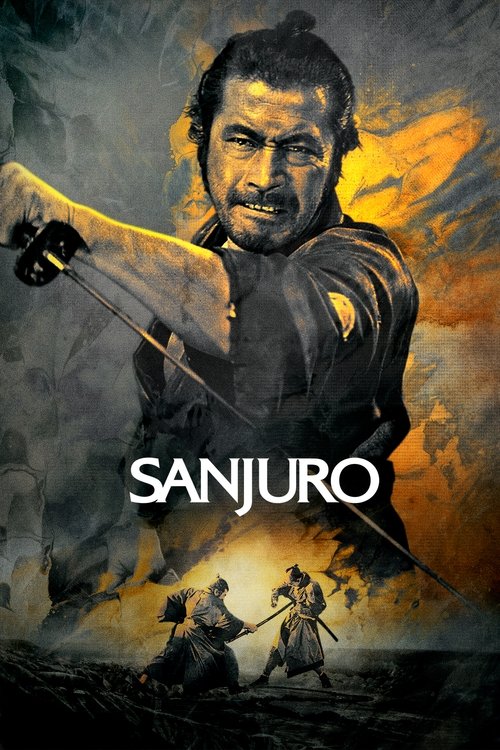
椿三十郎
"You cut well, but the best sword stays in its sheath!"
Sanjuro - Symbolism & Philosophy
Symbols & Motifs
The Sheathed vs. The Unsheathed Sword
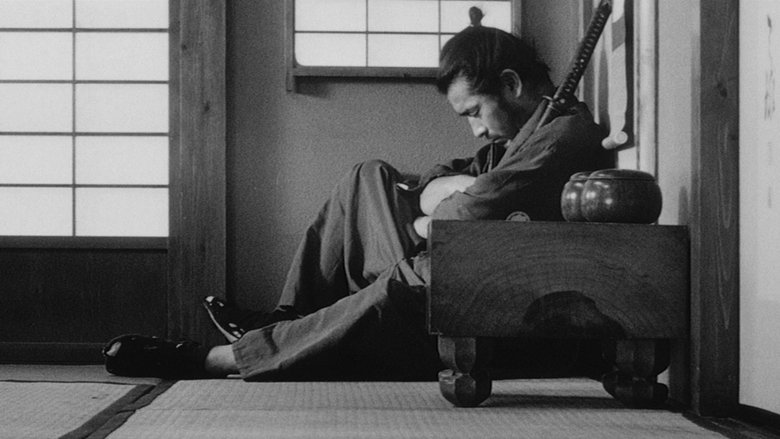
This is the film's central metaphor for true strength and wisdom. The Chamberlain's wife tells Sanjuro he is like a dangerous "drawn sword." The ideal, she suggests, is the "sheathed sword" – power held in reserve, used only when absolutely necessary. Sanjuro ultimately internalizes this lesson, recognizing his rival Muroto as another unsheathed sword, and sees their duel as a tragedy born of their shared nature.
This is first articulated by the Chamberlain's wife after she is rescued. Sanjuro then repeats this wisdom at the film's conclusion after killing Muroto, telling the young samurai that the lady was right and they should keep their own swords sheathed.
Camellias (Tsubaki)
The camellia flower (Tsubaki) carries multiple meanings. Sanjuro adopts it as part of his name. In Japanese culture, the way camellias drop their entire head at once can symbolize a noble death or, conversely, be seen as unlucky, resembling decapitation. Within the film, they are used practically as a signal. The contrast between the beautiful flowers floating downstream and the bloody violence they are meant to trigger highlights the absurdity of conflict. Kurosawa reportedly wanted the camellias to be the only colored objects in the black-and-white film, but the technology was not ready.
Sanjuro devises a plan to send a large number of camellias down a stream to signal the nine samurai when it is time to attack the compound where the Chamberlain is held. The plan is subverted when his captor, Muroto, becomes suspicious.
Philosophical Questions
What is the nature of true strength and honor?
The film directly challenges the traditional samurai definition of honor, which is tied to martial prowess and a willingness to die. Through the character of the Chamberlain's wife, it proposes an alternative: true strength lies in restraint, wisdom, and the ability to avoid conflict. The central metaphor of the "sheathed sword" argues that power is most profound when it is controlled. Sanjuro's journey is one of realizing that his skill with a sword is a "bad habit" rather than the pinnacle of his being.
Can a person defined by violence ever truly escape their nature?
"Sanjuro" leaves this question ambiguous. The protagonist learns a profound lesson about the futility and ugliness of killing, yet the film ends with him walking away alone, still a ronin. He rejects the community and stability he helped create, warning the young samurai not to follow him under threat of death. This suggests that while he may have gained wisdom, he is still defined by his violent past and capabilities, unable or unwilling to integrate into the peaceful world he helped restore. He is a tool for restoring order, but not one that can exist within it.
Core Meaning
The core meaning of "Sanjuro" revolves around a critique of the glorified image of the samurai and the nature of violence. Through the wisdom of the Chamberlain's wife, the film posits that the best sword is one that remains in its sheath. Sanjuro, a master of violence, is forced to confront the idea that killing is a "bad habit" and that true strength lies in restraint and wisdom, not just martial prowess. The film satirizes the rigid, often foolish adherence to the samurai code by the nine young men, contrasting their idealism with Sanjuro's pragmatic and cynical approach. Ultimately, the film suggests that violence is a tragic, ugly necessity, not a source of glory, a lesson Sanjuro tries to impart after the brutal final duel.