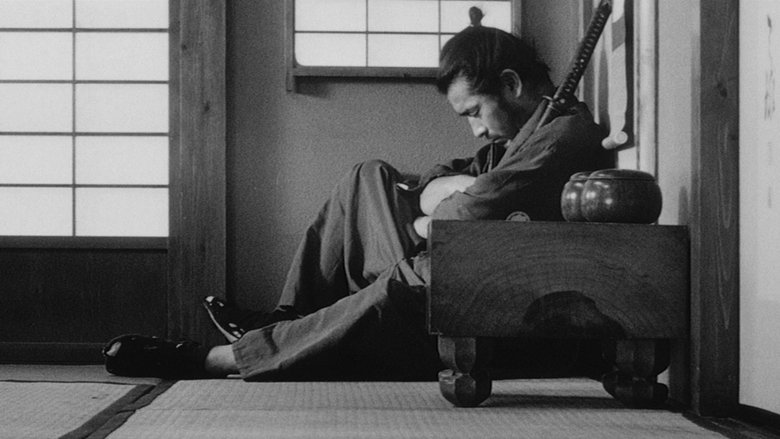
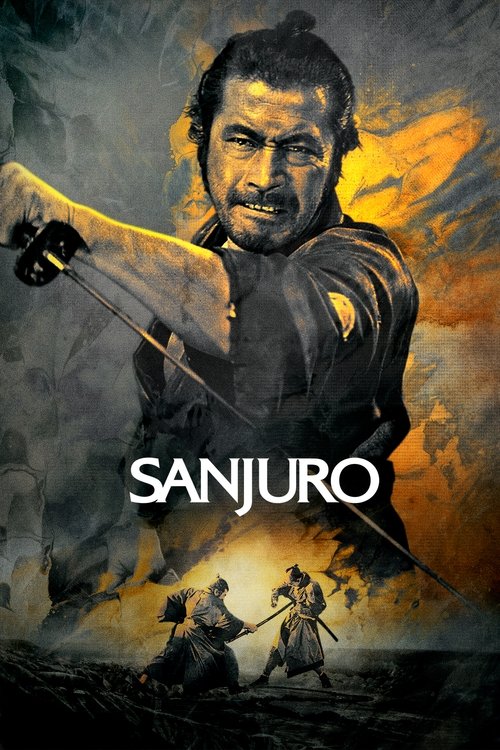
椿三十郎
"You cut well, but the best sword stays in its sheath!"
Director: Akira Kurosawa
Cast: Toshirō Mifune, Tatsuya Nakadai, Keiju Kobayashi, Yūzō Kayama, Reiko Dan
Sanjuro — Movie Quotes
Memorable Quotes
The best sword is kept in its sheath.
Context
The Chamberlain's wife first says this to Sanjuro, observing that he is like a dangerous "drawn sword." Sanjuro is initially taken aback but internalizes the lesson. He repeats the line to the young samurai at the end of the film after the tragic duel with Muroto, confirming his character's growth.
Meaning
This quote encapsulates the film's core theme. It argues that true strength and mastery are not demonstrated by constant displays of power and violence, but by restraint and the wisdom to know when *not* to fight. It's a direct critique of the glorification of violence inherent in the samurai mythos.
He was exactly like me. A drawn sword.
Context
Sanjuro says this immediately after killing Muroto in the final duel. He becomes angry when the young samurai cheer his victory, trying to make them understand the grim reality of what just happened.
Meaning
With this line, Sanjuro acknowledges his rival, Muroto, as his equal and his dark reflection. He sees that they are both defined by their readiness to kill and that this shared nature made their fatal confrontation inevitable. It is a moment of self-realization and regret, where he understands that his 'victory' is also a tragedy and a form of self-destruction.
Killing people is a bad habit.
Context
The Chamberlain's wife calmly says this to Sanjuro after he has skillfully, and violently, dispatched a number of guards to rescue her and her daughter. Her gentle disapproval has a greater effect on him than any threat.
Meaning
This simple, almost naive-sounding statement is a profound moral challenge to Sanjuro and the entire samurai genre. It reframes killing not as a glorious or necessary act of a warrior, but as a common, negative behavior that should be controlled. It strips the violence of its mystique and exposes it as a crude habit.
Explore More About This Movie
Dive deeper into specific aspects of the movie with our detailed analysis pages