Scener ur ett äktenskap
Scenes from a Marriage - Ending Explained
⚠️ Spoiler Analysis
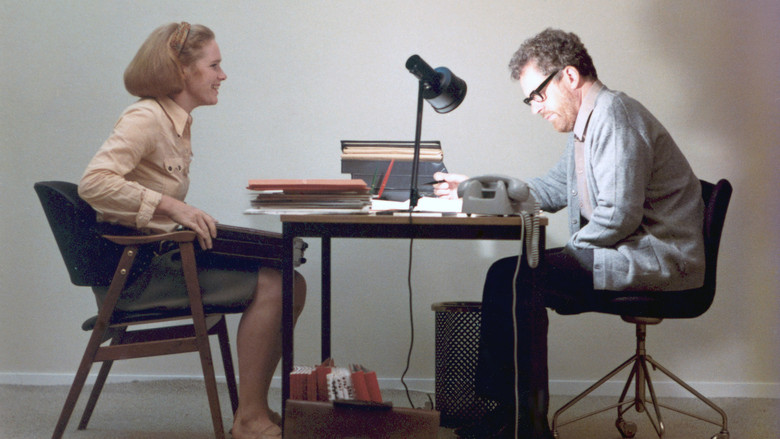
The plot of "Scenes from a Marriage" unfolds over six distinct chapters, chronicling the disintegration of Johan and Marianne's ten-year marriage. The story begins with them being portrayed as an ideal, affluent couple in a magazine. This facade quickly cracks. In the second part, 'The Art of Sweeping Things Under the Rug,' Marianne discovers she is pregnant and, after a tense discussion, decides to have an abortion, a key indicator of her deep-seated ambivalence.
The central turning point occurs when Johan calmly announces he is in love with a younger woman, Paula, and is leaving immediately for several months. This revelation shatters Marianne's world and initiates their painful separation. The subsequent chapters detail their acrimonious attempts to navigate the divorce. Their interactions oscillate wildly between nostalgia, tenderness, vicious verbal attacks, and, in one harrowing scene, physical violence, which culminates in a shocked Johan finally signing the divorce papers.
The ending provides no simple resolution. Years later, both Johan and Marianne have remarried. They meet secretly to begin an affair with each other. In a friend's country house, away from their new lives, they achieve a new kind of intimacy built on shared history and a brutal understanding of their mutual flaws. Marianne confesses a long-ago affair of her own, and after she awakens from a nightmare, Johan comforts her. He tells her they share an imperfect but real love. The film concludes with them in a quiet embrace, 'two lonely people' who have found a complex, undefined connection in the ruins of their marriage, suggesting their bond is permanent but can only exist outside of any formal structure.
Alternative Interpretations
While the primary interpretation of "Scenes from a Marriage" focuses on the failure of a specific couple and the oppressive nature of bourgeois marriage, alternative readings exist. One perspective sees the film not as a tragedy, but as a story of liberation, particularly for Marianne. From this viewpoint, the destruction of the marriage is a necessary, albeit painful, catalyst for her to achieve self-awareness and independence, breaking free from a patriarchal structure that had defined her. Her journey is one of profound personal growth that would have been impossible within the confines of her initial relationship with Johan.
Another interpretation views the ending less as a cynical commentary on imperfect love and more as a radical redefinition of it. Johan and Marianne's final state—divorced, married to others, but meeting as secret lovers—can be seen as Bergman's suggestion that the most profound connections exist outside of societal institutions. By shedding the roles of 'husband' and 'wife,' they are finally able to connect as two flawed, honest human beings. Their love isn't a failure that couldn't survive marriage, but rather a unique bond that could only truly flourish once freed from it.
A more philosophical or existentialist reading might see the marriage itself as a metaphor for the human condition. Johan's monologues on the absolute nature of loneliness suggest that the relationship's failure is not due to personal flaws but is an inevitable consequence of existential solitude. In this light, all relationships are merely temporary illusions we construct to ward off the inherent meaninglessness of existence. Their inability to ever fully connect is a reflection of a universal human struggle.