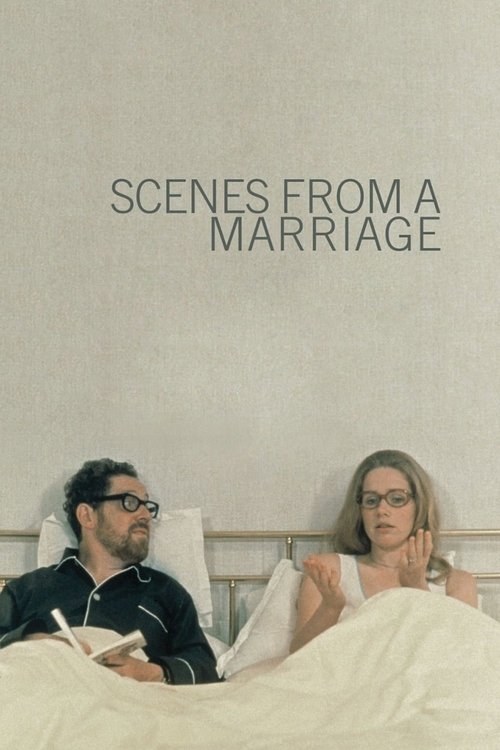
Scenes from a Marriage
Scener ur ett äktenskap
Overview
"Scenes from a Marriage" chronicles the decade-long dissolution of the seemingly perfect union between Marianne, a family lawyer, and Johan, a university professor. Initially presented as an ideal couple to a magazine, their relationship begins to unravel under the weight of unspoken frustrations, emotional neglect, and eventual infidelity. The film, originally a six-part Swedish television series, is structured in chapters that capture pivotal moments of their lives together and apart.
We witness their painfully honest conversations, explosive arguments, attempts at reconciliation, and the quiet moments of despair that define their separation and eventual divorce. As they navigate new partners and individual growth, they find themselves continually drawn back to one another, bound by a complex connection that transcends the confines of marriage. The narrative explores the brutal, tender, and contradictory nature of a long-term relationship, peeling back layers of societal expectation and personal delusion to examine the raw core of human connection.
Core Meaning
Ingmar Bergman's core message in "Scenes from a Marriage" is a profound and unsettling exploration of the fragility of love and the institution of marriage. Bergman suggests that the bourgeois ideal of a secure, orderly life can emotionally suffocate individuals, leading to a state of "emotional illiteracy." The film argues that true intimacy requires a brutal honesty that societal conventions and personal fears often suppress. It posits that beneath the veneer of a successful marriage can lie deep-seated loneliness and a failure to truly know one's partner or oneself. Ultimately, the film suggests that love is not a static state of contentment but a dynamic, often painful process of destruction and reinvention, and that a meaningful connection can sometimes only be found after the formal structure of marriage has been stripped away.
Thematic DNA
The Illusions of Marriage and Bourgeois Security
The film systematically dismantles the concept of the perfect middle-class marriage. Johan and Marianne initially present themselves as a happy, successful couple, embodying security and contentment. However, Bergman reveals this as a facade, an 'art of sweeping things under the rug.' Their comfortable life has bred complacency and an inability to communicate honestly about their desires and dissatisfactions. Johan's description of their marriage as built on 'security, order, contentment, loyalty' conspicuously omits love, highlighting how the structure has superseded genuine emotional connection. The violent arguments of their friends, Peter and Katarina, serve as a raw, unfiltered version of the conflict simmering beneath Johan and Marianne's polite exterior.
Communication and Emotional Illiteracy
A central theme is the failure of communication. Johan and Marianne talk, but they rarely connect on a deeper emotional level. They are, as Johan eventually admits, 'emotional illiterates.' They avoid difficult conversations and suppress their true feelings for the sake of maintaining peace. It is only after Johan's affair comes to light that the floodgates of honest, albeit brutal, communication open. The film is composed largely of intense, dialogue-driven scenes where the characters strip each other bare with words, revealing years of pent-up resentment, fear, and longing. Their journey is one of learning a new, more painful but authentic language of emotion.
Love, Loneliness, and Interdependence
The film explores the paradoxical nature of love and loneliness. Even when together, Johan and Marianne experience profound isolation. Johan expresses a belief that loneliness is an absolute, and all forms of togetherness are illusions. Yet, despite the pain they inflict on each other, they remain inextricably linked. After their divorce, they find they cannot stay away from each other, continuing an affair while married to other people. This suggests a deep, imperfect love and interdependence that defies conventional definitions. Marianne expresses the idea that 'you have to have someone's hand to hold,' challenging Johan's gospel of isolation and underscoring a fundamental human need for connection, however flawed.
Identity and Self-Discovery
The breakdown of the marriage forces both characters into a painful process of self-discovery. Marianne, in particular, undergoes a significant transformation. Initially accommodating and uncertain, she grows stronger and more self-aware after the separation, discovering her own desires and sense of self outside of her identity as a wife. Johan, stripped of his comfortable family life, is forced to confront his own mediocrity and insecurities. The 'scenes' of their marriage are also scenes from their individual lives, charting their evolution from two halves of a conventional whole into separate, more fully realized individuals who can only truly see each other once they are no longer bound together.
Character Analysis
Marianne
Liv Ullmann
Motivation
Initially motivated by a desire for security, stability, and the preservation of her family unit, Marianne's motivation shifts toward a deeper need for self-knowledge and authentic emotional connection. She is driven to understand why her marriage failed and to find a way to love and be loved without sacrificing her own identity.
Character Arc
Marianne begins as the seemingly content, accommodating wife, a successful divorce lawyer who ironically seems unaware of the deep cracks in her own marriage. Initially, she is emotionally reserved and struggles to articulate her own needs. Johan's departure shatters her world but also catalyzes a profound personal transformation. She moves through stages of grief, anger, and introspection, eventually emerging as a more independent, self-aware, and sexually confident woman. Her journey is one from passive partner to an individual who actively seeks to understand love, connection, and her own identity, ultimately finding a more honest, albeit unconventional, relationship with Johan.
Johan
Erland Josephson
Motivation
Johan is motivated by a fear of aging and mediocrity, and a desperate desire for passion, validation, and a sense of freedom from the perceived constraints of his bourgeois life. He seeks to escape a feeling of being emotionally stifled, yet his actions are often driven by selfish impulse rather than genuine self-reflection.
Character Arc
Johan is an associate professor who is outwardly charming but inwardly arrogant, selfish, and deeply insecure. He initiates the separation, seeking freedom and passion with a younger woman, Paula. However, his flight from the marriage is also a flight from himself. His affair fails to bring him lasting happiness, and he is forced to confront his professional mediocrity and emotional limitations. While he causes immense pain, he is not a simple villain. His arc reveals a man trapped by his own ego and intellectualizations, who slowly learns humility through loss. He eventually recognizes his deep-seated, albeit flawed, connection to Marianne, moving from a place of selfish cruelty to a more vulnerable, honest engagement with her.
Peter and Katarina
Jan Malmsjö and Bibi Andersson
Motivation
Their primary motivation within the narrative is to reveal the potential for ugliness and despair within a marriage. They are driven by years of mutual resentment and loathing, compelled to inflict emotional pain on each other in a desperate, destructive cycle.
Character Arc
Peter and Katarina are friends of the central couple who appear in the first episode. They do not have a developmental arc in the traditional sense; rather, they serve as a dramatic foil. Their marriage is openly and viciously hostile, characterized by public humiliation and drunken cruelty. They represent the brutal, unspoken truth of a failed marriage, foreshadowing the emotional violence that will later erupt between the more 'civilized' Johan and Marianne. Their scene is a condensed, explosive version of the ten-year decay that the rest of the film chronicles.
Symbols & Motifs
The Marital Bed
The bed symbolizes the shifting intimacy, emotional distance, and battleground of the marriage. It represents the core of their relationship, where vulnerability, desire, conflict, and comfort are negotiated.
The film features numerous crucial scenes in the bedroom. It is where they discuss their lackluster sex life, where Johan confesses his affair, and where they lie together in turmoil. The physical space of the bed reflects their emotional state—sometimes a vast, empty space between them, other times a place of desperate clinging or violent confrontation.
The House
The house represents the container of their marriage—the bourgeois security and the life they have built. As their relationship decays, the house transforms from a symbol of stability into a claustrophobic space and, eventually, a repository of memories and ghosts of the past.
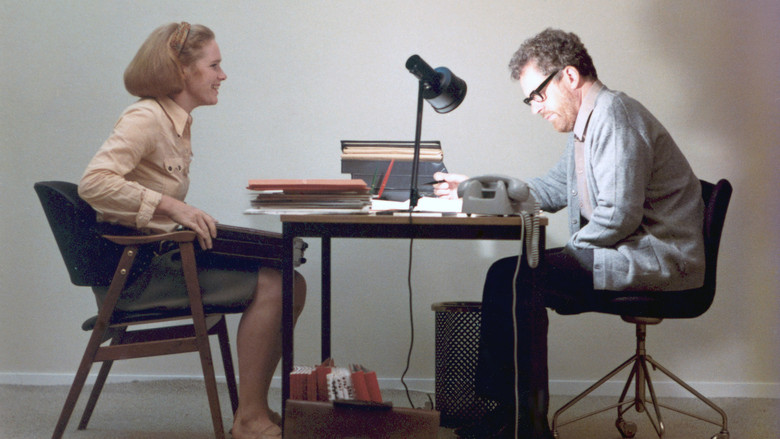
In the beginning, their home is the setting for the idealized magazine interview. During the divorce, it becomes the office where they brutally sign the divorce papers. Years later, when they are having an affair, they secretly meet at a friend's country house, a neutral space where they can forge a new kind of connection outside the confines of their old life.
The Telephone
The telephone acts as a conduit for painful revelations and failed connections. It often delivers news that shatters the fragile peace of the characters' lives, symbolizing the intrusion of outside realities into their insulated world.
A crucial moment occurs when Marianne, after Johan leaves, calls a friend for support only to discover that her friends already knew about the affair, amplifying her sense of isolation and betrayal. Phone calls throughout the film often interrupt tense moments or signal a turning point in the narrative, highlighting the characters' inability to communicate directly and honestly.
Memorable Quotes
Vi är känslomässiga analfabeter.
— Johan
Context:
This is said during one of their many post-mortems on their relationship, as they try to understand what went wrong. It's a moment of devastating clarity, where the intellectual professor admits that all their knowledge and sophistication has left them completely unequipped for the complexities of love.
Meaning:
Translated as "We're emotional illiterates." This line is the thematic core of the film. It's Johan's diagnosis of their inability, and perhaps society's at large, to understand and articulate genuine feelings, despite being educated and articulate in every other aspect of life. It encapsulates their failure to communicate and connect on a truly intimate level.
Trygghet, ordning, trivsel, lojalitet.
— Johan
Context:
This is stated during the opening interview where Johan and Marianne are presented as an ideal couple. The reporter asks about their seemingly perfect marriage, and this sterile, business-like list is Johan's response, betraying the emotional emptiness at the heart of their relationship before any conflict has even begun.
Meaning:
Translated as "Security, order, contentment, loyalty." This is Johan's description of his marriage to the magazine reporter in the first scene. The quote is profoundly significant for what it omits: love, passion, and excitement. It reveals that from the very beginning, their marriage was built on a foundation of comfortable, bourgeois stability rather than deep emotional connection, setting the stage for its eventual collapse.
Ibland, när jag ligger här och du sover, får jag en känsla av att vi är två ensamma människor som gett varandra i uppdrag att gemensamt vaka över, försvara och vårda någonting som vi genast skulle förlora om vi släppte taget.
— Marianne
Context:
This is an internal thought from Marianne early in the film, revealing the undercurrent of anxiety and loneliness that exists even within the seemingly stable marriage. It's a moment of quiet introspection that foreshadows the fragility of their connection.
Meaning:
Translated as "Sometimes when I lie here and you're sleeping, I get a feeling that we are two lonely people who have been given the task of jointly watching over, defending, and caring for something that we would immediately lose if we let go." This quote beautifully captures the film's theme of interdependence and the fear of loneliness. It suggests that their bond is less about love and more about a shared, fearful duty to maintain a structure that protects them from the void of being alone.
Philosophical Questions
Can true intimacy exist within the confines of institutionalized marriage?
The film relentlessly questions whether the societal expectations, roles, and ideal of security inherent in marriage ultimately suffocate genuine emotional honesty. Johan and Marianne's relationship is most 'successful' when it is a performance for a magazine and most 'real' when it is falling apart. Their eventual connection as lovers, outside the bounds of any formal commitment, suggests that true intimacy for them was only possible after the institution was destroyed, raising the question of whether the structure itself is the impediment to love.
Is loneliness a fundamental, unchangeable part of the human condition?
Through Johan's character, the film explores the existentialist idea that loneliness is absolute and that all attempts at connection are ultimately illusions designed to comfort us. The entire narrative can be seen as a case study for this proposition. Even in their most intimate moments, a gap remains between the characters. The film forces the audience to consider whether perfect communion with another person is ever truly possible, or if we are all fundamentally isolated, even from those we love most.
Is the destruction of a relationship a necessary prerequisite for self-discovery?
Both Marianne and Johan are forced into a period of painful self-examination only after their comfortable life is shattered. Marianne, in particular, blossoms into a more complex and self-assured individual after the divorce. The film poses a difficult question: Must we lose the foundational structures of our lives—like a marriage—to truly find out who we are? It suggests that comfort and security can lead to emotional and psychological stagnation, and that crisis, while devastating, can be a powerful and necessary catalyst for growth.
Alternative Interpretations
While the primary interpretation of "Scenes from a Marriage" focuses on the failure of a specific couple and the oppressive nature of bourgeois marriage, alternative readings exist. One perspective sees the film not as a tragedy, but as a story of liberation, particularly for Marianne. From this viewpoint, the destruction of the marriage is a necessary, albeit painful, catalyst for her to achieve self-awareness and independence, breaking free from a patriarchal structure that had defined her. Her journey is one of profound personal growth that would have been impossible within the confines of her initial relationship with Johan.
Another interpretation views the ending less as a cynical commentary on imperfect love and more as a radical redefinition of it. Johan and Marianne's final state—divorced, married to others, but meeting as secret lovers—can be seen as Bergman's suggestion that the most profound connections exist outside of societal institutions. By shedding the roles of 'husband' and 'wife,' they are finally able to connect as two flawed, honest human beings. Their love isn't a failure that couldn't survive marriage, but rather a unique bond that could only truly flourish once freed from it.
A more philosophical or existentialist reading might see the marriage itself as a metaphor for the human condition. Johan's monologues on the absolute nature of loneliness suggest that the relationship's failure is not due to personal flaws but is an inevitable consequence of existential solitude. In this light, all relationships are merely temporary illusions we construct to ward off the inherent meaninglessness of existence. Their inability to ever fully connect is a reflection of a universal human struggle.
Cultural Impact
"Scenes from a Marriage" had a seismic cultural impact, particularly in Scandinavia and Europe, that transcended the screen. Broadcast on Swedish television in 1973, it was watched by a massive portion of the population and became a national event. Its unflinching and realistic depiction of a marriage's breakdown resonated so deeply with audiences that it was widely credited with causing a significant increase in the divorce rate. While this claim is often linked to a concurrent liberalization of divorce laws in Sweden, the series undeniably opened up public discourse about marital dissatisfaction, infidelity, and the restrictive nature of traditional relationships.
Its influence on cinema and television has been profound and enduring. Filmmakers like Woody Allen (particularly in "Husbands and Wives") and Richard Linklater have cited it as a major influence. More recently, Noah Baumbach's "Marriage Story" (2019) is seen as a direct descendant, echoing its themes, raw emotional intensity, and dialogue-heavy scenes. The creator of the American TV show "Dallas," David Jacobs, originally envisioned an American version of the series.
The film's focus on intimate, psychological realism, characterized by Sven Nykvist's use of intense close-ups, created a new language for depicting relationships on screen. It legitimized television as a medium for serious, adult drama, with Bergman himself calling it an 'aesthetically superior everyday product for TV'. The story's timeless exploration of love, resentment, and identity has led to numerous stage adaptations and a 2021 English-language HBO remake starring Oscar Isaac and Jessica Chastain, demonstrating its continued relevance decades after its initial release.
Audience Reception
Upon its initial television broadcast in Sweden, "Scenes from a Marriage" was a cultural phenomenon, commanding a massive audience and sparking widespread public conversation about the nature of marriage and relationships. The reaction was intensely polarized. Many viewers praised the series for its searing honesty, raw emotional power, and relatable depiction of marital strife. The performances by Liv Ullmann and Erland Josephson were almost universally acclaimed for their depth and vulnerability. The series was lauded for its intelligent, penetrating script and Bergman's masterful direction, which used intimate close-ups to create an almost unbearable sense of psychological realism.
However, the film also generated significant controversy. It was widely criticized by conservative voices for its perceived negative portrayal of the institution of marriage, with many blaming the series for a documented rise in divorce rates in the years that followed. Some found the emotional brutality and relentless psychological dissection to be depressing and overly pessimistic. Despite the controversy, its critical reception internationally (for the theatrical version) was overwhelmingly positive, earning it a Golden Globe for Best Foreign Language Film and solidifying its status as a masterpiece of intimate cinema.
Interesting Facts
- The film is a condensed theatrical version of a six-part Swedish television miniseries, which had a total runtime of 281 minutes compared to the film's 167 minutes.
- Writer-director Ingmar Bergman wrote the screenplay in three months, drawing heavily on his own personal experiences, including his tumultuous relationship with lead actress Liv Ullmann and his own dissolved marriages.
- The series was a massive cultural phenomenon in Sweden, watched by nearly half the population at the time.
- The show was famously and controversially blamed for a spike in divorce rates in Sweden and across Europe in the year following its broadcast. However, this coincided with a major, simplifying reform of Swedish divorce laws in 1973-74.
- The production was shot on a very small budget of approximately $150,000, primarily in Stockholm and on the island of Fårö in 1972.
- Due to its initial television broadcast, the film was deemed ineligible for the Academy Award for Best Foreign Language Film, a decision that prompted a protest from many Hollywood directors.
- A sequel, "Saraband," was made by Bergman in 2003, reuniting Liv Ullmann and Erland Josephson as Marianne and Johan 30 years later. It was Bergman's final film.
- The characters of Peter and Katarina later became the protagonists of another Bergman film, "From the Life of the Marionettes" (1980).
⚠️ Spoiler Analysis
Click to reveal detailed analysis with spoilers
Frequently Asked Questions
Explore More About This Movie
Dive deeper into specific aspects of the movie with our detailed analysis pages
Comments (0)
No comments yet. Be the first to share your thoughts!