Scooby-Doo! Camp Scare
A nostalgic, spooky comedy where classic campfire ghost stories ignite into thrilling reality, casting long, menacing shadows over the joyous rites of summer camp.
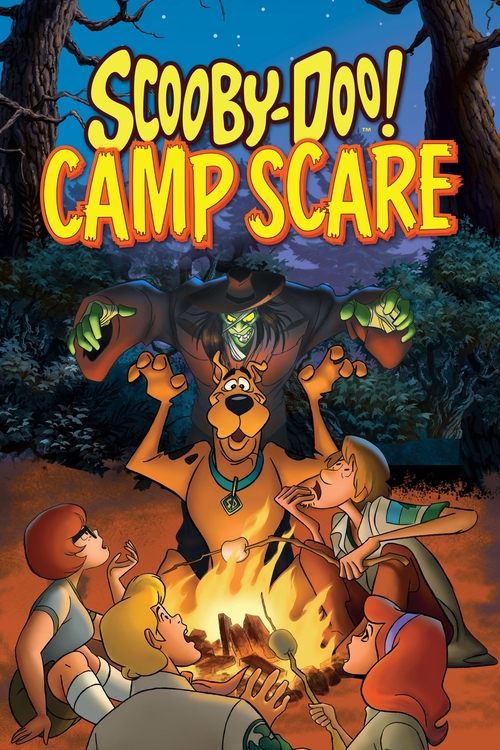
Scooby-Doo! Camp Scare

"Back-to-nature chills and thrills!"

14 September 2010 United States of America 72 min ⭐ 7.8 (316)
Director: Ethan Spaulding
Cast: Frank Welker, Mindy Cohn, Matthew Lillard, Grey DeLisle, Dee Bradley Baker
Animation Family Comedy Mystery
Greed vs. Tradition Facing Fear Teamwork and Mentorship Deception and Disguise

Scooby-Doo! Camp Scare - Ending Explained

⚠️ Spoiler Analysis

The central mystery of Scooby-Doo! Camp Scare revolves around a dual-villain conspiracy. The culprits are Ranger John Knudsen and Deacon, one of the young campers. Their motive is to find the hidden treasure of deceased gangster Ricky LaRue, who told his cellmate, Babyface Boretti, where it was buried in the old mining town of Moose Creek. The town was flooded decades prior to create Big Moose Lake. The key to finding the treasure is that its location is revealed when the sun hits the town's steeple on the Summer Solstice.

The entire plot is a race against this deadline. Deacon is revealed to be the gangster Babyface Boretti in disguise, who posed as a nerdy camper to infiltrate the group and urge them to leave. Ranger Knudsen, who harbored a crush on Velma, performed the roles of all three monsters: the Woodsman, the Fishman, and the Spectre. Boretti stole an RV and sonar equipment from the rival Camp Big Moose to scan the lakebed, while Knudsen, as the Woodsman, terrorized Camp Little Moose to scare everyone away. As the Fishman, Knudsen could explore the underwater town. Their final plan involved using dynamite to destroy the dam, exposing the sunken town of Moose Creek so Boretti could retrieve the treasure at sunrise. The post-credits scene adds a final twist, revealing that while Knudsen impersonated the Spectre, a real, supernatural Spectre does indeed haunt Shadow Canyon.

Alternative Interpretations

While the film's plot is straightforward, some alternative readings are possible. One interpretation views the conflict between Camp Little Moose and Camp Big Moose as a commentary on gentrification and corporate takeover of local traditions. The rustic, community-focused Little Moose is literally being destroyed by a plot motivated by greed, while the sterile, high-tech Big Moose represents a soulless modernization. Fred's passionate defense of Little Moose can be seen as a fight to preserve authentic, local culture against encroaching corporate interests. Another, more subtle interpretation could explore the film's take on fear itself. The villains don't just scare people away; they appropriate and weaponize local folklore. This can be read as a metaphor for how media or powerful interests can twist cultural narratives to manipulate public fear for their own agenda. The post-credits reveal of the real Spectre also suggests a philosophical layer: while human greed is the primary antagonist, the film leaves room for the existence of genuine, unexplained phenomena, implying that the world is more mysterious than even Velma's logic can fully explain.