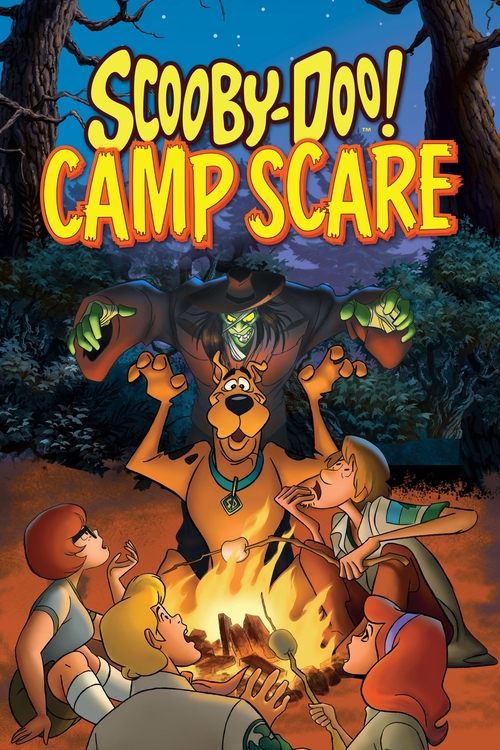
"Back-to-nature chills and thrills!"
Scooby-Doo! Camp Scare - Symbolism & Philosophy
Symbols & Motifs
Campfire Stories
The campfire stories represent the power of narrative and tradition. Initially, they are a source of communal fun and spooky entertainment. The villains corrupt this by bringing the legends to life, transforming shared cultural tales into instruments of terror. This symbolizes how stories and traditions can be manipulated for nefarious purposes.
The film opens with a camp counselor telling the legend of the Woodsman. Later, Fred tells the story of the Fishman, and the legend of the Spectre is also recounted. Each of these stories precedes the appearance of the actual monster, forming the basis of the mystery.
The Sunken Town of Moose Creek
The submerged town symbolizes a hidden past and buried secrets. Its discovery is the turning point in the mystery, revealing that the land holds a history far deeper and darker than the camp legends suggest. It is the literal location of the treasure, representing the forgotten source of the villains' greed.
Scooby-Doo first discovers a building at the bottom of Big Moose Lake during an attack by the Fishman. The gang later learns it was a mining town that was flooded to create the dam and lake, and it's where gangster Ricky LaRue's treasure is hidden. The film's climax takes place in the town after the dam is destroyed.
The Woodsman's Axe
The axe is a symbol of tangible and genuine danger. Unlike many Scooby-Doo villains whose tools are theatrical, the Woodsman's axe is presented as a real, sharp weapon. Its repeated use in destructive acts—destroying property and being thrown directly at the characters— elevates the threat level beyond a typical haunting, symbolizing that the stakes in this mystery are potentially lethal.
The Woodsman is seen wielding the axe from his first appearance, where he throws it at a fleeing counselor. He uses it to destroy the camp boathouse and repeatedly throws it near the gang during chases, reinforcing the sense of immediate physical danger.
Philosophical Questions
Are manufactured fears based on legends as powerful as tangible, real-world dangers?
The film explores this by presenting both types of threats. The monsters are manufactured fears, costumes and special effects designed to evoke terror based on campfire stories. However, the villains back up these illusions with real danger: a sharp axe, explosions, and the destruction of a dam. This demonstrates that the most effective way to manipulate people is to blend the psychological power of legendary fears with the immediate threat of physical harm, blurring the line between what is a story and what is a genuine danger.
What is the value of preserving tradition in the face of modernization and greed?
Fred's character is the embodiment of this question. His motivation is almost entirely based on the preservation of his nostalgic, positive experiences at Camp Little Moose. The plot's central conflict is a direct assault on this tradition by villains who see the land only for its monetary value. The film's resolution, where the two rival camps merge to create 'Camp Little Big Moose,' suggests a compromise: that tradition can survive and adapt by integrating new elements, rather than being completely erased by modernity.
Core Meaning
Scooby-Doo! Camp Scare explores the theme that greed can drive people to desecrate cherished traditions and endanger innocent lives. The villains are motivated by a hidden treasure, and in their pursuit, they manufacture terror by co-opting local legends, turning places of joy and nostalgia into zones of fear. The film champions the preservation of tradition and community, as exemplified by Fred's passionate efforts to save his childhood camp. It ultimately suggests that the real monsters are not the ghouls from campfire stories but rather humans corrupted by avarice, and that teamwork and a connection to the past are powerful forces to combat such modern-day evils.