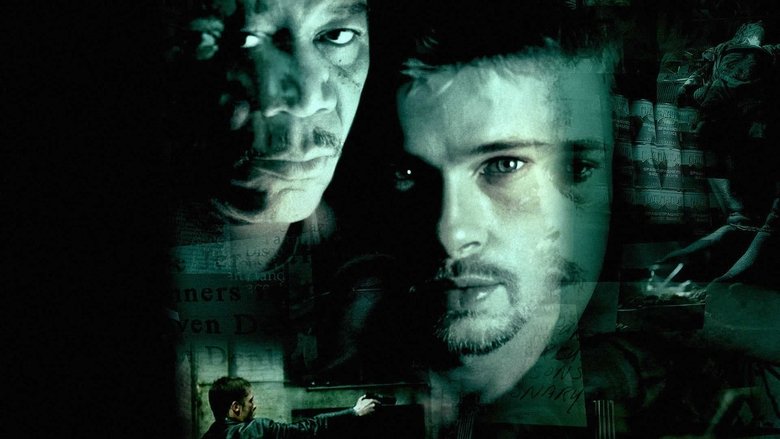
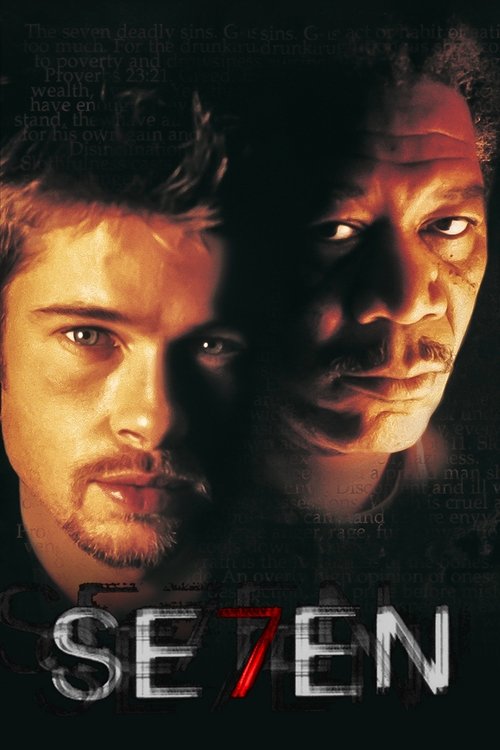
"Gluttony. Greed. Sloth. Envy. Wrath. Pride. Lust."
Director: David Fincher
Cast: Morgan Freeman, Brad Pitt, Gwyneth Paltrow, John Cassini, Peter Crombie
Se7en — Movie Quotes
Memorable Quotes
Ernest Hemingway once wrote, 'The world is a fine place and worth fighting for.' I agree with the second part.
Context
This line is spoken by Somerset after Mills has been taken away for killing John Doe. It is his final reflection on the horrific events that have transpired, showing that despite the victory of evil in this specific instance, he has chosen not to retreat into apathy but to remain engaged in the world.
Meaning
This quote, delivered in a voiceover at the very end of the film, encapsulates Somerset's transformation. It signifies his rejection of complete cynicism. While he acknowledges the profound darkness and corruption of the world, he has decided that the act of fighting against it still holds value. It's a bleakly optimistic conclusion, suggesting that hope lies not in winning, but in the refusal to give up.
What's in the box?!
Context
In the film's climax, a delivery driver brings a box to the remote desert location. Somerset opens it and is visibly horrified, warning Mills to stay away. John Doe begins to taunt Mills, alluding to the box containing the head of his wife, Tracy. Mills's repeated, increasingly frantic screams of this question lead up to him finally succumbing to his rage and killing Doe.
Meaning
This line has become iconic in pop culture, representing a moment of pure, agonizing suspense and horrific realization. It is the raw, desperate cry of a man on the precipice of understanding a truth so terrible it will destroy him. The power of the line lies in the fact that the audience, along with Mills, is forced to imagine the horror before it is confirmed.
Wanting people to listen, you can't just tap them on the shoulder anymore. You have to hit them with a sledgehammer.
Context
John Doe says this to Mills and Somerset while they are driving to the location of the final two victims. He is calmly explaining his rationale, presenting himself not as a madman but as a teacher and a moral crusader delivering a necessary, if brutal, lesson to the world.
Meaning
This quote is the core of John Doe's twisted philosophy and his justification for his horrific crimes. He believes that modern society is so desensitized and apathetic that only an act of extreme, theatrical violence can capture its attention and force it to confront its own sinfulness.
Apathy is the solution. I mean, it's easier to lose yourself in drugs than it is to cope with life. It's easier to steal what you want than it is to earn it. It's easier to beat a child than it is to raise it. Hell, love costs: it takes effort and work.
Context
Somerset delivers this monologue to Mills during one of their early conversations. He is explaining why he is retiring and why he can no longer bear to live in a city that he feels "nurtures apathy as if it was a virtue."
Meaning
This speech reveals the depth of Somerset's cynicism and disillusionment early in the film. He argues that apathy is not just a weakness but a logical and easier choice in a world full of pain and difficulty. It establishes his character's philosophical starting point, which is challenged throughout the narrative.
Explore More About This Movie
Dive deeper into specific aspects of the movie with our detailed analysis pages