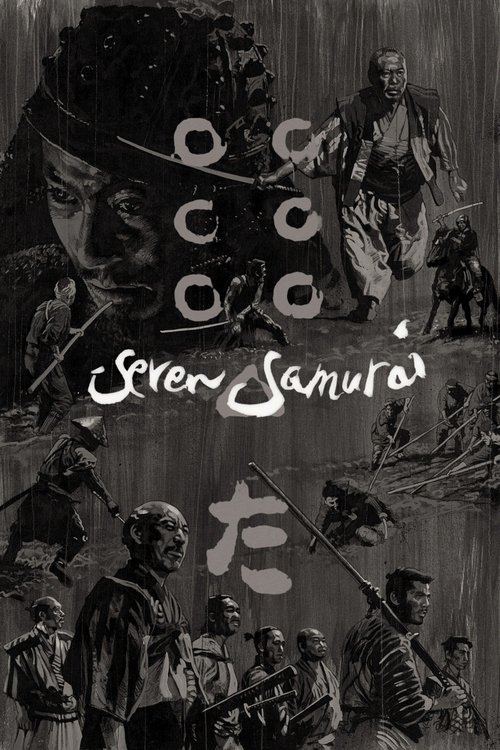
七人の侍
"Unmatched for suspense and spectacle!"
Seven Samurai - Symbolism & Philosophy
Symbols & Motifs
The Samurai Swords
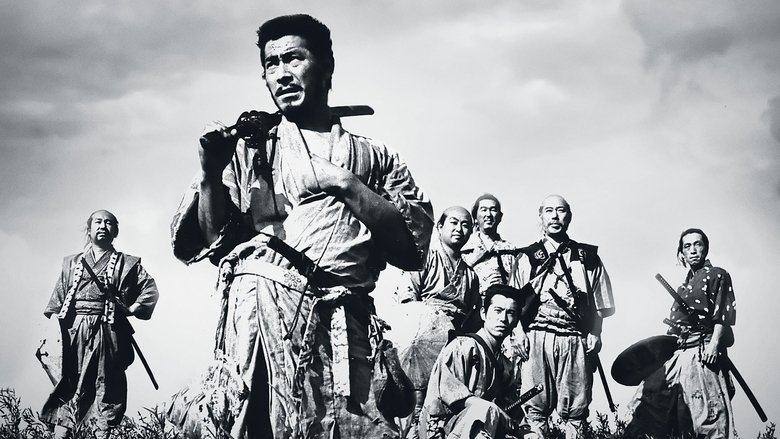
The swords represent the honor, duty, and identity of the samurai. They are a physical manifestation of their warrior status and their commitment to their code.
The swords are prominently featured throughout the film in the hands of the samurai. Kikuchiyo's comically large sword symbolizes his initial insecurity and his aspiration to be a true samurai.
Rain
The persistent rain during the final battle symbolizes the despair, hardship, and emotional turmoil of the characters. It creates a bleak and chaotic atmosphere, reflecting the brutality of the conflict.
The climactic battle takes place in a downpour, with the mud and rain adding to the visceral intensity of the fight. Kurosawa masterfully uses this natural element to heighten the drama and visual impact of the scene.
Kambei's Shaved Head
When Kambei shaves his top knot, a significant status symbol for a samurai, it represents his selfless nature and his willingness to abandon social conventions to do what is right. It becomes a symbol of his moral compass.
Early in the film, Kambei shaves his head to pose as a monk to rescue a kidnapped child. Throughout the film, he is often seen rubbing his shaved head when deep in thought, particularly when making difficult decisions.
Philosophical Questions
What is the true nature of heroism and self-sacrifice?
The film explores this question through the actions of the seven samurai, who risk their lives for a cause that offers them no material reward. Their motivations are complex, ranging from a sense of duty and honor to a desire to test their skills. The film suggests that true heroism is not about glory or recognition, but about protecting others and upholding one's principles, even in the face of death.
Can social and class barriers be overcome for a common good?
"Seven Samurai" examines the deep-seated prejudices and mistrust between the samurai and the farmers. Initially, there is a clear divide between the two groups. However, as they are forced to work together, they begin to see each other as individuals and develop a sense of camaraderie. The film suggests that while class distinctions are powerful, they can be transcended through shared struggle and a common purpose.
What is the meaning of victory in the face of loss?
The film's poignant ending challenges the traditional notion of a triumphant victory. Although the village is saved, four of the seven samurai are killed. The surviving samurai are left to contemplate their purpose as the farmers, the true victors, return to their timeless connection with the land. This raises the question of what has truly been won and at what cost.
Core Meaning
"Seven Samurai" is a profound exploration of honor, duty, and the human condition in the face of overwhelming adversity. Director Akira Kurosawa delves into the complex social dynamics of feudal Japan, particularly the rigid class structures that separated the samurai and the farmers. The film questions the nature of heroism, suggesting that true strength lies not just in martial prowess but in self-sacrifice and compassion for others. Ultimately, the film presents a bittersweet victory, as the surviving samurai reflect on their transient role and the enduring resilience of the land and its people, leaving the audience to ponder the true meaning of winning and losing.