Seven Samurai
An epic, black-and-white saga of honor and despair, where desperate farmers and masterless samurai unite against marauding bandits in a torrent of rain and a clash of steel.
Seven Samurai

Seven Samurai

七人の侍

"Unmatched for suspense and spectacle!"

26 April 1954 Japan 207 min ⭐ 8.5 (3,995)
Director: Akira Kurosawa
Cast: Toshirō Mifune, Takashi Shimura, Yoshio Inaba, Seiji Miyaguchi, Minoru Chiaki
Drama Action
Honor and Duty Class and Social Structure Sacrifice and Survival The Nature of a 'Samurai'
Budget: $2,000,000
Box Office: $105,000,000

Overview

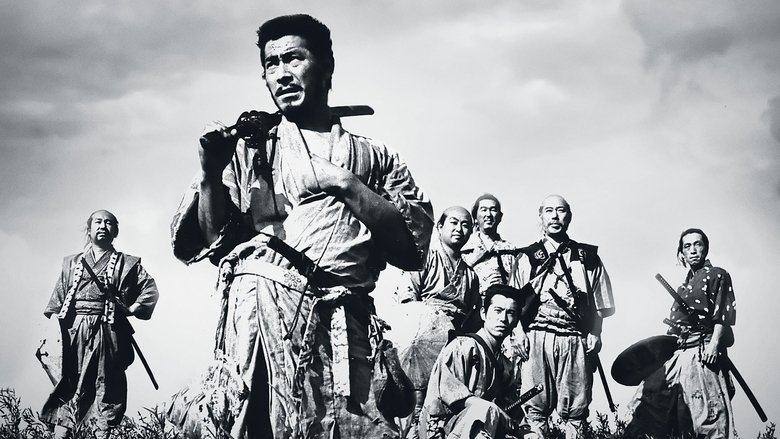
Set in 16th-century Japan during a time of civil war, "Seven Samurai" tells the story of a destitute farming village that is repeatedly plundered by a ruthless gang of bandits. Faced with starvation, the villagers decide to hire samurai to protect them. Their meager offer of food in exchange for protection attracts a small band of ronin (masterless samurai), each with their own unique skills and personalities.

Led by the wise and battle-weary Kambei, the samurai train the villagers to defend themselves and fortify their village for the inevitable attack. As the samurai and farmers work together, a bond forms between the two disparate social classes, challenging the rigid societal norms of the time. The film culminates in a series of epic battles as the small group of defenders faces the overwhelming force of the bandits.

Core Meaning

"Seven Samurai" is a profound exploration of honor, duty, and the human condition in the face of overwhelming adversity. Director Akira Kurosawa delves into the complex social dynamics of feudal Japan, particularly the rigid class structures that separated the samurai and the farmers. The film questions the nature of heroism, suggesting that true strength lies not just in martial prowess but in self-sacrifice and compassion for others. Ultimately, the film presents a bittersweet victory, as the surviving samurai reflect on their transient role and the enduring resilience of the land and its people, leaving the audience to ponder the true meaning of winning and losing.

Thematic DNA

Honor and Duty 30%
Class and Social Structure 25%
Sacrifice and Survival 25%
The Nature of a 'Samurai' 20%

Honor and Duty

The samurai are guided by their personal codes of honor and a sense of duty, which compels them to take on a dangerous and thankless task for little more than food. This theme is central to their identity and actions throughout the film, as they grapple with their responsibilities in a changing world where the traditional samurai class is losing its relevance.

Class and Social Structure

The film starkly portrays the rigid social hierarchy of feudal Japan, with a clear division between the warrior class (samurai) and the peasant class (farmers). The collaboration between these two groups is initially fraught with mistrust and prejudice, but they eventually forge a bond based on mutual respect and a shared goal of survival. This theme explores the potential for unity and the blurring of class lines in times of crisis.

Sacrifice and Survival

The samurai's willingness to risk their lives for a village that can barely sustain them highlights the theme of sacrifice. Both the samurai and the villagers must make immense sacrifices to survive the bandit attacks. The film juxtaposes the preparations for battle with the life-giving harvest, underscoring the preciousness of life and the lengths people will go to protect it.

The Nature of a 'Samurai'

The film delves into the question of what it truly means to be a samurai, moving beyond the stereotypes of the warrior class. The character of Kikuchiyo, a farmer's son who desperately wants to be a samurai, embodies this exploration of identity. Ultimately, the film suggests that the title of 'samurai' is earned through actions and character rather than birthright.

Character Analysis

Kambei Shimada

Takashi Shimura

Archetype: The Mentor/Leader
Key Trait: Wise

Motivation

To uphold his sense of honor and to protect the helpless, even when there is no personal gain.

Character Arc

A wise and experienced ronin, Kambei is the reluctant leader of the seven. He has grown weary of battle but agrees to help the villagers out of a sense of duty and compassion. Throughout the film, he serves as a calming and strategic presence, guiding both the samurai and the villagers. His arc is one of quiet resignation to his role as a warrior, even as he recognizes the futility of his profession in a changing world.

Kikuchiyo

Toshirō Mifune

Archetype: The Wild Card/Anti-Hero
Key Trait: Boisterous

Motivation

To be accepted as a samurai and to overcome the shame of his peasant origins.

Character Arc

A boisterous and impulsive farmer's son who pretends to be a samurai. Initially a source of comic relief, Kikuchiyo's character deepens as he reveals his tragic past and becomes a bridge between the samurai and the villagers. His journey is about finding his true identity and earning the respect of the samurai through his bravery and loyalty. His death is a poignant moment, solidifying his status as a true samurai in the eyes of his comrades and the audience.

Kyūzō

Seiji Miyaguchi

Archetype: The Master Swordsman
Key Trait: Stoic

Motivation

To perfect his swordsmanship and to test his skills in a worthy cause.

Character Arc

A quiet and stoic master swordsman who is initially uninterested in joining the group. He is the personification of skill and dedication to the warrior's craft. His arc is subtle, as he is a man of few words, but his actions demonstrate his unwavering commitment to the cause. He becomes a revered and almost mythical figure among the group.

Katsushirō Okamoto

Isao Kimura

Archetype: The Ingénue/The Student
Key Trait: Idealistic

Motivation

To become a great samurai like Kambei and to experience the life of a warrior.

Character Arc

A young, inexperienced, and idealistic samurai from a wealthy family who idolizes Kambei. He is eager to prove himself in battle and learns harsh lessons about the realities of war and the complexities of human relationships. His infatuation with a village girl, Shino, adds a romantic subplot and highlights the class divide. By the end of the film, he has lost his naivety and has become a more seasoned warrior.

Symbols & Motifs

The Samurai Swords

Meaning:

The swords represent the honor, duty, and identity of the samurai. They are a physical manifestation of their warrior status and their commitment to their code.

Context:

The swords are prominently featured throughout the film in the hands of the samurai. Kikuchiyo's comically large sword symbolizes his initial insecurity and his aspiration to be a true samurai.

Rain

Meaning:

The persistent rain during the final battle symbolizes the despair, hardship, and emotional turmoil of the characters. It creates a bleak and chaotic atmosphere, reflecting the brutality of the conflict.

Context:

The climactic battle takes place in a downpour, with the mud and rain adding to the visceral intensity of the fight. Kurosawa masterfully uses this natural element to heighten the drama and visual impact of the scene.

Kambei's Shaved Head

Meaning:

When Kambei shaves his top knot, a significant status symbol for a samurai, it represents his selfless nature and his willingness to abandon social conventions to do what is right. It becomes a symbol of his moral compass.

Context:

Early in the film, Kambei shaves his head to pose as a monk to rescue a kidnapped child. Throughout the film, he is often seen rubbing his shaved head when deep in thought, particularly when making difficult decisions.

Memorable Quotes

百姓ほど寝ても覚めても心配ばかりしている生き物はねえ。雨が降れば降りすぎると心配し、照れば水がなくなると心配し…

— Manzō

Context:

Spoken by Manzō, the father of Shino, as he expresses the deep-seated fear and pessimism that permeate the village due to the constant threat of the bandits.

Meaning:

"All farmers ever do is worry, whether the rain falls, the sun shines or the wind blows. In short, all they know is fear." This quote encapsulates the perpetual anxiety and hardship of the farmers' lives, constantly at the mercy of nature and human threats.

また負け戦だったな。…勝ったのはあの百姓たちだ。わしらではない。

— Kambei Shimada

Context:

Kambei says this to the other surviving samurai as they watch the joyful villagers planting rice after the final battle. It is a moment of quiet realization about their place in the world.

Meaning:

"So. Again we are defeated. The farmers have won. Not us." This final line of the film offers a profound and bittersweet reflection on the nature of victory. While the samurai have successfully defended the village, they are ultimately outsiders whose way of life is fading. The true victors are the farmers, who are rooted in the land and will endure.

腹のへった侍を探すんだ。熊だって腹がへりゃ山から下りてくらあ。

— Gisaku (Village Elder)

Context:

The village elder gives this counsel to the farmers who are about to embark on their quest to hire samurai for protection.

Meaning:

"Find hungry samurai. Even bears come down from the mountains when they're hungry." This pragmatic advice from the village elder sets the plot in motion. It reflects the desperate circumstances of both the villagers and the ronin in this era.

こいつを見てくれ!こいつは俺だ!俺はこいつなんだ!

— Kikuchiyo

Context:

Kikuchiyo cries this out while holding a baby, overwhelmed with emotion as he explains his deep-seated anger and empathy for the plight of the farmers.

Meaning:

"This baby... It's me... It's what happened to me!" This emotional outburst from Kikuchiyo reveals his true origins as a farmer's son whose family was killed by samurai. It is a pivotal moment that bridges the gap between the samurai and the villagers, as it exposes the hypocrisy and cruelty that has shaped their world.

Philosophical Questions

What is the true nature of heroism and self-sacrifice?

The film explores this question through the actions of the seven samurai, who risk their lives for a cause that offers them no material reward. Their motivations are complex, ranging from a sense of duty and honor to a desire to test their skills. The film suggests that true heroism is not about glory or recognition, but about protecting others and upholding one's principles, even in the face of death.

Can social and class barriers be overcome for a common good?

"Seven Samurai" examines the deep-seated prejudices and mistrust between the samurai and the farmers. Initially, there is a clear divide between the two groups. However, as they are forced to work together, they begin to see each other as individuals and develop a sense of camaraderie. The film suggests that while class distinctions are powerful, they can be transcended through shared struggle and a common purpose.

What is the meaning of victory in the face of loss?

The film's poignant ending challenges the traditional notion of a triumphant victory. Although the village is saved, four of the seven samurai are killed. The surviving samurai are left to contemplate their purpose as the farmers, the true victors, return to their timeless connection with the land. This raises the question of what has truly been won and at what cost.

Alternative Interpretations

One interpretation of "Seven Samurai" views the film as a commentary on the decline of the samurai class and the rise of a new social order in Japan. The samurai, once a powerful and revered class, are depicted as masterless and struggling to find their place in a changing world. Their victory in defending the village is ultimately a hollow one, as they are no longer needed once the threat is gone, symbolizing the obsolescence of their warrior way of life.

Another perspective, particularly in the context of post-World War II Japan, sees the film as an allegory for Japan's relationship with the United States. In this reading, the samurai represent the American forces who occupied and protected Japan after the war. The film's ending, where the samurai depart, can be seen as a reflection on the end of the American occupation and Japan's need to find its own path forward.

Cultural Impact

"Seven Samurai" is widely regarded as one of the greatest and most influential films ever made. Its impact on cinema is vast and multifaceted. The film is credited with popularizing the "assembling the team" trope, a narrative structure that has been emulated in countless films, most notably its direct Hollywood remake, "The Magnificent Seven" (1960). Its influence can also be seen in films like "The Dirty Dozen," "The Guns of Navarone," and even the "Star Wars" saga.

Kurosawa's innovative filmmaking techniques, including his use of multiple cameras to capture action sequences, telephoto lenses, and dynamic editing, set a new standard for action filmmaking and have been studied and adopted by generations of directors. The film also played a crucial role in introducing Japanese cinema to a global audience, elevating its status on the world stage. Beyond its cinematic influence, "Seven Samurai" continues to be celebrated for its profound exploration of universal themes that resonate with audiences across cultures and time periods.

Audience Reception

Upon its release, "Seven Samurai" was a major box-office success in Japan, becoming the country's highest-grossing film at the time. It also garnered international acclaim, winning the Silver Lion at the Venice Film Festival. Critics and audiences alike were captivated by its epic scale, compelling characters, and groundbreaking action sequences. Over the decades, its reputation has only grown, and it is consistently ranked by critics as one of the greatest films of all time. Audiences continue to praise its timeless story, emotional depth, and thrilling entertainment value.

Interesting Facts

  • At the time of its production, 'Seven Samurai' was the most expensive film ever made in Japan, with a budget that was nearly seven times that of a typical major studio film.
  • Director Akira Kurosawa and his co-writers spent six weeks in seclusion writing the screenplay.
  • Toshiro Mifune, who played the farmer-turned-samurai Kikuchiyo, was originally cast as the master swordsman Kyūzō. The character of Kikuchiyo was created to add a more unpredictable element to the group.
  • The final battle scene, which was scheduled to be shot in the summer, was filmed in near-freezing temperatures in February.
  • Real arrows were used in some scenes. The actors being shot at wore wooden planks under their clothing for protection.
  • Seiji Miyaguchi, who played the master swordsman Kyūzō, had no prior experience with sword fighting and had to be taught for the role.
  • The film's main musical theme was a piece that composer Fumio Hayasaka had initially discarded.
  • Akira Kurosawa had a complete village set constructed for the film to ensure authenticity.

⚠️ Spoiler Analysis

Click to reveal detailed analysis with spoilers

Frequently Asked Questions

Explore More About This Movie

Dive deeper into specific aspects of the movie with our detailed analysis pages

Comments (0)

Leave a comment

No comments yet. Be the first to share your thoughts!