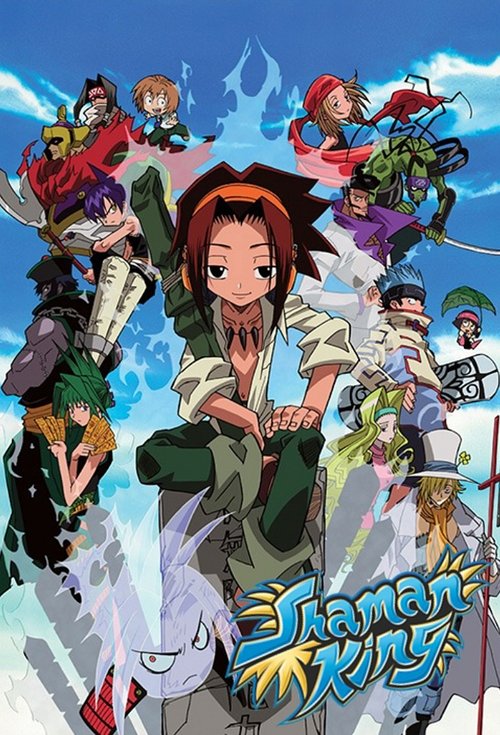
Shaman King
A vibrant tapestry of spiritual battles and laid-back philosophy, this action-packed fantasy unfolds like a phantom dream, exploring the bonds that connect worlds.
Shaman King
Shaman King

シャーマンキング

04 July 2001 — 25 September 2002 Japan 1 season 64 episode Ended ⭐ 8.5 (424)
Cast: Inuko Inuyama, Katsuyuki Konishi, Masahiko Tanaka, Yuuko Satou, Megumi Hayashibara
Animation Sci-Fi & Fantasy Action & Adventure
The Nature of Friendship and Trust Conflict Between Ideologies (Destruction vs. Coexistence) Finding One's Own Path and Purpose The Past's Influence on the Present

Shaman King - Ending Explained

⚠️ Spoiler Analysis

The major divergence of the 2001 anime from the manga begins after the initial rounds of the Shaman Fight. In this version, the tournament structure itself eventually dissolves into an all-out race to reach the Great Spirit. A key anime-original plot point is the X-Laws' ultimate plan involving the "Gate of Babylon," a dimensional prison they use in a failed attempt to trap Hao. This event showcases Hao's immense power as he effortlessly escapes, absorbing the spirit of one of their archangels in the process.

The finale is entirely original to the anime. In the final confrontation, Hao successfully reaches and merges with the Great Spirit, achieving god-like power. He defeats all of Yoh's friends and even consumes Yoh's soul after their initial one-on-one battle. However, Manta and the remaining allies manage to journey into the Great Spirit itself to rescue him. The ultimate climax sees all of Yoh's friends and every shaman they have ever met transfer their spiritual power (Furyoku) to Yoh. Empowered by this collective energy—a literal manifestation of the "power of friendship"—Yoh's spirit Amidamaru transforms into a colossal, golden Spirit of Sword. With this power, Yoh is able to overpower Hao's Spirit of Fire and kills him, ending his threat permanently. This makes Yoh the de facto winner and savior, providing a conclusive, action-oriented end to the series where the hero decisively vanquishes the villain, a stark contrast to the manga's ending where Hao is redeemed, not destroyed.

Alternative Interpretations

A prominent alternative interpretation of the 2001 series focuses on its ending as a more traditional shōnen conclusion compared to the manga's philosophical resolution. In the anime, Yoh achieves victory by becoming powerful enough to defeat Hao in a climactic battle, fulfilling the hero's journey in a straightforward manner. This can be interpreted as a story about the necessity of decisive action and sacrifice, where the hero must ultimately destroy the villain to save the world. This contrasts sharply with the manga's theme of redemption and understanding, where the goal becomes to save Hao, not kill him.

Another perspective views the anime's heavy focus on the "power of friendship" as a more optimistic, if simplified, take on the source material's themes. While the manga also values friendship, the anime elevates it to a literal power source, with Yoh's final strength being a direct accumulation of his friends' energy. This interpretation suggests that the 2001 anime is less about the complexities of individual philosophies and more a straightforward celebration of collective will and unity triumphing over isolated, nihilistic power.