Shaman King
A vibrant tapestry of spiritual battles and laid-back philosophy, this action-packed fantasy unfolds like a phantom dream, exploring the bonds that connect worlds.
Shaman King

Shaman King

シャーマンキング

04 July 2001 — 25 September 2002 Japan 1 season 64 episode Ended ⭐ 8.5 (424)
Cast: Inuko Inuyama, Katsuyuki Konishi, Masahiko Tanaka, Yuuko Satou, Megumi Hayashibara
Animation Sci-Fi & Fantasy Action & Adventure
The Nature of Friendship and Trust Conflict Between Ideologies (Destruction vs. Coexistence) Finding One's Own Path and Purpose The Past's Influence on the Present

Overview

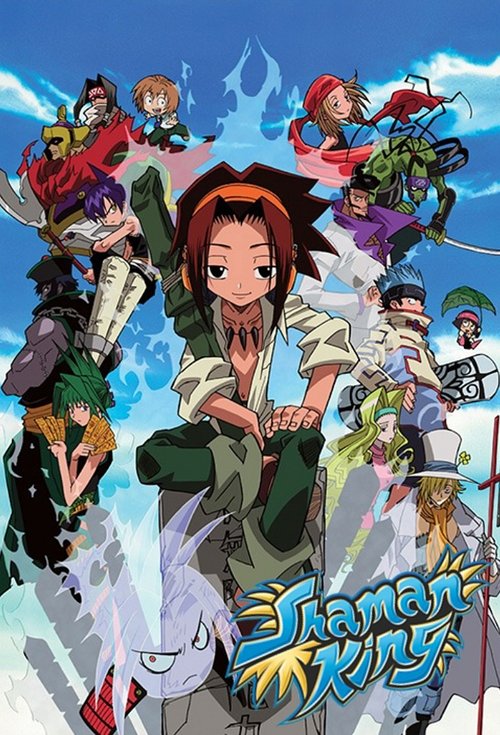
"Shaman King" (2001) follows the journey of Yoh Asakura, a seemingly carefree and relaxed teenager who is actually a shaman—a medium between the worlds of the living and the dead. His ultimate goal is to win the Shaman Fight, a prestigious tournament that occurs only once every 500 years, to become the titular Shaman King. The victor gains the ability to commune with and control the Great Spirit, granting them the power to reshape the world according to their wishes.

Alongside his spirit partner, the legendary samurai Amidamaru, and his pragmatic fiancée, Anna Kyoyama, Yoh befriends and competes against a diverse cast of shamans from around the globe. These include the hot-headed Tao Ren, the nature-loving Horohoro, and the vengeful Ryunosuke "Wooden Sword" Ryu. Together, they face numerous challenges and powerful adversaries, all while honing their shamanistic abilities. However, a darker threat looms in the form of Hao Asakura (also known as Zeke in the English dub), Yoh's powerful ancestor and twin brother, who seeks the Shaman King title to eradicate humanity and create a world solely for shamans.

As the series progresses, it diverges significantly from its manga source material, which was still in serialization at the time of production. This leads to an anime-original second half and a definitive conclusion created specifically for this adaptation, focusing on the ultimate confrontation between Yoh's alliance and Hao's forces for the fate of the world.
Core Meaning

The core meaning of the 2001 "Shaman King" series revolves around the message that fighting and hatred are ultimately futile. As stated by the manga's creator, Hiroyuki Takei, "the final message of Shaman King is that fighting is no good." The series champions Yoh's laid-back philosophy of finding understanding and friendship over conflict. It posits that true strength comes not from overpowering others, but from the bonds forged with friends and spirits. Through Yoh's journey, the show explores the idea of accepting the past and different cultures to build a better future, suggesting that redemption is possible even for those consumed by hatred, and that a gentle heart can change the world.

Thematic DNA

The Nature of Friendship and Trust 35%
Conflict Between Ideologies (Destruction vs. Coexistence) 30%
Finding One's Own Path and Purpose 20%
The Past's Influence on the Present 15%

The Nature of Friendship and Trust

Friendship is the central pillar of the series. Yoh's primary strength lies in his ability to befriend anyone, including former rivals like Tao Ren and Ryunosuke Umemiya. His bond with his guardian spirit, Amidamaru, is portrayed not as a master-servant relationship, but as a deep, trusting partnership. This theme is consistently reinforced as Yoh's group of friends becomes his greatest asset, their combined strength and loyalty allowing them to overcome seemingly insurmountable odds. The series argues that trust and mutual respect are the foundation of true power.

Conflict Between Ideologies (Destruction vs. Coexistence)

The main conflict is driven by the clash between Yoh's and Hao's philosophies. Yoh believes in a world where everyone can live a peaceful, easy life and seeks to become Shaman King to achieve this relaxed utopia. In stark contrast, Hao, filled with hatred for humanity's destructive nature, wishes to become Shaman King to eradicate all non-shamans. This ideological battle forms the series' narrative core, questioning whether humanity is worth saving and exploring if understanding can triumph over deep-seated hatred.

Finding One's Own Path and Purpose

Many characters struggle with their place in the world and their reasons for fighting. Tao Ren must overcome the legacy of hatred within his family to find his own way. Ryunosuke Umemiya searches for a "Best Place" and finds his purpose in loyalty to Yoh. Even Yoh, despite his relaxed demeanor, must confront the heavy responsibility placed upon him and decide what it truly means for him to be the Shaman King. The series emphasizes that one's purpose is not predetermined but is found through experience, friendship, and self-reflection.

The Past's Influence on the Present

The spirits that shamans partner with are beings from the past, and their histories profoundly affect the present. Amidamaru's story of loyalty, Tokageroh's quest for revenge, and Hao's ancient grudge are central to the plot. The series explores how history and tradition shape individuals and their motivations. Yoh's approach is to learn from and befriend the past, using its lessons to create a better future, while other characters are either shackled by their history or seek to exploit it for power.

Character Analysis

Yoh Asakura

Yuuko Satou

Archetype: The Reluctant Hero
Key Trait: Easy-going

Motivation

Initially, Yoh is motivated by his promise to Anna to become Shaman King so she can be the "First Lady of the shaman world" and they can live a comfortable life. As the stakes rise and he understands Hao's destructive goal, his motivation shifts. He fights to protect his friends and create a world where everyone can live peacefully and be themselves, a direct extension of his own easy-going personality.

Character Arc

Yoh begins as a laid-back and seemingly unmotivated shaman whose primary desire is to live an easy life. His initial motivation to become Shaman King is to fulfill a promise to his fiancée, Anna. Throughout the series, he is confronted by intense rivals and the immense threat of his twin brother, Hao. This forces him to grow beyond his passive nature. His arc is about realizing that his innate ability to see the good in others and form deep friendships is not a weakness but his greatest strength. He evolves from a boy who avoids trouble into a leader who inspires hundreds to trust him with the fate of the world, all while retaining his core belief that "everything will work out somehow."

Anna Kyoyama

Megumi Hayashibara

Archetype: The Mentor / The Disciplinarian
Key Trait: Determined

Motivation

Anna's stated motivation is to live a life of comfort and luxury as the wife of the Shaman King. Her true motivation, however, is her deep and fierce love for Yoh. She knows the immense burden he carries as Hao's twin and is determined to make him strong enough to survive and achieve his dream, willing to do whatever it takes to ensure his victory and safety.

Character Arc

Anna is introduced as a cold, harsh, and demanding fiancée who puts Yoh through a brutal training regimen. She appears to be purely motivated by the ambition of becoming the Shaman King's wife. However, her arc reveals a deeper layer of unwavering faith and love for Yoh. While her methods remain strict, it becomes clear that her tough exterior is a front to push Yoh to his full potential because she believes in him more than anyone. She evolves from a seemingly selfish taskmaster into the steadfast emotional anchor for the entire group, whose conviction never wavers even in the face of certain defeat.

Hao Asakura (Zeke Asakura)

Masahiko Tanaka

Archetype: The Nihilistic Antagonist
Key Trait: Misanthropic

Motivation

Hao's motivation stems from his belief that humans are a destructive force that is ruining the planet. He sees non-shamans as weak and worthless and believes that creating a world exclusively for shamans is the only way to save the world. This genocidal goal is fueled by centuries of accumulated hatred and a profound sense of superiority.

Character Arc

Hao is introduced as the overwhelmingly powerful and primary antagonist. Having reincarnated twice, his power is immense, and his goal is absolute: the eradication of humanity. Initially, he is portrayed as a purely evil force. As the series progresses (especially in its anime-original conclusion), his character is explored as a tragic figure whose immense power has led to profound loneliness and a deep-seated hatred born from past betrayals. In the 2001 anime's climax, his arc culminates not in redemption, but in a final, desperate grasp for power by merging with the Great Spirit, forcing Yoh into a position where he must destroy him, solidifying Hao's tragic trajectory.

Tao Ren (Len Tao)

Katsuyuki Konishi

Archetype: The Rival
Key Trait: Prideful

Motivation

Ren's initial motivation is to become Shaman King to destroy the world he despises and uphold his family's dark legacy. He is driven by a deep-seated hatred instilled in him by his father. After being befriended by Yoh, his motivation evolves into a desire to protect his new friends and find a new, more constructive path for himself, seeking to change the world rather than destroy it.

Character Arc

Ren is introduced as a cold, ruthless, and arrogant shaman, shaped by his family's history of hatred and belief that destruction is the only path to power. His initial encounters with Yoh are violently antagonistic. However, his repeated defeats at the hands of Yoh, who values friendship above all, begin to erode his rigid ideology. Ren's arc is one of the most significant in the series; he slowly sheds his hatred and learns the value of trust and camaraderie. He transforms from a lone wolf into a loyal, albeit still prideful, friend and ally to Yoh, proving that one can break free from a destructive upbringing.

Symbols & Motifs

The Great Spirit

Meaning:

The Great Spirit represents the ultimate power of nature and the collective consciousness of all souls. It is the source of all life and the prize of the Shaman Fight. Symbolically, it embodies the concept of godhood and the immense responsibility that comes with absolute power—the ability to either create or destroy the world based on the victor's will.

Context:

The entire series revolves around the tournament to contact and control the Great Spirit. It is the ultimate goal for all participants, particularly Yoh, who wants to use its power for peace, and Hao, who intends to use it for destruction. Its presence looms over the entire narrative as the catalyst for the global conflict.

Amidamaru's Sword, Harusame

Meaning:

Harusame (Spring Rain) symbolizes legacy, trust, and the bond between a shaman and their spirit. It is not merely a weapon but a physical manifestation of Amidamaru's history and his promise to his friend Mosuke. When Yoh wields it, it represents his acceptance and honoring of Amidamaru's past and the deep trust between them.

Context:

The sword is a key plot device early in the series. Its theft by Tokageroh and subsequent re-forging by Mosuke's spirit solidifies the partnership between Yoh and Amidamaru. It remains Yoh's primary medium for Amidamaru throughout the series, evolving in form as their power grows.

The Shaman Fight

Meaning:

The Shaman Fight symbolizes a crucible for ideals and the ultimate test of a person's soul and beliefs. While ostensibly a combat tournament, its true purpose is to determine whose philosophy is worthy of shaping the future of the world. It represents the idea that conflict is sometimes necessary to bring about change and challenge existing values.

Context:

The tournament provides the structural framework for the entire series. Every major character is introduced and developed through their participation in the Shaman Fight, from the preliminary rounds in Tokyo to the final stages in the Patch Village.

Memorable Quotes

No one can predict the future, so it's pointless to fear the unknown.

— Yoh Asakura

Context:

This is a recurring sentiment for Yoh throughout the series, reflecting his general attitude towards the daunting task of the Shaman Fight and facing Hao.

Meaning:

This quote perfectly encapsulates Yoh's optimistic and relaxed philosophy on life. It speaks to his ability to face immense challenges without succumbing to fear or anxiety, choosing instead to trust that things will work out. It's the core of his strength and what allows him to remain calm under pressure.

Because I aim to be the First Lady of the shaman world... You will become Shaman King, whether you want to or not.

— Anna Kyoyama

Context:

Anna states this early in the series, making her intentions and expectations for Yoh explicitly clear shortly after her introduction.

Meaning:

This quote establishes Anna's unwavering determination and her role as the driving force behind Yoh's journey. It showcases her seemingly selfish ambition but also hides her absolute faith in Yoh's potential. It's a blend of threat and promise that defines their unique relationship.

In this world, hatred continually breeds yet more hatred. I will try to change that, even if it costs my life.

— Tao Ren

Context:

Ren has this realization after his major conflicts and subsequent friendship with Yoh, as he resolves to confront his family's dark past and forge a new identity.

Meaning:

This quote marks a pivotal turning point in Ren's character arc. It signifies his conscious decision to reject the cycle of hatred that defined his family and his early life. It represents his shift from a destructive force to a protective one, aligning his path with Yoh's.

Episode Highlights

The Boy Who Dances with Ghosts

S1E1

The first episode introduces the main protagonist, Yoh Asakura, and his ability to see and interact with ghosts. It establishes his laid-back personality and his first meeting with Manta Oyamada. The episode culminates in Yoh uniting with the samurai spirit Amidamaru for the first time to defend the cemetery from the gang leader Ryu, showcasing the core concept of a shaman's power.

Significance:

This episode sets the entire premise of the show, introducing the main character, the concept of shamans and guardian spirits, and the central theme of friendship. It's the foundation upon which the entire series is built.

Over Soul

S1E13

A pivotal episode where the concept of "Over Soul" is properly introduced and mastered by Yoh. This technique, which allows a shaman to manifest their spirit's power into a physical form through a medium, marks a significant evolution in the power system of the series. Yoh uses this newfound ability in a crucial battle.

Significance:

The introduction of the Over Soul technique fundamentally changes the nature of shaman battles, moving from simple possession to complex, strategic combat. This episode represents a major power-up for the protagonist and a turning point in the Shaman Fight.

Awakened, Nyan Nyan Doushi

S1E23

Focusing on Tao Jun's powerful jiangshi (Chinese zombie), Lee Pai-Long, this episode delves into his tragic backstory. When Pai-Long goes berserk, Anna summons the spirit of his former master, Shamon, to pacify him. The encounter results in Pai-Long choosing to willingly serve Jun, transforming their relationship from one of control to mutual respect.

Significance:

This episode provides significant character development for the Tao siblings' camp, showcasing that even antagonists' spirits have depth and humanity. It reinforces the theme that true partnership is built on will, not coercion.

The Dead Spirit of Tao

S1E46

This episode delves into the history of the Tao family's hatred and Ren's internal conflict. It's a character-defining moment where Ren must confront the darkness that has been passed down through his lineage. His interactions with Yoh and friends help him find a new path forward, away from pure destruction.

Significance:

Crucial for Ren's character arc, this episode solidifies his transformation from a primary antagonist to a core member of Yoh's group, driven by a new purpose to change the world for the better.

Door of Babylon

S1E56

This episode marks a significant point in the anime-original storyline where the X-Laws, a group of crusading shamans, enact their plan to eliminate Hao using a powerful technique called the Babylon Gate. They trap both Hao's followers and Yoh's friends in an alternate dimension. However, the plan backfires when Hao demonstrates that his power far exceeds their expectations.

Significance:

A major turning point in the latter half of the series, this episode showcases the futility of trying to defeat Hao with brute force and establishes the immense scale of his power. It sets the stage for the final confrontation by removing a major faction from the board and forcing Yoh to confront Hao more directly.

A Place Where I Belong

S1E63

In the penultimate episode, Yoh's friends and allies, having been defeated by Hao, place all their hope and remaining power into Yoh. They channel their spiritual energy into him, leading to a massive power-up. This moment is the culmination of all the friendships Yoh has forged throughout his journey.

Significance:

This episode powerfully demonstrates the series' central theme: that true strength comes from bonds and trust. Yoh's power becomes a reflection of all the people who believe in him, setting up the final battle against a lonely and isolated Hao.

Overlapping Souls

S1E64

The series finale features the ultimate battle between Yoh, empowered by the souls of his friends, and Hao, who has merged with the Great Spirit. In this anime-original ending, Yoh manages to defeat and kill Hao, ending the Shaman Fight and his threat to humanity. The conclusion sees the characters moving on with their lives, with Yoh having saved the world.

Significance:

This episode provides a definitive, self-contained conclusion to the 2001 anime. It resolves the central conflict of the series in a way that diverges completely from the manga, emphasizing Yoh's growth into a hero who must make the difficult choice to destroy his brother for the greater good.

Philosophical Questions

Is humanity inherently destructive and beyond saving?

This is the central question posed by the antagonist, Hao. He has witnessed humanity's cruelty and environmental destruction for a thousand years and concludes that they are a cancer on the planet that must be eradicated. The series explores this through Yoh's counter-argument, which isn't a denial of humanity's flaws but a belief in its potential for good. Yoh's friendships with a diverse group of people, each with their own flaws and virtues, serve as the primary evidence that humanity is worth preserving. The show constantly weighs Hao's grim assessment against Yoh's hopeful optimism.

What is the true nature of strength?

"Shaman King" continuously challenges the conventional shōnen trope that strength is simply a measure of physical or spiritual power. Characters like Tao Ren initially believe that strength is the ability to dominate and destroy. However, Yoh's journey demonstrates that true strength lies in empathy, the courage to trust others, and the resilience to maintain a gentle heart in a hostile world. The series posits that the power to build connections is ultimately greater than the power to break things.

Can one escape the cycle of hatred?

Several characters are trapped in cycles of hatred and revenge, most notably Tao Ren, who was raised in a clan that glorified it, and Hao, who is consumed by it. Yoh's philosophy of understanding and forgiveness acts as the primary force that challenges these cycles. Ren's character arc is the most direct exploration of this theme, as his friendship with Yoh allows him to break free from his family's legacy and choose a different path. Hao represents the tragic outcome of being unable to escape this cycle.

Alternative Interpretations

A prominent alternative interpretation of the 2001 series focuses on its ending as a more traditional shōnen conclusion compared to the manga's philosophical resolution. In the anime, Yoh achieves victory by becoming powerful enough to defeat Hao in a climactic battle, fulfilling the hero's journey in a straightforward manner. This can be interpreted as a story about the necessity of decisive action and sacrifice, where the hero must ultimately destroy the villain to save the world. This contrasts sharply with the manga's theme of redemption and understanding, where the goal becomes to save Hao, not kill him.

Another perspective views the anime's heavy focus on the "power of friendship" as a more optimistic, if simplified, take on the source material's themes. While the manga also values friendship, the anime elevates it to a literal power source, with Yoh's final strength being a direct accumulation of his friends' energy. This interpretation suggests that the 2001 anime is less about the complexities of individual philosophies and more a straightforward celebration of collective will and unity triumphing over isolated, nihilistic power.

Cultural Impact

The 2001 "Shaman King" anime was a significant part of the early 2000s anime boom, becoming an emblematic shōnen title for many fans of that era. Airing alongside giants like "Naruto" and "Bleach", it offered a unique premise centered on shamanism, a topic not widely explored in mainstream manga and anime at the time. Its blend of action, comedy, and surprisingly deep philosophical themes about life, death, and friendship resonated with a global audience.

In Japan, the show was successful, but its international broadcast, particularly through 4Kids in the United States on the FoxBox programming block, introduced a massive new audience to the franchise. Despite heavy censorship and localization, the core story and appealing characters captured the imaginations of many young viewers, and for this audience, the 2001 anime is often the definitive version of the story. Its reception was generally positive, though many fans later became critical of the anime-original ending upon discovering the manga's different storyline. This divergence has been a long-standing point of discussion in the fan community, similar to the 2003 "Fullmetal Alchemist" series, which was directed by the same person, Seiji Mizushima.

The series' legacy is complex. For years, it was remembered fondly for its characters and music but also as an adaptation that failed to tell the complete story. This widespread nostalgia and desire to see the manga's true ending were major contributing factors to the production of the 2021 reboot, which was marketed as a more faithful adaptation. The 2001 series remains a beloved classic for many, a nostalgic touchstone that stands as a testament to a time when anime series often had to forge their own path when they outpaced their source material.

Audience Reception

The audience reception for "Shaman King" (2001) has been largely positive over the years, with a strong sense of nostalgia attached to it, particularly among Western audiences who discovered it through 4Kids broadcasts. It is often praised for its compelling and diverse cast of characters, its unique premise, and its memorable soundtrack, including the iconic opening themes. Yoh Asakura is frequently highlighted as a refreshingly different type of shōnen protagonist due to his laid-back and non-confrontational nature.

The main point of criticism, which has become more pronounced over time, is its deviation from the manga's plot and its anime-original ending. Many viewers who later read the manga felt the anime's conclusion was a more generic "good vs. evil" showdown that lacked the philosophical depth of the source material's ending. The pacing of the final arc is also sometimes criticized as feeling rushed. Despite these critiques, the 2001 adaptation is remembered with fondness and is considered by some to have superior pacing and emotional weight in its early, faithful arcs compared to the 2021 reboot.

Interesting Facts

  • The 2001 anime was produced while the manga by Hiroyuki Takei was still being written. This led to the anime creating its own original storyline and ending for the second half of the series.
  • The director of the 2001 series, Seiji Mizushima, later commented that the anime-original material was not his own decision but a request from Shueisha, the manga's publisher.
  • 4Kids Entertainment licensed the series for its North American broadcast, resulting in significant edits, censorship, and name changes (e.g., Manta became Morty, Hao became Zeke) to make it more suitable for a younger Western audience.
  • Megumi Hayashibara, the Japanese voice actress for Anna Kyoyama, performed both of the series' opening themes ("Over Soul" and "Northern Lights") and its primary ending themes.
  • Manga creator Hiroyuki Takei was involved in the early stages of the anime's production but had to step away due to the time constraints of working on the ongoing manga.
  • In 2017, Hiroyuki Takei revealed that he had turned down an offer for an anime reboot because the producers were unable to use the original 2001 voice cast and music, which he felt were essential. However, a new adaptation with many returning voice actors was eventually produced in 2021.

⚠️ Spoiler Analysis

Click to reveal detailed analysis with spoilers

Frequently Asked Questions

Explore More About This Movie

Dive deeper into specific aspects of the movie with our detailed analysis pages

Comments (0)

Leave a comment

No comments yet. Be the first to share your thoughts!