
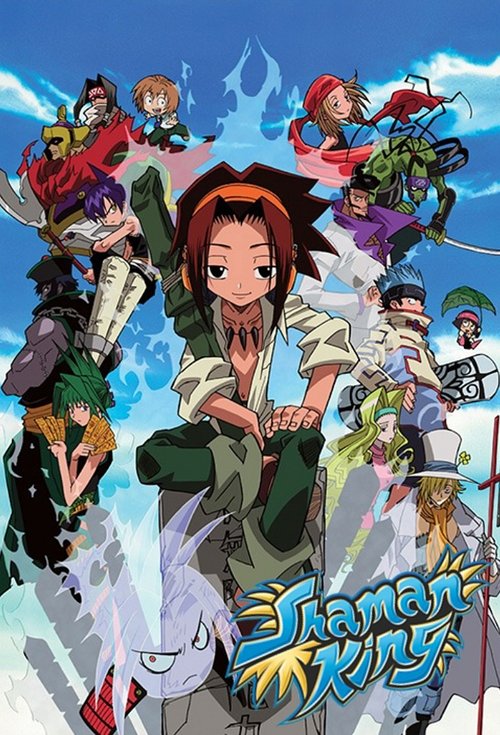
シャーマンキング
Shaman King - Symbolism & Philosophy
Symbols & Motifs
The Great Spirit
The Great Spirit represents the ultimate power of nature and the collective consciousness of all souls. It is the source of all life and the prize of the Shaman Fight. Symbolically, it embodies the concept of godhood and the immense responsibility that comes with absolute power—the ability to either create or destroy the world based on the victor's will.
The entire series revolves around the tournament to contact and control the Great Spirit. It is the ultimate goal for all participants, particularly Yoh, who wants to use its power for peace, and Hao, who intends to use it for destruction. Its presence looms over the entire narrative as the catalyst for the global conflict.
Amidamaru's Sword, Harusame
Harusame (Spring Rain) symbolizes legacy, trust, and the bond between a shaman and their spirit. It is not merely a weapon but a physical manifestation of Amidamaru's history and his promise to his friend Mosuke. When Yoh wields it, it represents his acceptance and honoring of Amidamaru's past and the deep trust between them.
The sword is a key plot device early in the series. Its theft by Tokageroh and subsequent re-forging by Mosuke's spirit solidifies the partnership between Yoh and Amidamaru. It remains Yoh's primary medium for Amidamaru throughout the series, evolving in form as their power grows.
The Shaman Fight
The Shaman Fight symbolizes a crucible for ideals and the ultimate test of a person's soul and beliefs. While ostensibly a combat tournament, its true purpose is to determine whose philosophy is worthy of shaping the future of the world. It represents the idea that conflict is sometimes necessary to bring about change and challenge existing values.
The tournament provides the structural framework for the entire series. Every major character is introduced and developed through their participation in the Shaman Fight, from the preliminary rounds in Tokyo to the final stages in the Patch Village.
Philosophical Questions
Is humanity inherently destructive and beyond saving?
This is the central question posed by the antagonist, Hao. He has witnessed humanity's cruelty and environmental destruction for a thousand years and concludes that they are a cancer on the planet that must be eradicated. The series explores this through Yoh's counter-argument, which isn't a denial of humanity's flaws but a belief in its potential for good. Yoh's friendships with a diverse group of people, each with their own flaws and virtues, serve as the primary evidence that humanity is worth preserving. The show constantly weighs Hao's grim assessment against Yoh's hopeful optimism.
What is the true nature of strength?
"Shaman King" continuously challenges the conventional shōnen trope that strength is simply a measure of physical or spiritual power. Characters like Tao Ren initially believe that strength is the ability to dominate and destroy. However, Yoh's journey demonstrates that true strength lies in empathy, the courage to trust others, and the resilience to maintain a gentle heart in a hostile world. The series posits that the power to build connections is ultimately greater than the power to break things.
Can one escape the cycle of hatred?
Several characters are trapped in cycles of hatred and revenge, most notably Tao Ren, who was raised in a clan that glorified it, and Hao, who is consumed by it. Yoh's philosophy of understanding and forgiveness acts as the primary force that challenges these cycles. Ren's character arc is the most direct exploration of this theme, as his friendship with Yoh allows him to break free from his family's legacy and choose a different path. Hao represents the tragic outcome of being unable to escape this cycle.
Core Meaning
The core meaning of the 2001 "Shaman King" series revolves around the message that fighting and hatred are ultimately futile. As stated by the manga's creator, Hiroyuki Takei, "the final message of Shaman King is that fighting is no good." The series champions Yoh's laid-back philosophy of finding understanding and friendship over conflict. It posits that true strength comes not from overpowering others, but from the bonds forged with friends and spirits. Through Yoh's journey, the show explores the idea of accepting the past and different cultures to build a better future, suggesting that redemption is possible even for those consumed by hatred, and that a gentle heart can change the world.