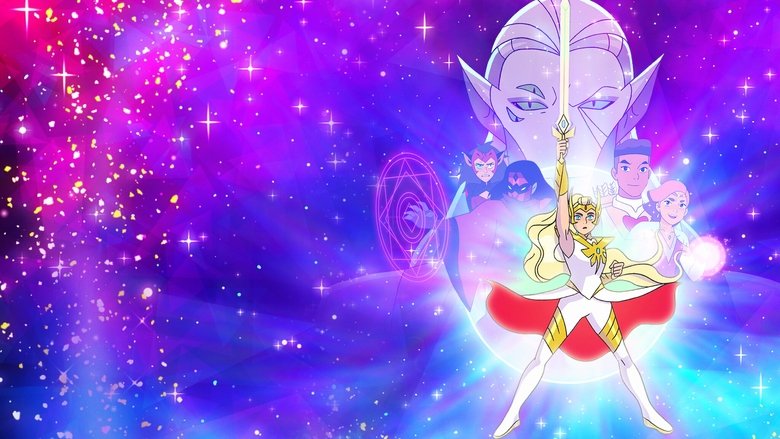
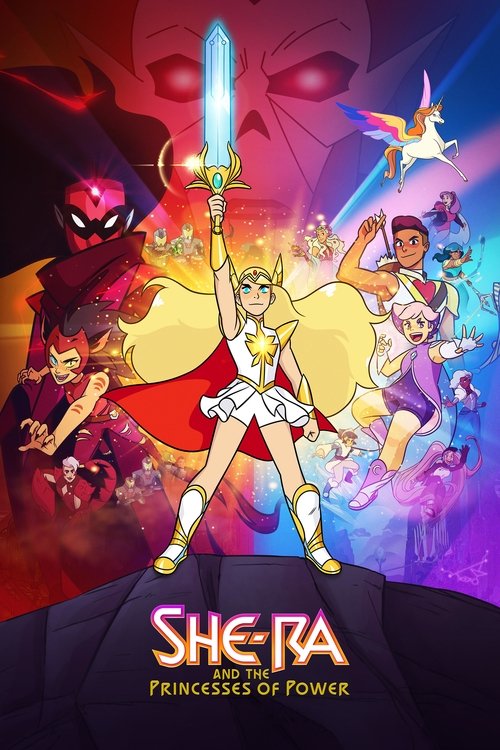
"A hero will rise."
She-Ra and the Princesses of Power - Symbolism & Philosophy
Symbols & Motifs
The Sword of Protection
The sword initially symbolizes destiny, power, and the burden of being the hero. It is the conduit for Adora's transformation into She-Ra. However, it also represents a loss of self, as Adora fears she is nothing without it. Its destruction at the end of Season 4 is a pivotal moment, symbolizing Adora's need to find her own power, separate from the weapon and its predetermined purpose.
The sword is central to the first four seasons. Adora finds it in Season 1, transforming her life. Throughout the series, she learns about its history and the legacy of past She-Ras. When she shatters it to save Etheria from being turned into a superweapon, it forces her to find strength within herself and her relationships, leading to a more powerful, authentic version of She-Ra in the final season.
The Heart of Etheria
The Heart of Etheria symbolizes the planet's immense magical power, but also the danger of power that is exploited and controlled. It was a project by the First Ones to turn the entire planet into a weapon, representing a legacy of colonialism and abuse of nature. Its eventual release and healing symbolizes liberation and the restoration of balance.
The Heart of Etheria is a major plot point in the later seasons. The rebellion discovers that the planet itself is a superweapon that Hordak and later Horde Prime wish to control. Glimmer nearly activates it in a moment of desperation in Season 4. In the series finale, Adora must reach the Heart not to wield it as a weapon, but to release its magic, healing the planet.
Masks
Masks symbolize hidden identities, emotional armor, and the duality of characters. Shadow Weaver's mask hides her disfigured face and represents her turn from Light Spinner to a creature of darkness and manipulation. Catra's mask in the first three seasons signifies her role as a Horde soldier and her refusal to show vulnerability. Hordak's armor is a life-support system but also a mask for his physical frailty and deep-seated insecurity.
Shadow Weaver is almost never seen without her mask until her final moments, where she unmasks before sacrificing herself for Adora and Catra, signifying a moment of genuine, unveiled feeling. Catra discards her mask as she becomes more powerful and less reliant on the Horde's structure, though her emotional walls remain. Hordak's reliance on his armor decreases as he forms a connection with Entrapta, showing his true self more often.
Philosophical Questions
Are we defined by our past or by the choices we make?
The series explores this question through nearly every major character. Adora and Catra were both raised as child soldiers in an abusive environment. Adora chooses to leave and forge a new path, but is constantly haunted by her past with the Horde. Catra initially seems defined by her trauma, making choices based on anger and a fear of abandonment. Her entire arc is a struggle to see if she can choose a different future, culminating in her decision to save Glimmer and later join the fight against Horde Prime, proving that one's past does not have to be a life sentence.
What is the true nature of heroism?
"She-Ra" deconstructs the idea of a flawless, destined hero. Adora believes being She-Ra means being an infallible, self-sacrificing symbol. The show argues this is a toxic and unsustainable model of heroism. True heroism, the series suggests, lies in vulnerability, relying on others, admitting mistakes, and choosing to do good even when it's difficult. Mara, the previous She-Ra, teaches Adora that she is worth more than her utility as a hero, and the final victory is achieved not through sacrifice, but through an act of emotional honesty and love.
Can systems of oppression be fought without becoming like the oppressor?
This is explored most deeply in Season 4 through Glimmer. After her mother's death and her ascension to the throne, Glimmer becomes desperate to defeat the Horde. She begins to adopt more authoritarian and secretive methods, mirroring the control exerted by the Horde. She lies to her friends and makes a dangerous choice to activate the Heart of Etheria, believing the ends justify the means. Her arc serves as a cautionary tale, demonstrating how the pressures of war and power can corrupt even the most well-intentioned leaders.
Core Meaning
The core meaning of "She-Ra and the Princesses of Power" is that true strength is found not in destiny or innate power, but in the love, vulnerability, and connections we forge with others. The series deconstructs the traditional 'chosen one' narrative, arguing that heroism is a choice made every day. It powerfully asserts that no one is beyond redemption and that healing from trauma—both personal and generational—is possible through empathy and forgiveness. Ultimately, the show's message is one of radical optimism, championing the idea that love, in its many forms, is the most powerful force for change in the universe.