Sherlock Jr.
A surrealist comedy of errors where a dreamer's cinematic fantasies gloriously collide with his mundane reality, blurring the lines between the screen and the self.
Sherlock Jr.
Sherlock Jr.

"Every inch of footage holds such a laugh!"

17 April 1924 United States of America 45 min ⭐ 8.1 (1,081)
Director: Buster Keaton
Cast: Buster Keaton, Kathryn McGuire, Joe Keaton, Erwin Connelly, Ward Crane
Action Comedy Mystery
Dreams vs. Reality The Nature of Cinema Aspiration and Identity

Sherlock Jr. - Ending Explained

⚠️ Spoiler Analysis

The central twist of "Sherlock Jr." is that the entire adventure of the master detective is a dream. The film is split into two distinct parts: the real world and the dream world. In the real world, the Projectionist is a failure. He is framed for stealing a pocket watch by his rival, The Local Sheik, who pawns it and plants the ticket in the Projectionist's pocket. Believing him to be a thief, The Girl banishes him from her house.

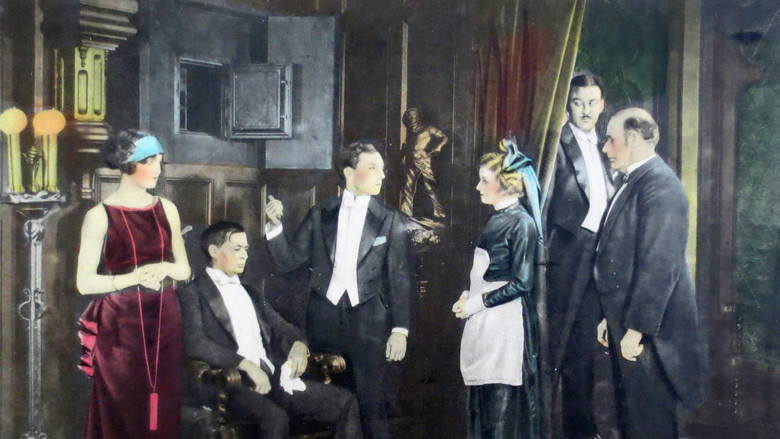
Dejected, the Projectionist falls asleep in his booth, and his dream-self enters the movie being shown. In this film-within-a-film, he is the heroic Sherlock Jr., and the real-world characters are recast: The Girl is the damsel in distress, her father is a wealthy man, and The Sheik is the villain trying to steal a valuable pearl necklace. Sherlock Jr. brilliantly solves the crime, surviving numerous elaborate traps and engaging in a thrilling chase sequence. He ultimately rescues the girl and defeats the villain.

The resolution in the real world happens concurrently but entirely without the Projectionist's heroic intervention. The Girl, deciding to do some detective work of her own, goes to the pawn shop and discovers that it was The Sheik who pawned her father's watch. She goes to the theater to apologize to the Projectionist, waking him from his dream. The true hero of the real-world plot is The Girl. The final layer of meaning comes as the Projectionist, now reunited with The Girl but unsure how to act, looks to the movie screen for guidance, mimicking the on-screen hero's romantic advances to win his own happy ending, thus blending his cinematic fantasy with his reality.

Alternative Interpretations

While largely seen as a comedy about the magic of movies, some interpretations view "Sherlock Jr." through a more philosophical or psychological lens. One perspective is that the film is a commentary on the alienation of modern life in the 1920s. The Projectionist is a lonely figure, unable to connect with others or achieve his dreams in the real world, finding solace and competence only through the fantasy of cinema. His struggle to navigate the constantly shifting landscapes within the dream film could be seen as a metaphor for the bewildering and impersonal nature of a rapidly modernizing society.

Another interpretation focuses on the film as an almost Pirandellian exploration of identity. The protagonist has a fractured identity, split between his inadequate real self and his idealized dream self. The film questions the nature of the self: are we defined by our mundane actions or by our heroic aspirations? The ending, where the Projectionist mimics the on-screen hero to navigate a real-life romantic moment, can be interpreted in two ways: either as a triumphant integration of his dream persona into his real life, or as a more cynical statement on his inability to act authentically, forever reliant on cinematic clichés to guide his emotions and actions.