Sherlock Jr.
A surrealist comedy of errors where a dreamer's cinematic fantasies gloriously collide with his mundane reality, blurring the lines between the screen and the self.
Sherlock Jr.

Sherlock Jr.

"Every inch of footage holds such a laugh!"

17 April 1924 United States of America 45 min ⭐ 8.1 (1,081)
Director: Buster Keaton
Cast: Buster Keaton, Kathryn McGuire, Joe Keaton, Erwin Connelly, Ward Crane
Action Comedy Mystery
Dreams vs. Reality The Nature of Cinema Aspiration and Identity

Overview

"Sherlock Jr." tells the story of a humble movie projectionist who yearns to be a detective. He is in love with a young woman, but is framed for the theft of her father's pocket watch by a rival suitor. Heartbroken and dejected, he returns to his projection booth and falls asleep while a film is playing.

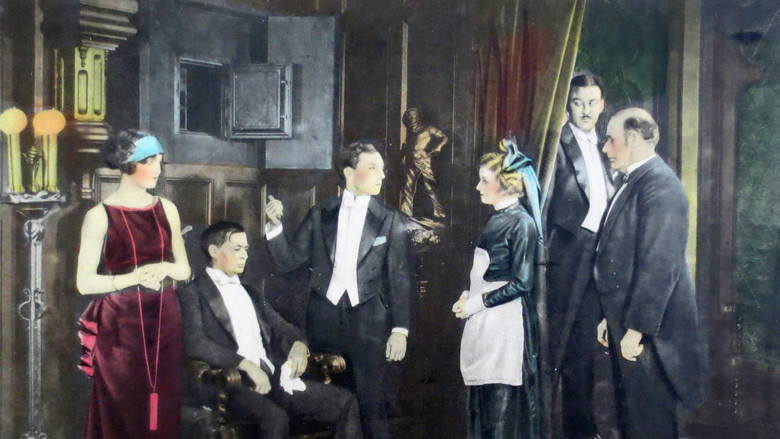
In his dream, the projectionist magically steps into the movie on screen, becoming the brilliant detective "Sherlock Jr." The characters in the film-within-a-film are played by the same actors from his real life, with his rival as the villain and his love interest as the damsel in distress. As Sherlock Jr., he navigates a world of thrilling chases, daring stunts, and clever deductions to solve the crime and win the girl, all while being subjected to the whimsical and chaotic cuts of the film's editing.

Core Meaning

At its heart, "Sherlock Jr." is a profound exploration of the relationship between reality, dreams, and the cinematic experience. Director Buster Keaton uses the film to comment on the power of movies to shape our desires, inform our actions, and provide an escape from the mundanity of everyday life. The film suggests that while our fantasies and aspirations, often fueled by cinema, may seem grander than our reality, it is in the real world where we must ultimately find our courage and happiness. The final scene, where the awakened projectionist mimics the romantic gestures from the movie to woo his love, beautifully encapsulates the idea of life imitating art.

Thematic DNA

Dreams vs. Reality 40%
The Nature of Cinema 35%
Aspiration and Identity 25%

Dreams vs. Reality

The central theme of "Sherlock Jr." is the interplay between the protagonist's mundane reality and his extraordinary dream life. In reality, he is a clumsy and unassuming projectionist who is easily outwitted. However, in his dreams, he becomes the highly competent and heroic detective, Sherlock Jr. This stark contrast highlights the human desire for escapism and the power of the imagination, particularly as influenced by the burgeoning world of cinema. The film humorously explores how the protagonist's dream self is able to achieve what his real self cannot, yet ultimately, the resolution comes back to the real world.

The Nature of Cinema

"Sherlock Jr." is a highly self-reflexive film that deconstructs the art of filmmaking itself. The famous sequence where the projectionist enters the movie screen and is subjected to its rapid, nonsensical edits is a commentary on the mechanics of cinematic storytelling, including cuts and changes in location. The film playfully acknowledges the illusion of cinema while simultaneously celebrating its magic. By having the protagonist literally step into a film, Keaton breaks the fourth wall in a way that was revolutionary for its time, questioning the boundaries between the audience, the characters, and the world on screen.

Aspiration and Identity

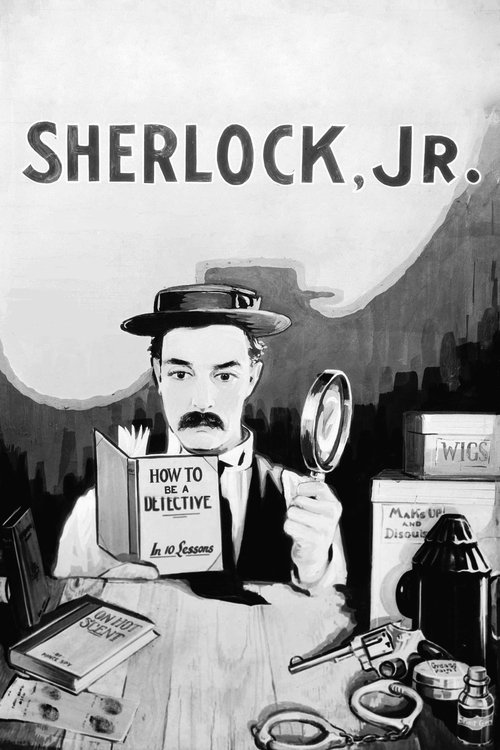
The projectionist's desire to be a detective is a driving force in the narrative, representing the universal theme of aspiration. He studies a "How to be a Detective" book and dreams of a life of excitement and purpose beyond his humble job. His dream as Sherlock Jr. is the fulfillment of this aspiration, allowing him to embody the qualities of intelligence, bravery, and resourcefulness he lacks in his waking life. The film explores how our aspirations shape our identity and how we often look to fictional heroes as models for who we want to become.

Character Analysis

The Projectionist / Sherlock Jr.

Buster Keaton

Archetype: The Dreamer / The Hero
Key Trait: Aspirational

Motivation

His primary motivation is to win the affection of The Girl and prove his worth, both to her and to himself. He is also driven by a desire to live a more exciting and meaningful life, as represented by his aspiration to be a detective.

Character Arc

The Projectionist begins as a humble, somewhat inept young man with dreams of being a great detective. After being unjustly accused of theft and rejected by the woman he loves, he retreats into a dream where he becomes his idealized self: the brilliant and fearless Sherlock Jr. Through his dream adventure, he symbolically confronts his real-world problems. When he awakens, he finds that the girl has discovered his innocence, and he uses the romantic cues from the movie he is projecting to finally win her affection, demonstrating a newfound, albeit learned, confidence.

The Girl

Kathryn McGuire

Archetype: The Love Interest / The Damsel in Distress
Key Trait: Inquisitive

Motivation

She is motivated by a desire for a worthy partner and, ultimately, by a sense of justice when she realizes the Projectionist has been wrongly accused.

Character Arc

The Girl initially believes the lies of the rival suitor and rejects the Projectionist. However, she is resourceful and intelligent in her own right. While the Projectionist is dreaming, she takes it upon herself to investigate the theft of her father's watch, ultimately discovering the truth and exonerating the Projectionist. Her arc shows her moving from a passive object of affection to an active agent in resolving the film's central conflict.

The Local Sheik / The Villain

Ward Crane

Archetype: The Rival / The Villain
Key Trait: Deceitful

Motivation

His motivation is purely selfish: he wants to win The Girl's affection and is willing to resort to theft and deception to achieve his goal.

Character Arc

The Local Sheik is the antagonist in both the real world and the dream world. He is deceitful and manipulative, stealing the watch and framing the Projectionist to eliminate his competition for The Girl's affection. His character does not have a developmental arc; he remains the villain throughout, serving as the primary obstacle for the protagonist to overcome, both in reality and fantasy.

The Girl's Father

Joe Keaton

Archetype: The Obstacle
Key Trait: Protective

Motivation

He is motivated by the desire to protect his daughter and his property. He does not want his daughter to be with a thief.

Character Arc

The Girl's Father initially acts as an obstacle to the Projectionist's happiness by forbidding him from seeing his daughter after he is framed for the theft. In the dream sequence, he is a wealthy man whose pearl necklace is stolen. His role is largely functional, providing the initial conflict and representing the authority figure the protagonist must win over. His stance softens once the truth is revealed by his daughter.

Symbols & Motifs

The Movie Screen

Meaning:

The movie screen serves as a portal between the mundane reality of the projectionist and the fantastic world of his dreams and of cinema itself. It represents the porous boundary between fiction and reality, and the power of film to transport the viewer into another world.

Context:

The most iconic sequence of the film involves the projectionist's dream-self walking down the theater aisle and stepping directly through the screen into the film being projected. This act is a literal manifestation of cinematic immersion and escapism.

The Detective Manual

Meaning:

The "How to be a Detective" book symbolizes the protagonist's earnest but naive aspirations. It represents his desire for a different, more exciting life and his belief that he can learn to be a hero by studying a manual, much like an audience learns how to feel and act from watching movies.

Context:

The film opens with the projectionist diligently reading the detective manual while at work. His attempts to apply its lessons in the real world are comically inept, contrasting sharply with the effortless competence he displays as Sherlock Jr. in his dream.

The Pocket Watch

Meaning:

The stolen pocket watch is the catalyst for the central conflict in the real world. It symbolizes deception and injustice, as the protagonist is falsely accused of its theft. In the dream world, the stolen item is a pearl necklace, elevating the stakes and the glamour of the crime.

Context:

The rival suitor steals the watch and pawns it, planting the pawn ticket on the projectionist to frame him. This act of betrayal leads to the projectionist's rejection by the girl and fuels his dream of becoming a detective who can right such wrongs.

Philosophical Questions

What is the relationship between art and life?

"Sherlock Jr." explores this question by literally merging the two. The protagonist not only escapes into the world of film but also brings the lessons and behaviors from that world back into his reality. The film's ending suggests that art (the movie on screen) provides a script for life (the Projectionist's romantic actions). This raises questions about authenticity and whether our lives are enriched or impoverished by our imitation of art.

Where is the line between dream and reality?

The film deliberately blurs the boundaries between the protagonist's waking life and his dream state. The seamless transition into the movie screen and the mirroring of real-life characters and conflicts within the dream challenge the viewer's perception of what is real. The film posits that our dreams and fantasies are an integral part of our reality, shaping our desires and providing solutions to our real-world problems.

Can we truly become the heroes we admire?

The Projectionist aspires to be a detective like the ones he sees in books and movies. In his dream, he achieves this, becoming a masterful hero. However, in the real world, the crime is solved not by his heroic actions, but by the girl's quiet investigation. The film seems to suggest that while we can be inspired by heroes, true heroism in the real world may be more mundane and collaborative than the fantasies we project onto the screen.

Alternative Interpretations

While largely seen as a comedy about the magic of movies, some interpretations view "Sherlock Jr." through a more philosophical or psychological lens. One perspective is that the film is a commentary on the alienation of modern life in the 1920s. The Projectionist is a lonely figure, unable to connect with others or achieve his dreams in the real world, finding solace and competence only through the fantasy of cinema. His struggle to navigate the constantly shifting landscapes within the dream film could be seen as a metaphor for the bewildering and impersonal nature of a rapidly modernizing society.

Another interpretation focuses on the film as an almost Pirandellian exploration of identity. The protagonist has a fractured identity, split between his inadequate real self and his idealized dream self. The film questions the nature of the self: are we defined by our mundane actions or by our heroic aspirations? The ending, where the Projectionist mimics the on-screen hero to navigate a real-life romantic moment, can be interpreted in two ways: either as a triumphant integration of his dream persona into his real life, or as a more cynical statement on his inability to act authentically, forever reliant on cinematic clichés to guide his emotions and actions.

Cultural Impact

"Sherlock Jr." is a landmark film celebrated for its technical innovation, surrealist humor, and profound exploration of the nature of cinema. Released in 1924, during the 'Roaring Twenties', a period of significant social and technological change, the film captured the growing cultural obsession with movies as a form of escapism and aspiration.

Its influence on cinema is immense and long-lasting. The concept of a character entering a film has been famously echoed in later works, most notably Woody Allen's "The Purple Rose of Cairo" (1985). The film's gags and stunt work have also been referenced and reused, such as a car gag being replicated in the James Bond film "The Living Daylights" (1987). Filmmakers and cinematographers of its era were reportedly amazed by the film's seamless special effects, studying it to understand how they were achieved.

While initial critical reception was mixed, with some finding it more technically impressive than funny, "Sherlock Jr." has since been recognized as one of Keaton's masterpieces and one of the greatest comedies of all time. It was selected for preservation in the United States National Film Registry by the Library of Congress in 1991 for being "culturally, historically, or aesthetically significant." The film's playful deconstruction of cinematic reality is often cited by critics as an early example of surrealism and postmodernism in film, predating the more formal explorations by artists like Buñuel and Dalí.

Audience Reception

Upon its initial release in 1924, "Sherlock Jr." received a mixed reception from both audiences and critics. While many praised the film's technical ingenuity and astonishing special effects, some found it lacking in the consistent laughs of Buster Keaton's previous films. Pre-release screenings reportedly had audiences gasping at the stunts but not laughing as much as expected, leading Keaton to re-edit the film multiple times. The trade paper Variety famously gave it a negative review, stating it was as funny as "a hospital operating room." As a result, it was not a major box office success, earning less than his prior feature, "Three Ages."

However, in the decades since, the perception of "Sherlock Jr." has changed dramatically. It is now widely regarded by critics and audiences as a masterpiece of comedic filmmaking and a work of profound artistic merit. Modern audiences celebrate its creativity, its surreal humor, and its ahead-of-its-time meta-narrative. Its reputation has grown to the point where it is frequently listed among the greatest films ever made and is a staple for students of film history.

Interesting Facts

  • During the filming of a stunt where his character grabs a water tower spout while on a moving train, Buster Keaton was thrown to the tracks by the force of the water, fracturing his neck. He was unaware of the severity of the injury for years, despite suffering from migraines.
  • The film was initially not a major box office success and received mixed reviews, with some critics finding it less funny than Keaton's previous work. Its reputation has grown immensely over time, and it is now considered a masterpiece of the silent era.
  • The famous sequence of Keaton being trapped in the film and jumping between different scenes was achieved through precise surveying and camera placement to ensure he was in the exact right spot for each shot, creating a seamless illusion.
  • Buster Keaton's real-life father, Joe Keaton, played the role of the Girl's father in the film.
  • The film's most complicated special effects and in-camera tricks made it one of Keaton's most technically challenging productions, taking four months to film instead of the usual two.
  • Keaton claimed the entire reason for making the film was for the single idea of his character walking into a movie screen.
  • The gag where Keaton dives through a woman's midsection to escape villains was an old vaudeville trick, reworked for the film.
  • Keaton originally hired his friend and mentor Roscoe "Fatty" Arbuckle to direct the film, but Arbuckle was ultimately dismissed. The extent of his contribution remains a subject of debate among film historians.

Easter Eggs

The film-within-a-film that the Projectionist falls asleep watching is titled "Hearts and Pearls."

This title neatly summarizes the plot of the melodramatic film he is watching, which revolves around love and stolen jewels, mirroring the conflict in his own life.

Sherlock Jr.'s assistant in the dream world is named Gillette.

This is a direct reference to William Gillette, the American actor who was famously the first to portray Sherlock Holmes on stage.

A poster for the film "Scaramouche" (1923) is visible outside the movie theater.

This is a nod to another popular Metro Pictures production from the era, grounding the film in its specific cinematic context.

The production company for the film-within-a-film is called the "Veronal Film Company."

Veronal was a brand name for the first commercially available barbiturate sleeping pill, a clever and subtle joke given that the entire sequence is the result of the protagonist falling asleep.

⚠️ Spoiler Analysis

Click to reveal detailed analysis with spoilers

Frequently Asked Questions

Explore More About This Movie

Dive deeper into specific aspects of the movie with our detailed analysis pages

Comments (0)

Leave a comment

No comments yet. Be the first to share your thoughts!