"Every inch of footage holds such a laugh!"
Sherlock Jr. - Symbolism & Philosophy
Symbols & Motifs
The Movie Screen
The movie screen serves as a portal between the mundane reality of the projectionist and the fantastic world of his dreams and of cinema itself. It represents the porous boundary between fiction and reality, and the power of film to transport the viewer into another world.
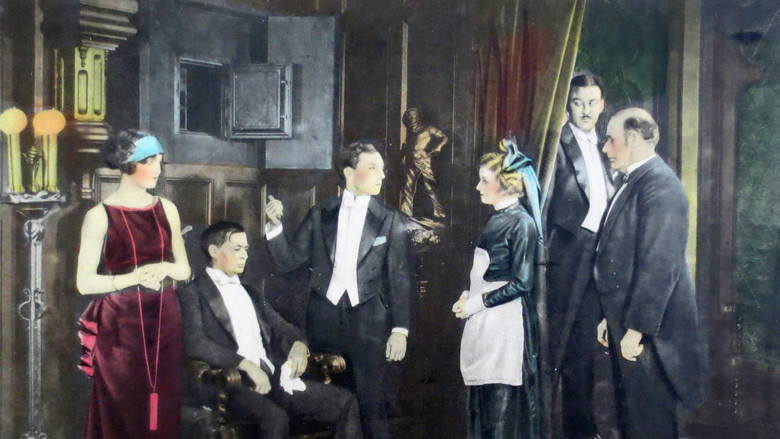
The most iconic sequence of the film involves the projectionist's dream-self walking down the theater aisle and stepping directly through the screen into the film being projected. This act is a literal manifestation of cinematic immersion and escapism.
The Detective Manual
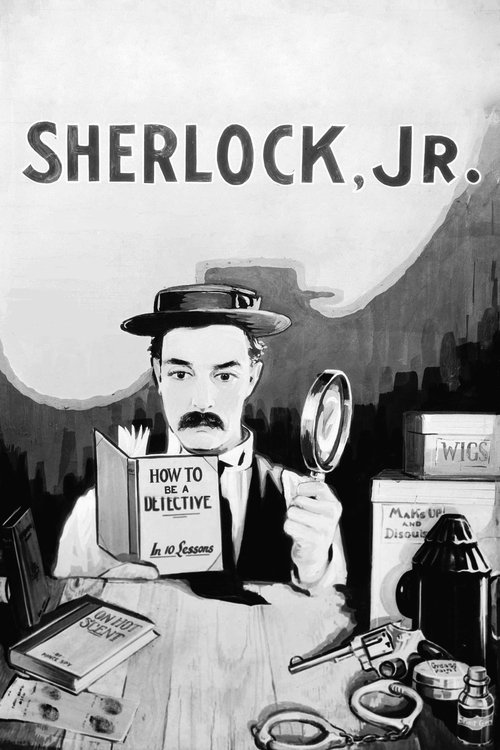
The "How to be a Detective" book symbolizes the protagonist's earnest but naive aspirations. It represents his desire for a different, more exciting life and his belief that he can learn to be a hero by studying a manual, much like an audience learns how to feel and act from watching movies.
The film opens with the projectionist diligently reading the detective manual while at work. His attempts to apply its lessons in the real world are comically inept, contrasting sharply with the effortless competence he displays as Sherlock Jr. in his dream.
The Pocket Watch
The stolen pocket watch is the catalyst for the central conflict in the real world. It symbolizes deception and injustice, as the protagonist is falsely accused of its theft. In the dream world, the stolen item is a pearl necklace, elevating the stakes and the glamour of the crime.
The rival suitor steals the watch and pawns it, planting the pawn ticket on the projectionist to frame him. This act of betrayal leads to the projectionist's rejection by the girl and fuels his dream of becoming a detective who can right such wrongs.
Philosophical Questions
What is the relationship between art and life?
"Sherlock Jr." explores this question by literally merging the two. The protagonist not only escapes into the world of film but also brings the lessons and behaviors from that world back into his reality. The film's ending suggests that art (the movie on screen) provides a script for life (the Projectionist's romantic actions). This raises questions about authenticity and whether our lives are enriched or impoverished by our imitation of art.
Where is the line between dream and reality?
The film deliberately blurs the boundaries between the protagonist's waking life and his dream state. The seamless transition into the movie screen and the mirroring of real-life characters and conflicts within the dream challenge the viewer's perception of what is real. The film posits that our dreams and fantasies are an integral part of our reality, shaping our desires and providing solutions to our real-world problems.
Can we truly become the heroes we admire?
The Projectionist aspires to be a detective like the ones he sees in books and movies. In his dream, he achieves this, becoming a masterful hero. However, in the real world, the crime is solved not by his heroic actions, but by the girl's quiet investigation. The film seems to suggest that while we can be inspired by heroes, true heroism in the real world may be more mundane and collaborative than the fantasies we project onto the screen.
Core Meaning
At its heart, "Sherlock Jr." is a profound exploration of the relationship between reality, dreams, and the cinematic experience. Director Buster Keaton uses the film to comment on the power of movies to shape our desires, inform our actions, and provide an escape from the mundanity of everyday life. The film suggests that while our fantasies and aspirations, often fueled by cinema, may seem grander than our reality, it is in the real world where we must ultimately find our courage and happiness. The final scene, where the awakened projectionist mimics the romantic gestures from the movie to woo his love, beautifully encapsulates the idea of life imitating art.