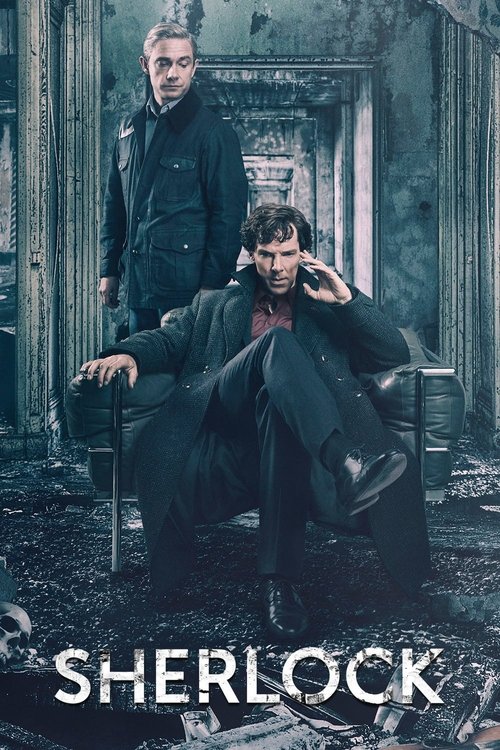
Sherlock
A high-octane mystery fueled by intellectual arrogance, this modern reimagining paints London as a dazzling, dangerous chessboard for a mind that moves faster than a speeding bullet.
Sherlock
Sherlock

"A new sleuth for the 21st century."

25 July 2010 — 15 January 2017 United Kingdom 4 season 12 episode Ended ⭐ 8.5 (5,947)
Cast: Benedict Cumberbatch, Martin Freeman, Una Stubbs, Rupert Graves, Louise Brealey
Drama Crime Mystery
The Nature of Friendship and Loyalty Intellect vs. Emotion Modernity and Technology The Duality of Heroes and Villains

Sherlock - Ending Explained

⚠️ Spoiler Analysis

The overarching plot of "Sherlock" is driven by a series of shocking reveals. In Season 1, the mysterious adversary taunting Sherlock is revealed to be Jim Moriarty, his intellectual equal and a "consulting criminal." The season ends on a cliffhanger with Sherlock and John held at gunpoint by Moriarty. Season 2 intensifies their rivalry, culminating in "The Reichenbach Fall," where Moriarty systematically destroys Sherlock's public reputation. In a final rooftop confrontation, Moriarty shoots himself to ensure Sherlock must also die to save his friends from snipers. Sherlock then fakes his own death by jumping from the roof of St. Bartholomew's Hospital, a secret known only to Mycroft and a select few, leaving John to grieve his best friend's death.

Season 3 begins with Sherlock's dramatic return to London, much to John's initial fury. A major twist reveals that John's new wife, Mary Morstan, is a former secret agent on the run. In the season finale, "His Last Vow," Sherlock kills the blackmailer Charles Augustus Magnussen to protect Mary's secret and is sent into exile. However, his exile is immediately aborted when videos of Moriarty asking "Did you miss me?" are broadcast all over the UK. Season 4 reveals that Moriarty's return was a posthumous plan. The season's central tragedy is the death of Mary Watson, who takes a bullet for Sherlock. The ultimate secret of the series is then revealed: the existence of a third Holmes sibling, Eurus, a genius surpassing even Sherlock and Mycroft, who was institutionalized as a child after seemingly killing Sherlock's dog, Redbeard. The finale, "The Final Problem," discloses that Eurus didn't kill a dog, but Sherlock's childhood best friend, Victor Trevor. Sherlock had suppressed this traumatic memory, which was the origin of his emotional detachment. By solving Eurus's final game and offering her the emotional connection she craved, Sherlock saves John and finally makes peace with his past, continuing his work with John at 221B Baker Street as a more complete, human detective.

Alternative Interpretations

The Johnlock Conspiracy (TJLC): The most prominent and debated alternative interpretation is that the series was intentionally written as a slow-burn romance between Sherlock Holmes and John Watson, which was meant to be revealed in the finale. Proponents, known as 'Johnlockers', point to subtext, specific camera shots, color symbolism, and dialogue that they argue frame the relationship in a romantic, rather than platonic, light. The creators have publicly dismissed this theory, leading to ongoing debate within the fandom about authorial intent versus audience interpretation.

Moriarty's Survival: Despite his apparent suicide in "The Reichenbach Fall," many fans theorize that Moriarty somehow faked his death. Theories range from the existence of a twin brother to the idea that Sherlock and Moriarty conspired together to fake both their deaths. The final seasons leave his fate ambiguous, suggesting his return was a posthumous game, but some viewers maintain that the 'consulting criminal' is still alive.

Mycroft as the Master Manipulator: Another interpretation suggests that Mycroft Holmes is the ultimate puppet master of the entire series. In this view, he orchestrates many of the events, including potentially faking Moriarty's return video, to manipulate Sherlock and keep his volatile genius brother occupied and on the side of the government. This reading casts Mycroft's actions as a deeply complex and morally grey attempt to control his brother for the 'greater good'.