Sherlock
"A new sleuth for the 21st century."
Overview
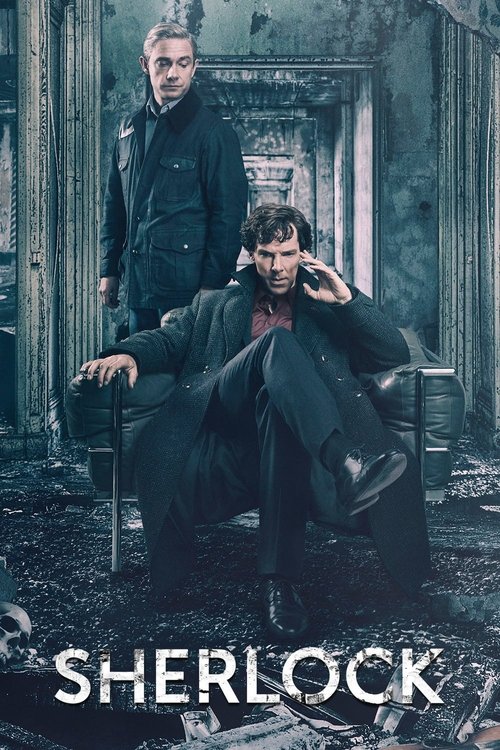
"Sherlock" reimagines Sir Arthur Conan Doyle's iconic detective stories in 21st-century London. The series follows the brilliant but eccentric Sherlock Holmes, a self-proclaimed "high-functioning sociopath," as he solves baffling crimes with his flatmate and steadfast friend, Dr. John Watson, a former army doctor returned from Afghanistan. Holmes's unparalleled intellect and observational skills often put him at odds with the Metropolitan Police, particularly Detective Inspector Greg Lestrade, who grudgingly relies on his genius.
Across four series, each comprised of three feature-length episodes, the duo confronts a variety of modern-day puzzles, from serial killers using smartphones to international espionage rings. Their lives are perpetually intertwined with the enigmatic and malevolent "consulting criminal," Jim Moriarty, who serves as Sherlock's intellectual equal and arch-nemesis. The overarching narrative explores the complex, evolving friendship between Holmes and Watson, the cost of Sherlock's genius on his personal relationships, and the lonely burden of exceptional intelligence in a world that struggles to keep up.
Core Meaning
At its heart, "Sherlock" is an exploration of the paradox of genius in the modern world. The series delves into the profound loneliness and isolation that accompany extraordinary intellect, questioning whether a mind like Sherlock's can ever truly connect with others. It argues that humanity, friendship, and emotional connection—often dismissed by Holmes as weaknesses—are not just advantageous but essential for survival and meaning. The complete story arc is a journey of Sherlock's gradual, painful transformation from a detached calculating machine into someone who understands the value of love and loyalty, ultimately suggesting that true strength lies not in intellect alone, but in the heart that guides it.
Thematic DNA
The Nature of Friendship and Loyalty
The central theme is the powerful, grounding friendship between Sherlock and John. Initially a partnership of convenience, their bond evolves into a deep, loyal brotherhood. John humanizes Sherlock, acting as his moral compass and emotional anchor, while Sherlock gives John the purpose and danger he craved after leaving the army. The series constantly tests their loyalty through manipulation, faked deaths, and personal betrayals, ultimately affirming that their connection is the most vital element in both their lives, saving them from their respective demons—Sherlock's detachment and John's trauma.
Intellect vs. Emotion
Sherlock begins the series championing pure, cold reason, famously declaring "caring is not an advantage." He views emotions as a chemical defect and a hindrance to his work. However, throughout the seasons, this belief is challenged. His adversaries, especially Moriarty and Irene Adler, exploit his emotional attachments. His journey is a slow, reluctant acceptance of his own humanity and the realization that his connection to John, Mrs. Hudson, and others is a source of strength, not a flaw. The series concludes that a balance of intellect and emotion is necessary for a complete existence.
Modernity and Technology
The show masterfully integrates modern technology into the classic detective framework. Sherlock utilizes smartphones, GPS, and the internet as essential tools for crime-solving, a contemporary update to Doyle's character who always used the latest technology available to him. This is visualized through the iconic on-screen text messages and search results, which provide a dynamic window into Sherlock's thought process. The theme explores how timeless methods of deduction are amplified and sometimes complicated by the digital age, from John's blog popularizing Sherlock's exploits to Moriarty's use of media to orchestrate chaos.
The Duality of Heroes and Villains
"Sherlock" constantly blurs the line between its hero and his antagonists. Sherlock himself is described as a "high-functioning sociopath" and often uses morally ambiguous methods. His arch-nemesis, Jim Moriarty, is presented as his dark mirror—a man of equal genius who uses his intellect for chaos rather than order. Moriarty is obsessed with Sherlock because he sees a kindred spirit, stating, "Every fairytale needs a good old-fashioned villain." The series suggests that the capacity for good and evil is a matter of choice and purpose, not merely of intellect or disposition.
Character Analysis
Sherlock Holmes
Benedict Cumberbatch
Motivation
Initially, his sole motivation is the need for complex mental stimulation—"the game." He is driven by a deep-seated fear of boredom. As the series progresses, his motivation evolves. Protecting John Watson and his other few friends becomes a primary driver, culminating in a willingness to sacrifice himself and even kill to keep them safe. By the end, his purpose is redefined by love and responsibility.
Character Arc
Sherlock begins as a brilliant, arrogant, and emotionally detached individual who solves crimes to stave off boredom. He prides himself on his lack of emotional attachments, viewing them as a weakness. Through his friendship with John Watson, he slowly and begrudgingly begins to develop empathy and loyalty. His arc across the four seasons is a transformative journey from a self-described "high-functioning sociopath" to a man who understands and accepts the importance of human connection, ultimately choosing to be a hero not for the intellectual thrill, but for the sake of his friends.
Dr. John Watson
Martin Freeman
Motivation
John is motivated by a need for purpose and a strong moral compass. He is drawn to the danger and excitement that Sherlock provides, as it fills the void left by the war. His deepest motivation is loyalty—to his friends, his principles, and later, his family. He consistently puts himself in harm's way for Sherlock, driven by a profound sense of duty and friendship.
Character Arc
John starts as a traumatized former army doctor, physically and psychologically wounded, feeling purposeless in civilian life. Meeting Sherlock gives him a new sense of identity and adventure. His arc is about finding a new family and a new way to be a soldier—protecting Sherlock and the innocent. He acts as Sherlock's conscience and anchor to humanity. Over the series, he grapples with the immense danger of Sherlock's world, gets married, becomes a father, and endures profound loss, emerging as a resilient and fiercely loyal man who is a hero in his own right.
Jim Moriarty
Andrew Scott
Motivation
Moriarty's primary motivation is to escape boredom. He sees life as a game and is entertained by chaos and destruction. His singular focus becomes his obsession with Sherlock Holmes, whom he sees as the only worthy opponent capable of providing a real challenge. His ultimate goal is not just to defeat Sherlock, but to "burn the heart out of him" and prove that they are two sides of the same coin.
Character Arc
Moriarty is introduced as a "consulting criminal," the dark reflection of Sherlock's "consulting detective." He does not have a traditional developmental arc; rather, he serves as a catalyst for Sherlock's. He is a force of pure, joyful chaos, motivated by a desperate need to alleviate his own intellectual boredom. His obsession with Sherlock stems from finding his equal. His arc is short and explosive, culminating in his willingness to die to complete his masterpiece of destroying Sherlock's reputation, cementing his legacy as the ultimate villain whose influence haunts Sherlock long after his physical death.
Mycroft Holmes
Mark Gatiss
Motivation
Mycroft's motivation is national security and, beneath that, the protection of Sherlock. He manipulates events and people on a grand scale to maintain order and safeguard his brother from himself and outside threats. While he feigns indifference, his actions are consistently aimed at ensuring Sherlock's survival, believing his brother's genius to be a vital, if volatile, asset.
Character Arc
Mycroft is introduced as an antagonistic, powerful figure who claims to "be the British government." His relationship with Sherlock is defined by intellectual rivalry and a cold, seemingly detached concern. Over the series, his layers are peeled back to reveal a deep, albeit dysfunctional, love and protectiveness for his younger brother. His arc involves the gradual unveiling of his emotional vulnerability, especially concerning the family's dark secret, Eurus. He transforms from a seemingly omnipotent puppet master to a man burdened by immense responsibility and regret.
Symbols & Motifs
The Deerstalker Hat
The deerstalker symbolizes the public's perception and the myth of "Sherlock Holmes," a persona distinct from the man himself. It represents the caricature he occasionally embraces for effect but largely disdains.
Sherlock rarely wears the hat by choice. He first puts it on for the press in "A Scandal in Belgravia" to play into the media image John's blog has created. Its appearances are often linked to moments when he is performing the role of the great detective, highlighting the gap between his true self and his public legend.
221B Baker Street
The flat at 221B Baker Street represents sanctuary, friendship, and the heart of Sherlock and John's world. It is the one constant place of stability and belonging for two men who are otherwise outsiders.
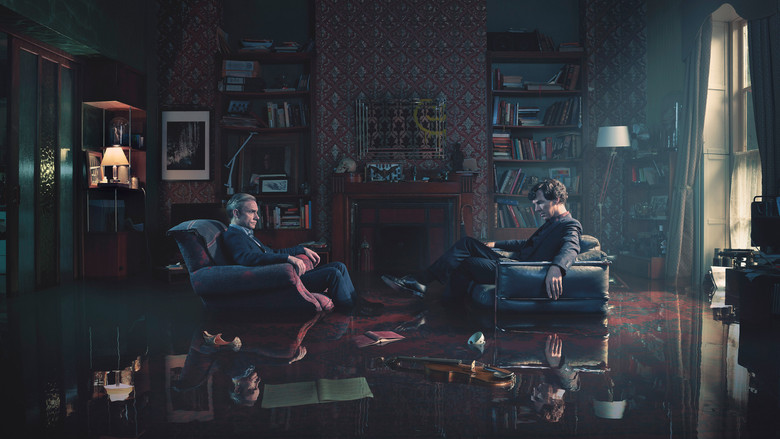
From the first episode, the flat is established as their shared home. It's the setting for countless deductions, arguments, and moments of quiet camaraderie. Its messy, cluttered state reflects Sherlock's mind, yet it's also where their partnership is forged. Threats to the flat often symbolize direct threats to their relationship and safety.
The Smiley Face on the Wall
The spray-painted smiley face, often punctuated by bullet holes, symbolizes Sherlock's boredom, his destructive need for mental stimulation, and his playful defiance of convention.
Appearing in the first episode, "A Study in Pink," it's a modern update to the original stories where Holmes would shoot the initials "VR" (Victoria Regina) into the wall. The face becomes a recurring visual in the flat, a testament to the chaotic energy that defines Sherlock's personality when he is not occupied by a case.
Mobile Phones
Mobile phones symbolize the new speed of information, connection, and manipulation in the modern world. They are the primary tools for both deduction and deception, acting as extensions of the characters' minds.
The show's signature visual is the floating text messages on screen. Sherlock uses his phone to receive case information, John uses it to write his blog, and Moriarty uses it to taunt his victims and orchestrate his crimes. Irene Adler's phone, containing state secrets, becomes the ultimate symbol of power and vulnerability in "A Scandal in Belgravia."
Memorable Quotes
I'm not a psychopath, Anderson, I'm a high-functioning sociopath. Do your research.
— Sherlock Holmes
Context:
Said in Season 1, Episode 1, "A Study in Pink," during a crime scene investigation. Anderson, a forensics officer, calls him a psychopath, and Sherlock delivers this iconic retort before continuing his deduction.
Meaning:
This quote perfectly encapsulates Sherlock's clinical self-assessment and his intellectual arrogance. It's his way of distinguishing his detachment from a more malicious psychopathy, establishing his unique identity while insulting Anderson's intelligence.
Every fairytale needs a good old-fashioned villain.
— Jim Moriarty
Context:
Spoken during his climactic confrontation with Sherlock on the roof of St. Bartholomew's Hospital in Season 2, Episode 3, "The Reichenbach Fall."
Meaning:
This line reveals Moriarty's self-awareness and theatricality. He doesn't see himself as merely a criminal, but as a necessary narrative force—the antagonist required for a story like Sherlock's to be truly great. It highlights his obsession with their rivalry as a grand, epic tale.
The game, Mrs. Hudson, is on!
— Sherlock Holmes
Context:
Sherlock exclaims this at the end of Season 1, Episode 3, "The Great Game," after receiving a direct challenge from his mysterious new adversary, Moriarty.
Meaning:
An iconic modernization of the classic Holmes phrase "The game is afoot." This line signals Sherlock's excitement and readiness to dive into a new, challenging case. It represents his view of detective work as the ultimate form of entertainment.
I'm in shock. Look, I've got a blanket.
— Sherlock Holmes
Context:
Delivered in Season 1, Episode 1, "A Study in Pink," after surviving a tense confrontation with the murderous cabbie and being saved at the last second by John.
Meaning:
This sarcastic line showcases Sherlock's dark humor and his disdain for conventional emotional displays. While wrapped in a shock blanket by paramedics, he mocks the gesture, demonstrating his inability to process trauma or concern in a 'normal' way.
Did you miss me?
— Jim Moriarty
Context:
Appears at the very end of Season 3, Episode 3, "His Last Vow," interrupting Sherlock's exile and pulling him back into the world he just left behind.
Meaning:
This chilling question marks the shocking, impossible return of Sherlock's greatest foe. Broadcast on every screen in the country, it signifies that Moriarty's influence transcends even death, and that his 'game' with Sherlock is far from over.
Episode Highlights
A Study in Pink
The first episode masterfully introduces the main characters and their dynamic. It establishes the show's unique visual style with on-screen text, the fast-paced deductive monologues, and the modern London setting. The central mystery of the serial suicides serves as a perfect vehicle to showcase Sherlock's genius and John's role as his grounded companion.
This episode is the foundation of the entire series. It forges the Holmes-Watson partnership, introduces key supporting characters like Lestrade and Mycroft, and teases the existence of a master criminal, Moriarty, setting the stage for the central conflict of the first two seasons.
The Great Game
A high-stakes, fast-paced episode where Sherlock is forced into a deadly game by a mysterious bomber, who is finally revealed to be Jim Moriarty. Sherlock must solve a series of unrelated puzzles against the clock to save innocent lives, culminating in a tense poolside confrontation.
It's the first physical meeting between Sherlock and his arch-nemesis. The episode solidifies Moriarty as a terrifyingly brilliant and unpredictable villain, establishing the personal and intellectual stakes of their rivalry that will drive the narrative forward.
A Scandal in Belgravia
Sherlock meets his match in Irene Adler, "The Woman," a brilliant and ruthless dominatrix who possesses compromising information that threatens the British government. The episode is a complex game of intellectual and emotional chess between Sherlock, Irene, and Mycroft.
This episode is crucial for Sherlock's emotional development. Irene Adler is one of the few people to ever outsmart him, and his encounter with her forces him to confront feelings of respect, attraction, and vulnerability, challenging his belief that emotion is a disadvantage.
The Reichenbach Fall
Moriarty launches his final, devastating attack: to destroy Sherlock's reputation by convincing the world he is a fraud. The elaborate scheme culminates in an unforgettable confrontation on the roof of St. Bartholomew's Hospital, where Sherlock is forced to take his own life to save his friends.
This is arguably the most pivotal episode of the series. It showcases the depth of Sherlock and John's friendship through John's heartbreaking grief, features the apparent deaths of both hero and villain, and ends on a massive cliffhanger that left audiences speculating for two years.
His Last Vow
Sherlock confronts Charles Augustus Magnussen, a master blackmailer who knows the weakness of every important person in the Western world. The episode also reveals the shocking truth about Mary Watson's past as a secret agent. To protect his friends, Sherlock makes an irreversible decision.
This episode demonstrates the peak of Sherlock's character development, showing he is willing to become a murderer and accept exile to protect those he cares about. It resolves the Mary Morstan arc and ends with the shocking return of Moriarty on every screen in Britain.
The Final Problem
The series finale delves into the Holmes family's darkest secret: a third sibling, the impossibly brilliant and dangerously unstable Eurus Holmes. Sherlock, John, and Mycroft are trapped in the high-security facility of Sherrinford, forced to play Eurus's twisted psychological games to save their own lives and the life of a child.
This episode provides the ultimate context for Sherlock's character, revealing that his emotional detachment was a coping mechanism for childhood trauma. It brings the series' core theme of intellect versus emotion to a dramatic conclusion, with Sherlock choosing emotional connection to save the day, finally completing his transformation into a more human hero.
Philosophical Questions
Is extreme intellect a gift or a curse?
The series constantly explores the isolation that comes with Sherlock's genius. While his mind allows him to perform incredible feats, it also alienates him from almost everyone he meets. He struggles with boredom, social interaction, and forming meaningful relationships. The show asks whether the benefits of such a powerful mind outweigh the profound loneliness and emotional stunting it can cause, suggesting that without human connection, genius is a hollow and destructive force.
What is the relationship between identity and reputation?
Throughout the series, Sherlock grapples with the public persona created by John's blog. In Season 2, Moriarty's entire plan revolves around destroying Sherlock not by killing him, but by dismantling his reputation and turning him from a celebrated genius into a fraudulent villain. The show questions whether we are who we are, or who people perceive us to be, and examines the fragility of public trust in the media age.
Can a person truly change their fundamental nature?
Sherlock's entire character arc revolves around this question. He starts as a self-proclaimed sociopath who scoffs at sentiment. Over four seasons, he develops deep loyalty and love for his friends, making choices based on emotion rather than pure logic. The series explores whether this is a fundamental change in his nature or simply the discovery of a humanity that was always there, buried under layers of trauma and intellectual defense mechanisms.
Alternative Interpretations
The Johnlock Conspiracy (TJLC): The most prominent and debated alternative interpretation is that the series was intentionally written as a slow-burn romance between Sherlock Holmes and John Watson, which was meant to be revealed in the finale. Proponents, known as 'Johnlockers', point to subtext, specific camera shots, color symbolism, and dialogue that they argue frame the relationship in a romantic, rather than platonic, light. The creators have publicly dismissed this theory, leading to ongoing debate within the fandom about authorial intent versus audience interpretation.
Moriarty's Survival: Despite his apparent suicide in "The Reichenbach Fall," many fans theorize that Moriarty somehow faked his death. Theories range from the existence of a twin brother to the idea that Sherlock and Moriarty conspired together to fake both their deaths. The final seasons leave his fate ambiguous, suggesting his return was a posthumous game, but some viewers maintain that the 'consulting criminal' is still alive.
Mycroft as the Master Manipulator: Another interpretation suggests that Mycroft Holmes is the ultimate puppet master of the entire series. In this view, he orchestrates many of the events, including potentially faking Moriarty's return video, to manipulate Sherlock and keep his volatile genius brother occupied and on the side of the government. This reading casts Mycroft's actions as a deeply complex and morally grey attempt to control his brother for the 'greater good'.
Cultural Impact
"Sherlock" premiered in 2010 to critical acclaim, revitalizing the Sherlock Holmes character for a new generation. Its innovative approach of placing the Victorian detective in a modern, tech-savvy London, complete with texting and blogging, was hailed as a masterful adaptation. The series became a global phenomenon, catapulting its leads, Benedict Cumberbatch and Martin Freeman, to international stardom. The show's visual style, particularly its use of on-screen graphics to display text messages and Sherlock's thought processes, was widely influential and has been imitated in other productions.
The series generated a massive and highly active online fandom, which engaged in creating fan fiction, art, and elaborate theories, particularly during the long waits between seasons. The two-year gap following the Season 2 cliffhanger, "The Reichenbach Fall," fueled unprecedented levels of audience speculation about how Sherlock survived his fall. The show's success, along with the Robert Downey Jr. films, sparked a renewed interest in Sherlock Holmes in pop culture, inspiring other adaptations like CBS's "Elementary." While the first two seasons received near-universal praise, later seasons, especially the fourth, were more divisive among critics and audiences, with some criticizing the plots for becoming overly complex and self-referential. Despite this, the series' legacy is significant; it redefined how classic literary characters could be modernized for television and set a new standard for intelligent, cinematic crime drama.
Audience Reception
The audience reception for "Sherlock" was overwhelmingly positive for its first two seasons, with viewers and critics alike praising the sharp writing, charismatic performances by Cumberbatch and Freeman, and innovative visual style. The series quickly gained a massive and dedicated cult following. The season two finale, "The Reichenbach Fall," was a cultural event that generated immense online discussion and speculation. Season three was also highly anticipated and well-received, though some critics and viewers began to feel the plots were becoming more convoluted. The fourth and final season proved to be the most divisive. Many viewers criticized its shift towards a more convoluted, emotionally dramatic, and action-oriented tone, with the finale, "The Final Problem," receiving a particularly mixed response. Common criticisms included the complex and arguably implausible backstory of the secret Holmes sibling, Eurus. Despite the controversial ending, the series as a whole is remembered fondly by many as a landmark piece of television that brilliantly modernized a classic character.
Interesting Facts
- The creators, Steven Moffat and Mark Gatiss, conceived the idea for a modern Sherlock Holmes adaptation during their train journeys to Cardiff for their work on 'Doctor Who'.
- Benedict Cumberbatch was the first and only actor the producers saw for the role of Sherlock. The more difficult role to cast was John Watson.
- Matt Smith, who would go on to play the Eleventh Doctor in 'Doctor Who', auditioned for the role of John Watson but was deemed too 'barmy' by the producers.
- Sherlock's parents in the show are played by Benedict Cumberbatch's actual parents, actors Timothy Carlton and Wanda Ventham.
- The show is primarily filmed in Cardiff, Wales, which stands in for many of the London locations.
- The iconic Belstaff coat worn by Sherlock was personally purchased by co-creator Mark Gatiss for the unaired pilot. He later gifted it to Benedict Cumberbatch.
- The show's popularity led to a significant increase in sales of the original Arthur Conan Doyle books.
- Benedict Cumberbatch is distantly related to Sir Arthur Conan Doyle. They are 16th cousins, twice removed.
- The format was originally planned as six 60-minute episodes per season, but the BBC requested three 90-minute episodes instead, a change the creators believe was key to the show's success and ability to retain its in-demand stars.
Easter Eggs
In the first episode, John Watson and his friend Mike Stamford meet while holding coffee cups from "Criterion Bar."
This is a direct reference to the first Sherlock Holmes novel, A Study in Scarlet, where John Watson runs into his old friend at the Criterion Bar, which leads to him being introduced to Sherlock.
John Watson's blog post titles are modern puns on the original Conan Doyle story titles.
For example, "The Speckled Band" becomes "The Speckled Blonde," and "The Greek Interpreter" becomes "The Geek Interpreter." This is a running gag that pays homage to the source material throughout the series.
The codename 'Vatican Cameos' is used by Sherlock and John as a distress signal.
This is a reference to an unsolved case that Holmes mentions in passing in the original story "The Hound of the Baskervilles." The show's writers took this throwaway line and turned it into a significant plot device and an inside joke for fans of the books.
In "The Hounds of Baskerville," Sherlock frantically searches for cigarettes inside a Persian slipper.
This is a nod to the original stories, where Conan Doyle's Holmes keeps his tobacco stored in a Persian slipper on the mantelpiece.
In "His Last Vow," a bodyguard is shown to have a tattoo of five pips (dots) on his hand.
Sherlock identifies him as a white supremacist. This is a subtle reference to the Conan Doyle story "The Five Orange Pips," where the antagonists were members of the Ku Klux Klan.
⚠️ Spoiler Analysis
Click to reveal detailed analysis with spoilers
Frequently Asked Questions
Explore More About This Movie
Dive deeper into specific aspects of the movie with our detailed analysis pages
Comments (0)
No comments yet. Be the first to share your thoughts!