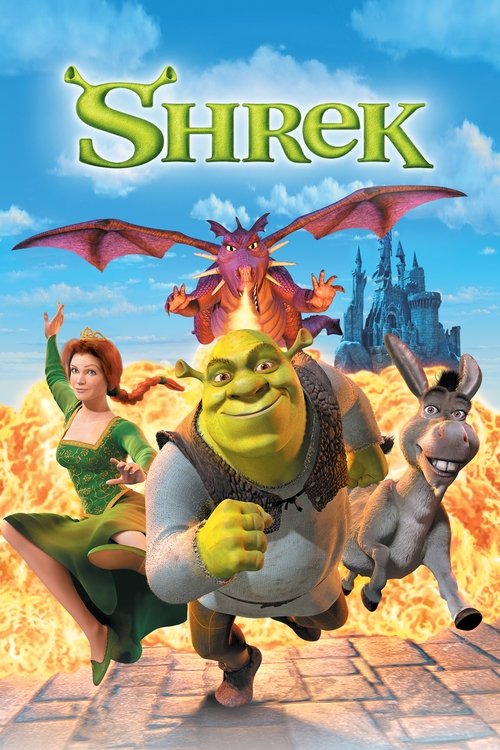
"The greatest fairy tale never told."
Shrek - Symbolism & Philosophy
Symbols & Motifs
Onions
Symbolizes the complexity of personality and the defense mechanisms used to protect the inner self. Unlike a cake (which is sweet and simple), an onion is pungent and complex.
Used in the famous dialogue where Shrek explains to Donkey that ogres have layers, just like onions, illustrating that there is depth beneath his rough exterior.
The Swamp
Represents isolation as a sanctuary but also a prison of loneliness. It is Shrek's safe space where he controls the narrative of his life.
The film begins and ends in the swamp, transforming it from a place of solitary confinement to a shared home filled with friends and love.
Duloc & Lord Farquaad's Castle
Symbolizes artificial perfection, overcompensation, and sterility. The immense size of the castle contrasts with Farquaad's stature, representing his fragile ego.
The perfectly manicured, empty streets of Duloc contrast sharply with the messy, organic vitality of the swamp, highlighting the villain's oppressive desire for control.
The Setting Sun
Represents the transition between appearance and reality. It is the boundary between the public mask and the private truth.
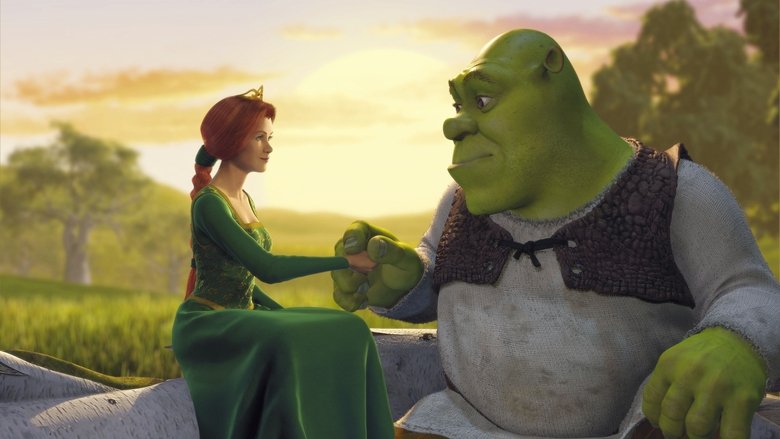
Fiona anxiously watches the sunset each day, as it triggers her transformation into an ogre, forcing her to hide the part of herself she deems unlovable.
Philosophical Questions
Does society create its own monsters?
The film suggests that Shrek is only a 'monster' because society treats him as one. He performs the role expected of him. This raises the question of social constructivism regarding identity and deviance.
What is the nature of true beauty?
By ending with Fiona permanently as an ogre, the film challenges the Platonic ideal that Beauty equals Goodness. It asks whether beauty is an objective physical quality or a subjective emotional experience derived from love.
Core Meaning
At its heart, Shrek is a subversive manifesto on self-acceptance and the deconstruction of superficial beauty standards. Director Andrew Adamson used the film to challenge the "Disneyfication" of folklore, arguing that true character is defined by layers rather than appearances.
The film posits that society's labels (monster, freak, hero) are arbitrary and that genuine happiness comes from embracing one's idiosyncrasies. It teaches that one does not need to be perfect or beautiful to be worthy of love and that friendship often blooms in the most unlikely places.