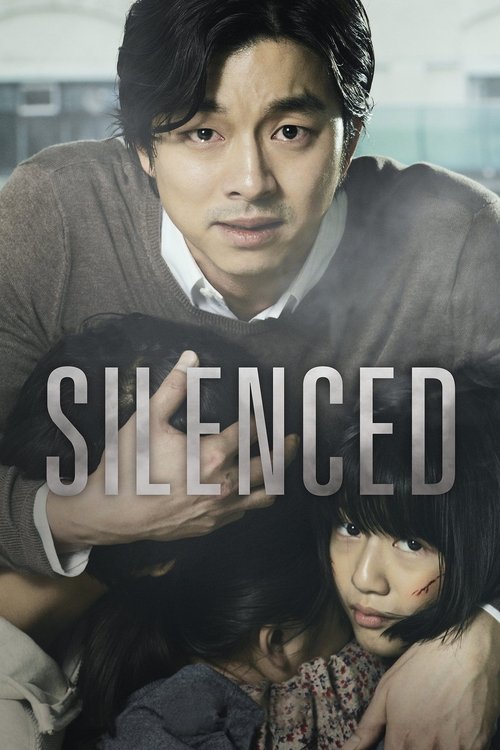
Silenced
A harrowing social drama that unfolds like a suffocating fog, exposing the chilling silence surrounding unspeakable abuse and the courageous fight for a whisper of justice.
Silenced
Silenced

도가니

"The hideous truth, concealed far too long."

22 September 2011 South Korea 125 min ⭐ 8.2 (710)
Director: Hwang Dong-hyuk
Cast: Gong Yoo, Jung Yu-mi, Kim Hyeon-soo, Jung In-seo, Baek Seung-hwan
Drama
Systemic Corruption and Collusion Injustice Towards the Vulnerable The Courage of the Whistleblower The Power of Film as a Social Catalyst
Budget: $2,200,000
Box Office: $31,500,000

Silenced - Ending Explained

⚠️ Spoiler Analysis

The plot of "Silenced" follows Kang In-ho's gradual uncovering of the horrific abuse at the Ja-ae Academy. He witnesses teachers brutally beating students, and with the help of activist Seo Yoo-jin, he convinces three children—Yeon-doo, Yoo-ri, and Min-su—to testify about the repeated sexual assaults they have endured from the principal, the administrative head, and a teacher. This leads to a grueling legal battle where the systemic corruption of the town becomes apparent. The defendants hire a lawyer with connections to the judge, key witnesses are bribed or intimidated, and the victims' families are pressured into accepting settlement money, which weakens the prosecution's case.

The central twist is not a plot point but the crushing reality of the verdict. Despite the children's brave and harrowing testimonies in court, the abusers receive incredibly lenient sentences, such as suspended jail time and small fines, allowing them to return to their positions at the school. This devastating outcome reveals the hidden meaning of the film: the true evil is not just the perpetrators, but the entire societal structure that protects them. The climax sees one of the victims, Min-su, take justice into his own hands. He confronts his abuser, the teacher Park Bo-hyun, and in a struggle, pulls both of them in front of an oncoming train, resulting in a murder-suicide. The film ends on a profoundly somber note. The final appeal is lost, and during a public protest, In-ho is arrested while holding a portrait of the deceased Min-su, a final, desperate act to make the world recognize the boy's stolen life. The ending makes it clear that while the protagonists fought to break the silence, the roar of a corrupt system ultimately drowned them out, with the only form of 'justice' being a tragic, violent act of desperation.

Alternative Interpretations

While the film's central message is a straightforward indictment of injustice, some critical discussions focus on the representation of its protagonists and the nature of its critique. One interpretation suggests that Kang In-ho, while heroic, is also a somewhat passive character who is largely swept along by events and the more proactive Seo Yoo-jin. This reading views the film as highlighting that moral outrage (In-ho) is insufficient without the structural knowledge and relentless drive of activism (Yoo-jin).

Another perspective focuses on the film's ending. The tragic conclusion, where justice is not served and a victim takes his own life to enact revenge, can be read in two ways. The dominant interpretation is one of profound pessimism, suggesting that in a deeply corrupt system, true justice is impossible, and violence begets violence. However, an alternative reading sees a glimmer of hope not in the legal outcome, but in the act of resistance itself. Yoo-jin's final quote about fighting 'to stop the world from changing us' suggests that the true victory lies in maintaining one's moral integrity and continuing the fight, regardless of the outcome. The final protest, though violently suppressed, signifies that the silence has been broken, which is a victory in itself.