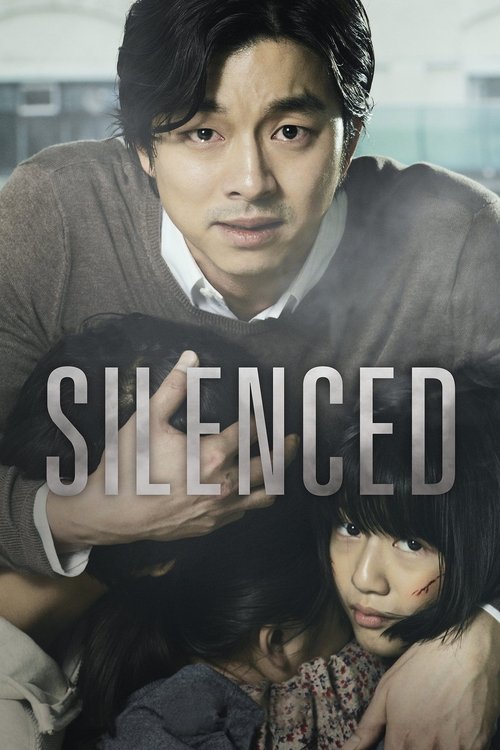
Silenced
도가니
"The hideous truth, concealed far too long."
Overview
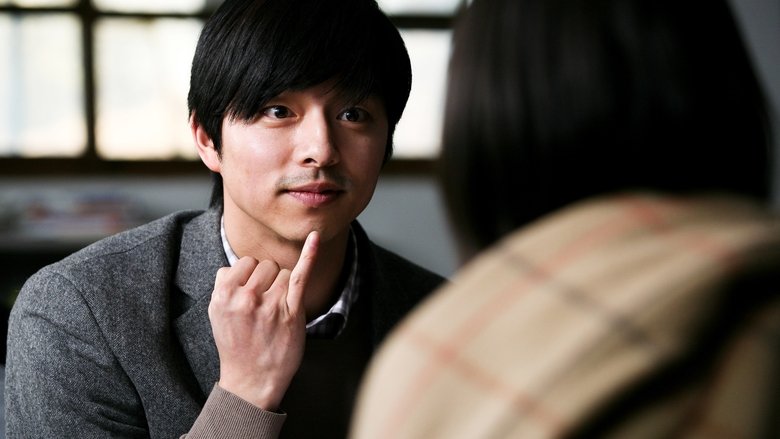
"Silenced" (Original Title: 도가니) is a 2011 South Korean drama film directed by Hwang Dong-hyuk, based on the novel "The Crucible" by Gong Ji-young, which in turn was inspired by harrowing real-life events at the Gwangju Inhwa School for the deaf. The film follows Kang In-ho (Gong Yoo), a compassionate art teacher who accepts a new position at a school for hearing-impaired children in the fictional, fog-enshrouded city of Mujin.
Upon his arrival, In-ho is unsettled by the oppressive atmosphere and the fearful, withdrawn demeanor of the students. He soon discovers a horrifying secret: the children are victims of systematic physical and sexual abuse at the hands of the school's most respected faculty members, including the principal and administrators. Teaming up with a local human rights activist, Seo Yoo-jin (Jung Yu-mi), In-ho embarks on a desperate and perilous journey to expose the truth and bring the perpetrators to justice. However, they face a formidable wall of corruption and collusion, as the abusers are protected by a network of powerful figures in the community, including the police, doctors, and church elders, who are determined to silence the victims and their advocates.

Core Meaning
The core meaning of "Silenced" is a blistering indictment of a society that fails its most vulnerable members. Director Hwang Dong-hyuk sought to expose the institutional corruption, societal indifference, and the perversion of power that allowed horrific abuse to occur and go unpunished. The film is not merely about the crimes themselves, but about the systemic 'silence'—the collusion of law, religion, and community—that protects the powerful and discards the weak. It carries a powerful message about the necessity of fighting for justice, even when the world seems determined to ignore the truth. The film's ultimate purpose was to provoke outrage and demand change, questioning whether justice is attainable when confronted by deeply entrenched corruption and societal apathy.
Thematic DNA
Systemic Corruption and Collusion
This is the central theme of the film. The abuse at the school is enabled and protected by a network of corruption that extends through the entire community of Mujin. The school's respected principal, teachers, local police, prosecutors, and even church elders are all complicit, either through direct involvement, bribery, or turning a blind eye. This demonstrates how the powerful can manipulate the legal and social systems to maintain their status and evade accountability, rendering justice nearly impossible for the powerless victims.
Injustice Towards the Vulnerable
The film powerfully illustrates how society's most vulnerable individuals—in this case, hearing-impaired children from disadvantaged backgrounds—are disproportionately targeted and failed by the systems meant to protect them. Their disability is exploited, as their inability to speak and be heard in a literal sense becomes a metaphor for their societal voicelessness. The legal proceedings expose the deep-seated prejudice and dismissiveness they face, where their testimony is questioned and their abusers receive laughably lenient sentences.
The Courage of the Whistleblower
Kang In-ho's journey represents the moral struggle and courage required to stand up against overwhelming injustice. Initially hesitant due to his own financial burdens and the need to care for his sick daughter, he cannot ignore the horrors he witnesses. His character, along with Seo Yoo-jin's, highlights the profound personal sacrifice involved in fighting a corrupt system. They face threats, lose their jobs, and are met with societal resistance, yet they persist, driven by a fundamental sense of right and wrong.
The Power of Film as a Social Catalyst
The film itself transcends its narrative to become a real-world agent of change. The story's raw and unflinching depiction of the real-life Gwangju Inhwa School case sparked massive public outrage in South Korea upon its release. This public pressure directly led to the reopening of the investigation and the passing of new legislation, known as the "Dogani Bill," which strengthened laws against sexual abuse of minors and the disabled. This theme demonstrates the profound impact that art and media can have on society and lawmaking.
Character Analysis
Kang In-ho
Gong Yoo
Motivation
His primary motivation evolves from providing for his family to an unshakeable moral imperative to protect the abused students and seek justice for them. His empathy as a father fuels his determination to fight for these children who have no one else to defend them.
Character Arc
Kang In-ho begins as an ordinary man burdened by personal problems, primarily seeking stable employment to care for his sick daughter. He is initially passive and hesitant to get involved in the school's dark affairs. However, witnessing the brutal abuse firsthand awakens his conscience. His arc is a transformation from a passive bystander into a courageous advocate who risks everything—his career, safety, and financial stability—to fight for the children, embodying the idea that ordinary people can be compelled to do extraordinary things in the face of profound evil.
Seo Yoo-jin
Jung Yu-mi
Motivation
Her motivation is a deeply ingrained belief in human rights and justice for the oppressed. She is professionally and personally dedicated to giving a voice to those who have been silenced by society, making the children's case her most urgent and personal battle.
Character Arc
Seo Yoo-jin is introduced as a committed human rights activist who is already fighting against societal injustice. Her character arc is less about transformation and more about steadfast perseverance in the face of crushing disillusionment. She provides the legal and activist framework for In-ho's moral outrage. While she is deeply shaken by the corruption they encounter, her resolve to help the children never wavers, even when the legal system fails them completely.
Kim Yeon-doo
Kim Hyeon-soo
Motivation
Her motivation is a simple, desperate desire for the abuse to stop and for the adults who hurt her to be punished. Encouraged by In-ho's kindness, she hopes that telling the truth will finally bring safety and justice.
Character Arc
Yeon-doo is one of the central child victims. Her arc is one of finding the courage to speak out after years of silent suffering. Initially fearful and withdrawn, her bond with Kang In-ho gives her the strength to testify. Her journey through the traumatic court process, where her testimony is graphically detailed and then dismissed, represents the re-traumatization that victims often endure when seeking justice. Despite the legal defeat, her act of speaking out is a significant personal victory.
Lee Kang-seok (Principal) & Lee Kang-bok (Admin Head)
Jang Gwang
Motivation
Their motivations are power, greed, and sadistic gratification. They exploit the children's vulnerability for their own perverse pleasure and financial gain (demanding a bribe from In-ho), confident that their societal standing and corrupt network will protect them from any consequences.
Character Arc
The identical twin brothers who run the school are the primary antagonists. They do not have a developmental arc; they are portrayed as irredeemably evil and corrupt from the beginning. They represent the absolute abuse of power, using their respected positions in the community, their wealth, and their connections to commit and conceal heinous crimes with impunity. Their lack of remorse, even when confronted, highlights the depth of their depravity.
Symbols & Motifs
Fog
The persistent fog that blankets the town of Mujin symbolizes the moral obscurity, concealment, and suffocating silence that allows the horrific abuse to continue unnoticed by the outside world. It represents a deliberate clouding of the truth and the community's willful ignorance. The name of the town, Mujin, itself means 'foggy town.' Breaking through the fog is akin to exposing the painful, hidden reality.
The fog is a constant visual motif from the moment Kang In-ho drives into Mujin in the opening scene. It surrounds the school, giving it an isolated and sinister atmosphere, and visually represents the psychological state of confusion and oppression felt by the victims and the protagonists as they struggle to find clarity and justice.
The Washing Machine
The washing machine used to torture a student symbolizes the attempt by the abusers to violently 'cleanse' or erase the children's identities and spirits. It is a horrifying perversion of a domestic object, turning a tool for cleaning into one of brutal, dehumanizing punishment. It represents the cyclical, churning nature of the violence inflicted upon the children.
In one of the film's most disturbing scenes, Kang In-ho discovers a teacher, Yoon Ja-ae, forcing a student's head into a spinning washing machine as a form of punishment. This moment is a turning point for In-ho, solidifying his resolve to intervene as he witnesses the sheer sadism of the faculty firsthand.
Sign Language
Sign language in the film functions as the voice of the silenced. It is the medium through which the children bravely articulate their trauma. However, in the courtroom, it also symbolizes the barrier to justice. Their 'speech' is mediated through interpreters and is easily dismissed or disbelieved by a legal system that privileges spoken word and is prejudiced against their testimony. It represents both the children's powerful truth and their marginalization.
The most pivotal scenes involving sign language occur during the children's harrowing testimonies in court. As they recount the abuse, their hands tell a story of immense pain and courage. The effectiveness and interpretation of their signing become a central point of conflict, highlighting the systemic failure to truly listen to them.
Memorable Quotes
우리가 싸우는 건, 세상을 바꾸기 위해서가 아니라 세상이 우리를 바꾸지 못하게 하기 위해서예요.
— Seo Yoo-jin
Context:
This is said towards the end of the film, after the court has delivered lenient sentences to the abusers. It is a moment of profound reflection between Yoo-jin and In-ho, where they must reconcile their failure in the legal arena with the moral necessity of their fight.
Meaning:
Translated as, "The reason we are fighting is not to change the world, but to prevent the world from changing us." This quote encapsulates the film's heartbreaking yet resilient philosophy. After facing a devastating legal defeat, Yoo-jin expresses that their struggle is not about achieving an impossible, grand victory against a corrupt system, but about retaining their humanity, integrity, and sense of justice in the face of overwhelming evil. It is a declaration of moral survival.
이 아이의 이름은 민수입니다. 이 아이는 듣지도, 말하지도 못합니다.
— Kang In-ho
Context:
This occurs during the film's climax. After Min-su has tragically died in a murder-suicide with his abuser, In-ho stands amidst a chaotic protest being suppressed by police water cannons. He holds Min-su's portrait and repeats these lines, his voice filled with grief and rage, before being arrested.
Meaning:
Translated as, "This child's name is Min-su. This child could neither hear nor speak." This repeated chant is a desperate plea for society to recognize the humanity of an individual victim who was utterly failed by the system. By holding up Min-su's funeral portrait and stating his name and disability, In-ho is fighting against the erasure of the victims, forcing the world to see a person, not just a statistic in a lost case.
Philosophical Questions
What is the nature of justice when legal systems are corrupt?
The film relentlessly explores this question by depicting a legal system that is not a tool for justice, but a shield for the powerful. The perpetrators use their wealth and connections to hire a former judge as their lawyer, bribe witnesses, and manipulate the proceedings. The court's lenient verdict forces the characters and the audience to question what justice means when the very institutions designed to uphold it are rotten. It culminates in Min-su's tragic decision to seek personal vengeance, suggesting that when legal justice fails, a more primal, destructive form of 'justice' may emerge.
What is the moral responsibility of a bystander in the face of atrocity?
Kang In-ho's character arc is a direct examination of this question. Initially, he is a bystander, concerned with his own problems. The film shows how seeing injustice is not enough; there is a moral imperative to act, even at great personal cost. The other teachers at the school who remain silent and complicit represent the moral failure of inaction. The film argues that silence in the face of evil is a form of complicity and that true morality requires courageous intervention, transforming the bystander into a participant in the struggle for justice.
Can art create tangible social change?
The very existence and real-world impact of "Silenced" provide a powerful, affirmative answer to this question. The film depicts a fictional struggle that mirrors a real one, and in doing so, it moved beyond the screen to become a tool for advocacy. It ignited public discourse, mobilized citizens, and directly led to legislative reform—the "Dogani Bill." The film serves as a testament to the power of storytelling to expose uncomfortable truths, shape public opinion, and hold institutions accountable in a way that news reports and legal proceedings sometimes cannot.
Alternative Interpretations
While the film's central message is a straightforward indictment of injustice, some critical discussions focus on the representation of its protagonists and the nature of its critique. One interpretation suggests that Kang In-ho, while heroic, is also a somewhat passive character who is largely swept along by events and the more proactive Seo Yoo-jin. This reading views the film as highlighting that moral outrage (In-ho) is insufficient without the structural knowledge and relentless drive of activism (Yoo-jin).
Another perspective focuses on the film's ending. The tragic conclusion, where justice is not served and a victim takes his own life to enact revenge, can be read in two ways. The dominant interpretation is one of profound pessimism, suggesting that in a deeply corrupt system, true justice is impossible, and violence begets violence. However, an alternative reading sees a glimmer of hope not in the legal outcome, but in the act of resistance itself. Yoo-jin's final quote about fighting 'to stop the world from changing us' suggests that the true victory lies in maintaining one's moral integrity and continuing the fight, regardless of the outcome. The final protest, though violently suppressed, signifies that the silence has been broken, which is a victory in itself.
Cultural Impact
The cultural impact of "Silenced" in South Korea was monumental and unprecedented for a feature film. More than just a successful movie, it became a powerful social and political catalyst. Upon its release in September 2011, the film's graphic and emotionally devastating portrayal of the real-life abuse at the Gwangju Inhwa School shocked the nation and ignited a firestorm of public outrage. Millions of citizens, horrified that the perpetrators had received minimal punishment, signed online petitions demanding justice.
This overwhelming public pressure forced a reluctant government and legal system to act. Police reopened the investigations into the historical abuse cases. Most significantly, the National Assembly swiftly passed a series of legislative reforms popularly known as the 'Dogani Bill' (도가니법), named after the film's Korean title. This bill eliminated the statute of limitations for sexual crimes against children and disabled people and significantly increased the penalties for such offenses. The real school at the center of the scandal was shut down in the months following the film's release. "Silenced" is a rare and powerful example of a film directly influencing national law and bringing about tangible social change, cementing its place as one of the most socially impactful films in Korean history.
Audience Reception
The audience reception to "Silenced" was overwhelmingly emotional and impassioned. Viewers in South Korea and abroad reported feeling immense anger, grief, and helplessness while watching the film. The graphic and realistic depiction of child abuse was a major point of discussion; while some critics found it sensationalized and exploitative, most audience members felt it was a necessary and brutally honest portrayal required to convey the gravity of the crimes and provoke a strong reaction. The performances of the child actors—Kim Hyeon-soo, Jung In-seo, and Baek Seung-hwan—were universally praised for their harrowing and authentic portrayals of the victims. The film was widely criticized for being emotionally draining and difficult to watch, yet it was simultaneously praised as a 'must-see' film for its social importance and its power to enact real-world change. The ultimate failure of the justice system in the film's narrative left audiences infuriated and galvanized, directly contributing to the public outcry that led to legal reforms.
Interesting Facts
- The film is based on the 2009 novel "The Crucible" (도가니) by Gong Ji-young, which itself was inspired by true events of abuse at the Gwangju Inhwa School for the deaf that came to light in 2005.
- Actor Gong Yoo was instrumental in the film's creation. He read the novel while serving his mandatory military service and was so moved by it that he actively pursued the author and producers to get it adapted into a film.
- The film's release caused a massive public uproar in South Korea, attracting over 4 million viewers.
- The public outrage led authorities to reopen the investigation into the real-life Gwangju Inhwa School case.
- As a direct result of the film's impact, the South Korean National Assembly passed the "Dogani Bill" (named after the film's Korean title) in October 2011. This bill abolished the statute of limitations for sex crimes against minors under 13 and the disabled, and increased the maximum prison sentences for such crimes.
- In November 2011, two months after the film's release, the Gwangju Inhwa School was officially shut down.
- The grandmother of the director, Hwang Dong-hyuk, played the role of Min-su's grandmother in the film.
⚠️ Spoiler Analysis
Click to reveal detailed analysis with spoilers
Frequently Asked Questions
Explore More About This Movie
Dive deeper into specific aspects of the movie with our detailed analysis pages
Comments (0)
No comments yet. Be the first to share your thoughts!