
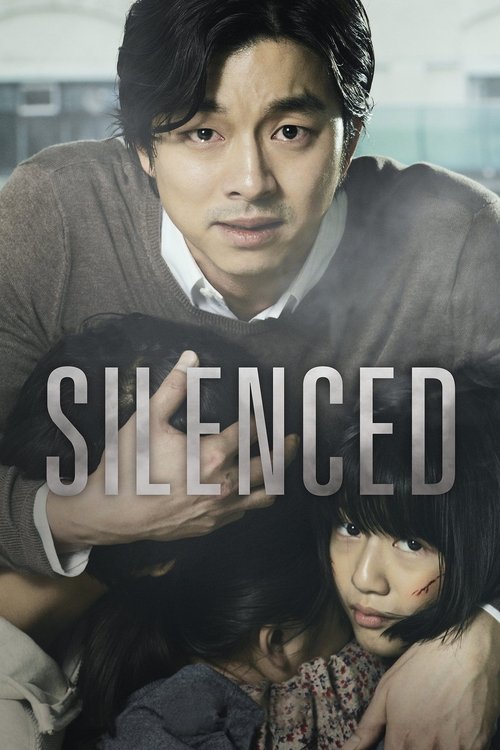
도가니
"The hideous truth, concealed far too long."
Silenced - Symbolism & Philosophy
Symbols & Motifs
Fog
The persistent fog that blankets the town of Mujin symbolizes the moral obscurity, concealment, and suffocating silence that allows the horrific abuse to continue unnoticed by the outside world. It represents a deliberate clouding of the truth and the community's willful ignorance. The name of the town, Mujin, itself means 'foggy town.' Breaking through the fog is akin to exposing the painful, hidden reality.
The fog is a constant visual motif from the moment Kang In-ho drives into Mujin in the opening scene. It surrounds the school, giving it an isolated and sinister atmosphere, and visually represents the psychological state of confusion and oppression felt by the victims and the protagonists as they struggle to find clarity and justice.
The Washing Machine
The washing machine used to torture a student symbolizes the attempt by the abusers to violently 'cleanse' or erase the children's identities and spirits. It is a horrifying perversion of a domestic object, turning a tool for cleaning into one of brutal, dehumanizing punishment. It represents the cyclical, churning nature of the violence inflicted upon the children.
In one of the film's most disturbing scenes, Kang In-ho discovers a teacher, Yoon Ja-ae, forcing a student's head into a spinning washing machine as a form of punishment. This moment is a turning point for In-ho, solidifying his resolve to intervene as he witnesses the sheer sadism of the faculty firsthand.
Sign Language
Sign language in the film functions as the voice of the silenced. It is the medium through which the children bravely articulate their trauma. However, in the courtroom, it also symbolizes the barrier to justice. Their 'speech' is mediated through interpreters and is easily dismissed or disbelieved by a legal system that privileges spoken word and is prejudiced against their testimony. It represents both the children's powerful truth and their marginalization.
The most pivotal scenes involving sign language occur during the children's harrowing testimonies in court. As they recount the abuse, their hands tell a story of immense pain and courage. The effectiveness and interpretation of their signing become a central point of conflict, highlighting the systemic failure to truly listen to them.
Philosophical Questions
What is the nature of justice when legal systems are corrupt?
The film relentlessly explores this question by depicting a legal system that is not a tool for justice, but a shield for the powerful. The perpetrators use their wealth and connections to hire a former judge as their lawyer, bribe witnesses, and manipulate the proceedings. The court's lenient verdict forces the characters and the audience to question what justice means when the very institutions designed to uphold it are rotten. It culminates in Min-su's tragic decision to seek personal vengeance, suggesting that when legal justice fails, a more primal, destructive form of 'justice' may emerge.
What is the moral responsibility of a bystander in the face of atrocity?
Kang In-ho's character arc is a direct examination of this question. Initially, he is a bystander, concerned with his own problems. The film shows how seeing injustice is not enough; there is a moral imperative to act, even at great personal cost. The other teachers at the school who remain silent and complicit represent the moral failure of inaction. The film argues that silence in the face of evil is a form of complicity and that true morality requires courageous intervention, transforming the bystander into a participant in the struggle for justice.
Can art create tangible social change?
The very existence and real-world impact of "Silenced" provide a powerful, affirmative answer to this question. The film depicts a fictional struggle that mirrors a real one, and in doing so, it moved beyond the screen to become a tool for advocacy. It ignited public discourse, mobilized citizens, and directly led to legislative reform—the "Dogani Bill." The film serves as a testament to the power of storytelling to expose uncomfortable truths, shape public opinion, and hold institutions accountable in a way that news reports and legal proceedings sometimes cannot.
Core Meaning
The core meaning of "Silenced" is a blistering indictment of a society that fails its most vulnerable members. Director Hwang Dong-hyuk sought to expose the institutional corruption, societal indifference, and the perversion of power that allowed horrific abuse to occur and go unpunished. The film is not merely about the crimes themselves, but about the systemic 'silence'—the collusion of law, religion, and community—that protects the powerful and discards the weak. It carries a powerful message about the necessity of fighting for justice, even when the world seems determined to ignore the truth. The film's ultimate purpose was to provoke outrage and demand change, questioning whether justice is attainable when confronted by deeply entrenched corruption and societal apathy.