Simone, le voyage du siècle
"We are responsible for what will unite us tomorrow"
Simone: Woman of the Century - Symbolism & Philosophy
Symbols & Motifs
The Chanel Suit
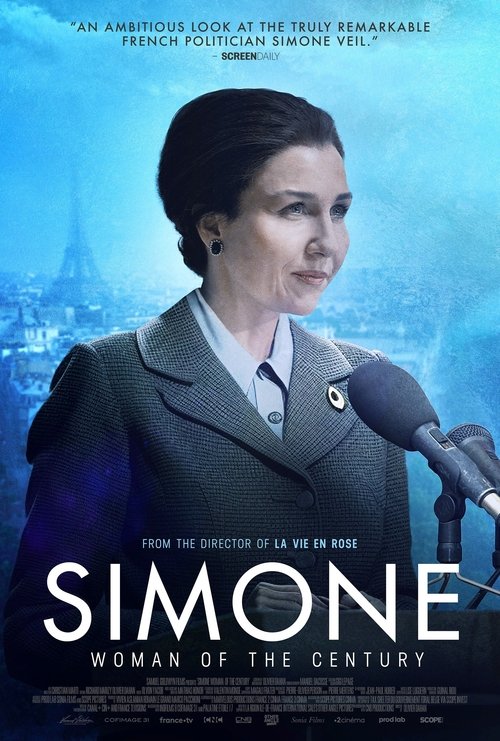
Simone Veil's signature Chanel suits symbolize her strength, professionalism, and unyielding dignity in the face of adversity. It represents her armor in the political arena, a conscious choice of attire that commands respect in a world dominated by men. It also signifies her return to and embrace of life and culture after the dehumanization of the camps.
Throughout the latter half of the film, Elsa Zylberstein's Simone is almost always seen in one of her elegant tweed suits. The costume designer worked closely with the House of Chanel to faithfully recreate the specific outfits Veil wore during key moments, such as her powerful speech defending the abortion bill in Parliament. This visual consistency underscores the suit as an essential part of her public identity and her fight for freedom and tolerance.
Laying the First Stone
This act symbolizes the bridging of Simone's past trauma and her present public duty. By openly stating that her masonry skill comes from her time in the camps, she breaks a long-held public silence, reclaiming a traumatic memory and transforming it into a moment of defiant truth-telling. It represents the "double penalty" of survivors who were expected to remain silent upon their return.
In a scene set in 1975, Simone, as Minister of Health, is at a ceremony to lay the first stone for a children's hospital. When an official compliments her technique with the trowel, she calmly replies, "I did this... when I was deported... It's been my profession." This moment, based on a real event, is depicted with a quiet intensity, followed by a stunned silence from those around her, powerfully illustrating the weight of her past.
The Non-Linear timeline
The fragmented, non-chronological structure of the film is itself a symbol of how memory and trauma function. It rejects a simple, linear progression of a life, suggesting instead that the past, particularly the trauma of the Holocaust, is always present and can resurface at any moment, influencing and defining the present.
The film constantly jumps between different periods of Simone's life—her idyllic childhood, the horror of Auschwitz, her political battles in the 1970s, and her later years. Director Olivier Dahan uses this "emotional chronology" rather than a factual one, where scenes are linked by thematic or emotional echoes rather than by date, to create a sensory narrative that reflects the inner world of a trauma survivor.
Philosophical Questions
What is the relationship between memory and history?
The film explores this question through its very structure. Simone's voiceover near the end explicitly states that for a few generations, memory and history are intertwined, but that this connection is fragile. The film posits that history without the visceral, personal component of memory becomes a sterile set of facts, easily ignored or manipulated. It argues for the vital importance of transmitting first-hand or second-hand memory (the "voyage of the century") to keep the ethical lessons of history alive and prevent the repetition of past atrocities.
Can personal trauma be a catalyst for societal good?
The film presents a resounding 'yes' to this question. It frames Simone Veil's immense suffering not as a debilitating force, but as the very source of her strength and empathy. Her fight for the dignity of prisoners, women, and all of Europe is depicted as a direct result of being stripped of her own dignity. The film explores the profound psychological alchemy through which the experience of absolute evil can forge an unbreakable commitment to justice and humanism, suggesting that the deepest understanding of what is right can come from experiencing the deepest wrong.
How does a society choose what to remember and what to forget?
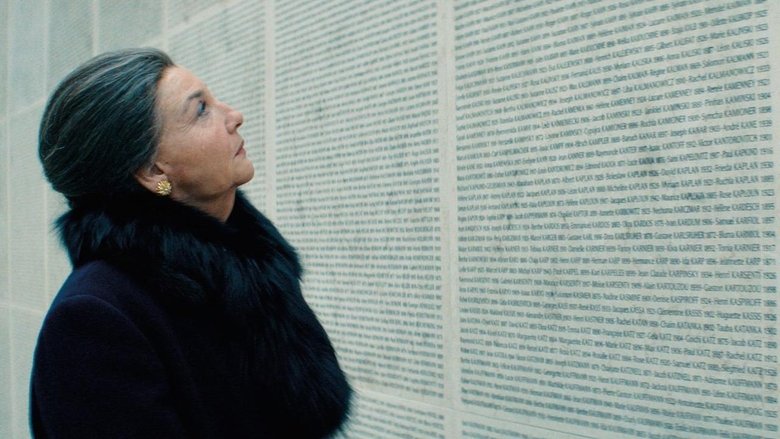
The film touches on France's post-war silence regarding the Holocaust. One scene highlights the "double penalty" for survivors who were expected not to speak of their experiences upon their return. Simone's decision to break this silence, and later to dedicate herself to the memory of the Shoah, is a central theme. The film asks viewers to consider the political and social mechanisms that lead to collective amnesia and highlights the courage required to force a society to confront the uncomfortable truths of its past.
Core Meaning
The core meaning of "Simone: Woman of the Century" lies in the indomitable power of resilience and the profound connection between personal trauma and public service. Director Olivier Dahan posits that Simone Veil's entire life's work—her fight for women's rights, her advocacy for prisoners, and her dedication to a unified Europe—was a direct response to the dehumanization she experienced during the Holocaust. The film's central message is that memory, however painful, must be transmitted to future generations as a bulwark against hatred and injustice. It's a testament to how one individual, forged in the crucible of immense suffering, can dedicate their life to ensuring such atrocities never happen again, transforming personal tragedy into a universal message of hope and human dignity.