
"What a Glorious Feeling!"
Singin' in the Rain - Symbolism & Philosophy
Symbols & Motifs
Rain and the Umbrella
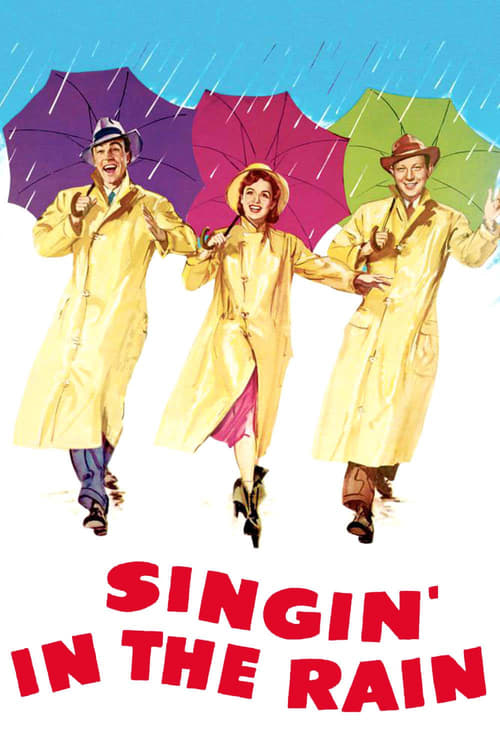
The rain symbolizes life's hardships, challenges, and the gloom that can accompany difficult situations. The umbrella represents protection and the conventional way of dealing with these problems. Don's act of closing his umbrella and joyfully singing and dancing in the downpour signifies his rebellion against negativity and his choice to embrace happiness and love, no matter the circumstances. It's a powerful symbol of optimism and inner joy triumphing over external adversity.
This is most famously used in the title musical number, "Singin' in the Rain." After dropping Kathy off at her home and realizing he's deeply in love, Don is so euphoric that he welcomes the torrential rain, turning what should be an unpleasant experience into a moment of pure, unadulterated bliss.
The Microphone
The microphone symbolizes the disruptive and revealing nature of the new sound technology. It is an unforgiving tool that exposes the truth. For characters like Lina Lamont, it is an obstacle that reveals her vocal inadequacy and threatens her career. For those with talent like Kathy, it is an opportunity, a means to be heard and recognized.
The microphone is a source of constant comedic struggle during the filming of "The Dueling Cavalier." Lina either can't be heard, speaks into it incorrectly, or the sound of her pearls clanking against it is captured. This highlights the technical hurdles and the ways in which the new technology could make or break a star.
The Curtain
The curtain symbolizes the boundary between illusion and reality. Throughout the film, what happens behind the curtain is the truth of film production—the hard work, the secrets, and the real talent. Raising the curtain literally and metaphorically means exposing the truth and shattering the illusion for the audience.
The most significant use is at the premiere of "The Dancing Cavalier." When the audience demands Lina sing live, Don, Cosmo, and R.F. hoist the curtain to reveal Kathy behind it, singing into the microphone. This act exposes Lina's fraudulence and reveals Kathy as the true star, breaking the Hollywood illusion.
Philosophical Questions
What is the relationship between authenticity and artifice?
The film constantly juxtaposes the manufactured reality of Hollywood with genuine emotion. Don's public persona is a lie, Lina's stardom is built on an illusion, and the filmmaking process itself is shown to be a series of tricks. However, the film argues that true art and profound emotion—like Don's love for Kathy, expressed in the fabricated setting of a soundstage—can emerge from this artifice. It asks whether an illusion that creates a genuine emotional response is any less valid than reality.
How do we find happiness in times of disruptive change?
The arrival of sound throws the characters' world into chaos, threatening careers and creating immense stress. The film's answer to this challenge is embodied in its title song: optimism, adaptability, and focusing on the sources of joy in one's life, like love and friendship. It suggests that embracing change, rather than resisting it like Lina does, is the key to not only surviving but thriving. Don's joyful dance in the storm is a powerful metaphor for finding an inner light during dark times.
What defines true talent and artistry?
"Singin' in the Rain" contrasts Lina Lamont, who has the image of a star but no discernible talent, with Kathy Selden, who has genuine skill but lacks recognition. The film ultimately argues that true artistry is based on substance—a beautiful voice, dancing ability, authentic emotion—rather than just a marketable image. It champions the idea that while fame can be manufactured, true talent will eventually be recognized and rewarded.
Core Meaning
"Singin' in the Rain" is a joyous celebration of resilience, innovation, and authenticity in the face of technological upheaval. The film's core message is that true talent and genuine emotion will always triumph over superficiality and illusion. It explores the idea that embracing change, however chaotic, can lead to new forms of creativity and happiness. The transition from silent films to talkies serves as a metaphor for any major life change, suggesting that with optimism, friendship, and love, any storm can be weathered. The iconic title number, where Don Lockwood dances joyfully in a downpour, perfectly encapsulates this theme: finding profound happiness and liberation amidst adversity.