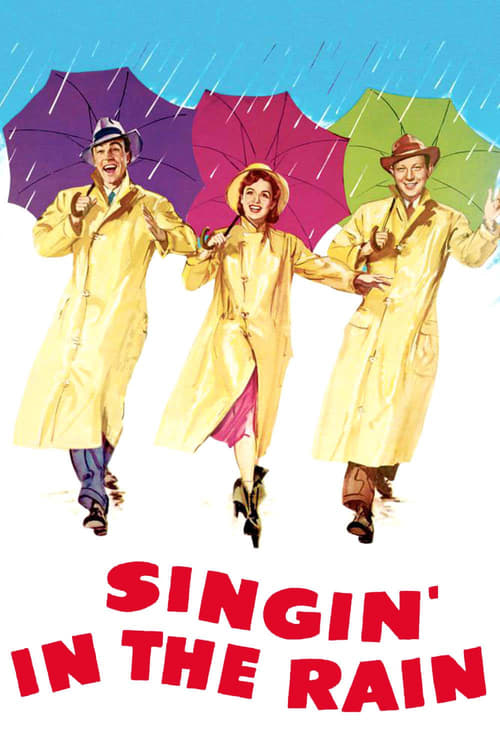
Singin' in the Rain
"What a Glorious Feeling!"
Overview
Set in 1927, "Singin' in the Rain" chronicles the chaotic shift from silent films to "talkies" in Hollywood through the eyes of its biggest stars. Don Lockwood is a dashing silent film idol with a carefully crafted public image, including a sham romance with his beautiful but vapid and shrill-voiced co-star, Lina Lamont. Their careers are thrown into turmoil when their studio, Monumental Pictures, decides to convert their latest swashbuckling epic, "The Dueling Cavalier," into a talking picture.
The initial attempts are a disaster, largely due to Lina's grating voice and inexperience with microphones. Don, along with his quick-witted best friend and former vaudeville partner, Cosmo Brown, must salvage the film and their careers. Their saving grace comes in the form of Kathy Selden, a talented and aspiring actress with a beautiful voice, with whom Don has had a rocky but charming first encounter. They devise a plan to turn "The Dueling Cavalier" into a musical, with Kathy secretly dubbing Lina's voice. As Don and Kathy fall in love, they must navigate the technical challenges of the new sound era and the jealous machinations of the increasingly desperate Lina Lamont, who is determined to keep her stardom and the illusion of her talent alive.
Core Meaning
"Singin' in the Rain" is a joyous celebration of resilience, innovation, and authenticity in the face of technological upheaval. The film's core message is that true talent and genuine emotion will always triumph over superficiality and illusion. It explores the idea that embracing change, however chaotic, can lead to new forms of creativity and happiness. The transition from silent films to talkies serves as a metaphor for any major life change, suggesting that with optimism, friendship, and love, any storm can be weathered. The iconic title number, where Don Lockwood dances joyfully in a downpour, perfectly encapsulates this theme: finding profound happiness and liberation amidst adversity.
Thematic DNA
Illusion vs. Reality
The film consistently plays with the contrast between Hollywood's glamorous facade and its often messy reality. This is evident from the opening scene, where Don Lockwood narrates a dignified, fabricated biography while flashbacks show his rough-and-tumble vaudeville beginnings. The central plot device—dubbing Lina Lamont's unpleasant voice with Kathy Selden's beautiful one—is the ultimate exploration of this theme, highlighting the artifice of filmmaking. The studio-manufactured romance between Don and Lina further contrasts with the genuine, burgeoning love between Don and Kathy.
Adaptation and Technological Advancement
The film is set during a pivotal moment of technological change in the film industry: the advent of sound. It satirizes the panic and comedic chaos that ensued as studios and stars struggled to adapt. Characters like Lina Lamont represent the inability to evolve, her career threatened by a voice unfit for talkies. Conversely, Don, Kathy, and Cosmo embody adaptability, using the new technology not just to survive but to innovate, transforming a failed drama into a successful musical. The film itself is a testament to this, being a musical that celebrates the birth of the movie musical.
The Nature of Fame and Art
"Singin' in the Rain" examines the fleeting and often superficial nature of celebrity. Don is initially disillusioned with his fame, feeling like a "shadow" rather than a real actor. Kathy initially scoffs at film acting, viewing it as less dignified than her preferred stage work. The film suggests that true art requires authenticity and talent, not just a photogenic face. Kathy's ultimate success, based on her genuine talent, and Don's rediscovery of his passion through the musical, champions the idea that substance will ultimately prevail over manufactured stardom.
Romantic Love
At its heart, the film is a classic romance. The love story between Don and Kathy serves as the emotional core and driving force of the narrative. Their relationship is presented as authentic and built on mutual respect, a stark contrast to the fake romance Don shares with Lina for publicity. Don's love for Kathy is what inspires his most joyous and iconic moment in the film, the "Singin' in the Rain" number, symbolizing that love is a source of happiness that can make any hardship feel insignificant.
Character Analysis
Don Lockwood
Gene Kelly
Motivation
Initially motivated by maintaining his fame and career, Don's motivation shifts to winning Kathy's affection and respect. He becomes driven by a desire for authenticity in both his personal and professional life, wanting to be a "real actor" and to create something meaningful, which culminates in his championing of "The Dancing Cavalier" and revealing Kathy as the true star.
Character Arc
Don begins the film as a suave but somewhat smug and disillusioned silent film star, forced to maintain a public persona he dislikes. He feels like a fraud, having fabricated his backstory for the fans. Meeting Kathy challenges his cynicism and forces him to confront his own artistic integrity. By falling in love and embracing the challenge of making a musical, he rediscovers his passion for performance, sheds his manufactured image, and finds authentic happiness and a more genuine form of dignity.
Kathy Selden
Debbie Reynolds
Motivation
Kathy is motivated by a desire to be a respected and "dignified" actress. While she falls in love with Don, her primary motivation isn't just romance but also achieving her professional dreams through hard work and talent. She is willing to help Don save his film, demonstrating a selfless nature that ultimately leads to her own success.
Character Arc
Kathy starts as an ambitious and principled aspiring actress with a disdain for the "undignified" world of silent films. She is talented but working in the chorus. Through her relationship with Don, she gets the opportunity to showcase her talent, albeit secretly at first. She maintains her integrity and generosity, even when it means sacrificing her own credit for Don's film. Her arc is one of perseverance, as her genuine talent is eventually recognized, and she transforms from an unknown chorus girl into a bona fide star in her own right.
Lina Lamont
Jean Hagen
Motivation
Lina's sole motivation is the preservation and enhancement of her own fame and power. She genuinely believes she is in love with Don because the fan magazines say so and sees Kathy as a threat to both her career and her fabricated personal life. Every action she takes is self-serving, from trying to get Kathy fired to attempting to force her into being her permanent, uncredited voice.
Character Arc
Lina Lamont does not have a traditional character arc; rather, she remains stubbornly resistant to change. She begins as a vain, controlling, and untalented silent film star who believes her own publicity. As the industry shifts to sound, her weaknesses are exposed, but instead of adapting, she doubles down on her delusion and uses threats and blackmail to maintain her status. Her refusal to acknowledge reality leads to her public humiliation and downfall, serving as a cautionary tale for those who rely on illusion over substance.
Cosmo Brown
Donald O'Connor
Motivation
Cosmo is motivated by his deep-seated loyalty and friendship to Don. He is the ultimate supportive friend, using his humor and creativity to cheer Don up and help him navigate professional and romantic crises. He seems to find genuine joy in helping his friends succeed and in deflating the pomposity of the Hollywood system.
Character Arc
Cosmo is a static but essential character. He is Don's lifelong friend, creative partner, and comedic foil. His role throughout the film is to provide humorous commentary, unwavering support, and brilliant, problem-solving ideas. From his philosophy to "Make 'Em Laugh" to his ingenious suggestion to turn "The Dueling Cavalier" into a musical and dub Lina's voice, Cosmo is the catalyst for many of the film's positive turns. He remains the loyal, witty, and grounded confidant from beginning to end.
Symbols & Motifs
Rain and the Umbrella
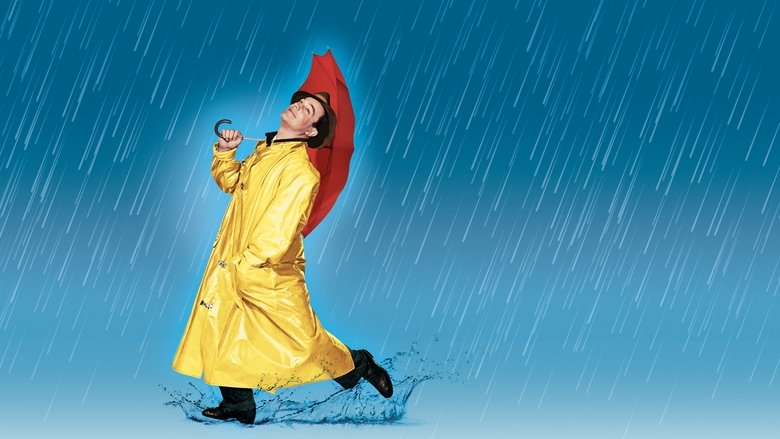
The rain symbolizes life's hardships, challenges, and the gloom that can accompany difficult situations. The umbrella represents protection and the conventional way of dealing with these problems. Don's act of closing his umbrella and joyfully singing and dancing in the downpour signifies his rebellion against negativity and his choice to embrace happiness and love, no matter the circumstances. It's a powerful symbol of optimism and inner joy triumphing over external adversity.
This is most famously used in the title musical number, "Singin' in the Rain." After dropping Kathy off at her home and realizing he's deeply in love, Don is so euphoric that he welcomes the torrential rain, turning what should be an unpleasant experience into a moment of pure, unadulterated bliss.
The Microphone
The microphone symbolizes the disruptive and revealing nature of the new sound technology. It is an unforgiving tool that exposes the truth. For characters like Lina Lamont, it is an obstacle that reveals her vocal inadequacy and threatens her career. For those with talent like Kathy, it is an opportunity, a means to be heard and recognized.
The microphone is a source of constant comedic struggle during the filming of "The Dueling Cavalier." Lina either can't be heard, speaks into it incorrectly, or the sound of her pearls clanking against it is captured. This highlights the technical hurdles and the ways in which the new technology could make or break a star.
The Curtain
The curtain symbolizes the boundary between illusion and reality. Throughout the film, what happens behind the curtain is the truth of film production—the hard work, the secrets, and the real talent. Raising the curtain literally and metaphorically means exposing the truth and shattering the illusion for the audience.
The most significant use is at the premiere of "The Dancing Cavalier." When the audience demands Lina sing live, Don, Cosmo, and R.F. hoist the curtain to reveal Kathy behind it, singing into the microphone. This act exposes Lina's fraudulence and reveals Kathy as the true star, breaking the Hollywood illusion.
Memorable Quotes
Dignity, always dignity.
— Don Lockwood
Context:
Spoken at the premiere of "The Royal Rascal," Don is addressing a fawning radio interviewer and his adoring fans, crafting a public image that is completely at odds with the truth.
Meaning:
This line is deeply ironic. Don repeats it as his motto while narrating a glamorous, false version of his rise to stardom. The accompanying visuals show his undignified past in vaudeville and stunt work. The quote highlights the theme of illusion versus reality and Don's initial insecurity about his own professional legitimacy.
What do they think I am? Dumb or something? Why, I make more money than Calvin Coolidge! Put together!
— Lina Lamont
Context:
Lina says this indignantly to R.F. Simpson after he suggests that her abrasive voice might be a problem for their transition to talking pictures.
Meaning:
This is a perfect encapsulation of Lina's character: comically arrogant, materialistic, and completely lacking in self-awareness. Her measure of worth and intelligence is purely financial, and the line is one of the film's most memorable comedic moments, showcasing Jean Hagen's Oscar-nominated performance.
Lina. She can't act, she can't sing, she can't dance. A triple threat.
— Cosmo Brown
Context:
Cosmo says this to Don as they are lamenting the disastrous preview of "The Dueling Cavalier" and the monumental problem that Lina's performance represents for the film's future.
Meaning:
Cosmo's sarcastic wit is on full display with this line. He cleverly inverts the industry term "triple threat" (someone who can act, sing, and dance) to perfectly summarize Lina's complete lack of talent in a humorous and biting way.
You're nothing but a shadow on film... you're not flesh and blood!
— Kathy Selden
Context:
This is said during Don and Kathy's first meeting, after he jumps into her car to escape his fans. She is unimpressed by his celebrity status and dismisses his profession, sparking their initial conflict and his subsequent fascination with her.
Meaning:
Kathy's initial critique of Don and movie stars strikes a nerve because it echoes his own insecurities. It challenges the legitimacy of silent film acting and, by extension, his entire career, framing it as mere pantomime without real substance or "dignity."
Philosophical Questions
What is the relationship between authenticity and artifice?
The film constantly juxtaposes the manufactured reality of Hollywood with genuine emotion. Don's public persona is a lie, Lina's stardom is built on an illusion, and the filmmaking process itself is shown to be a series of tricks. However, the film argues that true art and profound emotion—like Don's love for Kathy, expressed in the fabricated setting of a soundstage—can emerge from this artifice. It asks whether an illusion that creates a genuine emotional response is any less valid than reality.
How do we find happiness in times of disruptive change?
The arrival of sound throws the characters' world into chaos, threatening careers and creating immense stress. The film's answer to this challenge is embodied in its title song: optimism, adaptability, and focusing on the sources of joy in one's life, like love and friendship. It suggests that embracing change, rather than resisting it like Lina does, is the key to not only surviving but thriving. Don's joyful dance in the storm is a powerful metaphor for finding an inner light during dark times.
What defines true talent and artistry?
"Singin' in the Rain" contrasts Lina Lamont, who has the image of a star but no discernible talent, with Kathy Selden, who has genuine skill but lacks recognition. The film ultimately argues that true artistry is based on substance—a beautiful voice, dancing ability, authentic emotion—rather than just a marketable image. It champions the idea that while fame can be manufactured, true talent will eventually be recognized and rewarded.
Alternative Interpretations
While "Singin' in the Rain" is largely seen as a straightforward and joyous musical, some critical analyses offer different readings. One perspective interprets the film through a Freudian lens, suggesting underlying themes of psycho-sexual dynamics, with Don's journey representing a maturation process and his relationships with Lina and Kathy symbolizing different aspects of the psyche.
Another interpretation focuses on the film as a complex meta-commentary on the nature of cinematic art itself. From this viewpoint, the film constantly deconstructs its own artifice—showing the lights, cameras, and soundstages—to explore the dialectic between illusion and reality. The film acknowledges that movies are a lie, a "shadow on film," yet simultaneously celebrates their power to create genuine emotion and transcendent moments of beauty. The "Broadway Melody" sequence, in particular, can be seen not just as a dance number, but as a film-within-a-film that explores the very grammar of cinematic storytelling.
Finally, some scholars have analyzed the film through the lens of auteur theory, debating the primary creative force behind the film. While co-directed by Stanley Donen and Gene Kelly, many critical readings attribute the film's distinct vision of integrating dance and narrative ('cine-dance') primarily to Kelly, viewing the film as a showcase for his artistic ambitions to elevate dance in cinema.
Cultural Impact
"Singin' in the Rain" was released in 1952 to positive reviews and box office success, but it was not immediately hailed as the masterpiece it is considered today. It was overshadowed at the Academy Awards by "An American in Paris," another Gene Kelly musical from the previous year. However, its reputation grew immensely over time, particularly after it was re-released in the late 1950s. Critics like Pauline Kael championed it, and it is now widely regarded as the greatest movie musical of all time and one of the best films ever made.
The film serves as a vibrant, albeit simplified, historical document of a critical turning point in cinema history—the transition to sound. It lovingly satirizes the technical glitches, the panicked studios, and the unfortunate stars whose careers were ended by the microphone. Its influence is vast; the title dance sequence is one of the most iconic and parodied scenes in film history, a universal symbol of pure joy. The film's self-reflexive nature—a movie about making movies—has influenced countless other films that explore the inner workings of Hollywood. Despite being a lighthearted comedy, it brilliantly integrates its musical numbers into the narrative, a key innovation that elevated the movie musical as a genre. Its songs have remained staples of popular culture, and the film itself is a cornerstone of American cinema, celebrated for its perfect blend of comedy, romance, music, and dance.
Audience Reception
Upon its initial release in 1952, "Singin' in the Rain" was a commercial success and received generally positive reviews, though it wasn't universally seen as the classic it is today. Critics praised its humor, energy, and spectacular dance numbers, but some saw it as merely light and cheerful entertainment. Over the decades, its reputation has grown exponentially, and modern audiences and critics are nearly unanimous in their praise. It is now consistently ranked among the greatest films ever made. Audiences praise its clever and witty script, the incredible athletic and comedic performance of Donald O'Connor in "Make 'Em Laugh," and Gene Kelly's iconic, joyous title number. The performances of the entire cast are lauded, particularly Jean Hagen's Oscar-nominated comedic turn as Lina Lamont. While some might find the plot simple, the overwhelming sentiment is that the film is a masterpiece of pure joy, a perfectly crafted piece of entertainment that is both a hilarious satire and a heartwarming romance.
Interesting Facts
- Gene Kelly filmed the iconic "Singin' in the Rain" number while sick with a 103°F fever.
- Debbie Reynolds, who played the talented singer Kathy Selden, had no prior dance experience before this film. She later said that making "Singin' in the Rain" and childbirth were the two hardest things she ever did.
- In an ironic twist, while Kathy Selden's character dubs Lina Lamont's voice, Debbie Reynolds' own singing was dubbed by vocalist Betty Noyes in the songs "Would You?" and "You Are My Lucky Star".
- Furthermore, in the scene where Kathy is shown dubbing a line for Lina, the voice heard is actually Jean Hagen's (Lina's) natural, pleasant speaking voice, not Debbie Reynolds'.
- Donald O'Connor's physically demanding "Make 'Em Laugh" number left him exhausted and with carpet burns. He reportedly had to stay in bed for several days after filming it.
- The song "Make 'Em Laugh" is notoriously similar in melody and structure to Cole Porter's "Be a Clown" from the 1948 film "The Pirate." Co-director Stanley Donen later called it "100 percent plagiarism."
- The film's original negatives were destroyed in a fire at the George Eastman Museum in the late 1970s.
- Most of the songs in the film were not original but were hits from the 1920s and 30s written by the film's producer Arthur Freed and his partner Nacio Herb Brown. The script was essentially written around their back catalog of songs.
Easter Eggs
Zelda Zanders, the flapper friend of Lina Lamont, is played by Rita Moreno. A year after this film, Moreno would go on to have a much more significant career, including winning an Oscar for "West Side Story."
This is a fun early-career appearance for a legendary actress. Her character's name, Zelda, is likely a reference to Zelda Fitzgerald, an icon of the Roaring Twenties, the era in which the film is set.
The exaggerated "I love you, I love you, I love you" scene in "The Dueling Cavalier" is a parody of a similar scene from the early talkie "His Glorious Night" (1929), starring silent film idol John Gilbert.
John Gilbert's career famously declined with the advent of sound, partly due to audiences finding his romantic dialogue unintentionally humorous. This inside joke directly references the real-life career casualties of the era the film depicts.
During the "Broadway Melody" ballet, there is a very brief, almost unnoticeable jump cut during a lift between Gene Kelly and Cyd Charisse.
It's widely believed that this cut was made by censors who found a portion of the dance—likely Charisse wrapping her legs around Kelly—too suggestive for 1952 audiences. The original footage is now lost.
⚠️ Spoiler Analysis
Click to reveal detailed analysis with spoilers
Frequently Asked Questions
Explore More About This Movie
Dive deeper into specific aspects of the movie with our detailed analysis pages
Comments (0)
No comments yet. Be the first to share your thoughts!