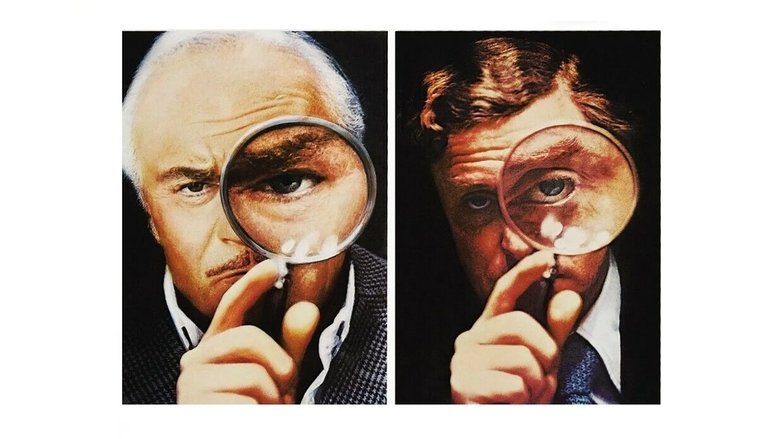
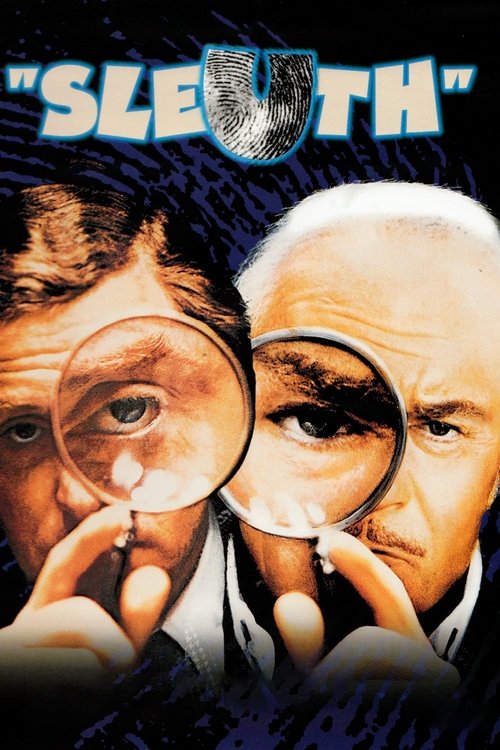
"Think of the perfect crime... Then go one step further."
Sleuth - Symbolism & Philosophy
Symbols & Motifs
The Automata (Jolly Jack Tar)
The mechanical toys represent Wyke's desire for absolute control. Unlike real people, the automata do exactly what he wants. The laughing sailor ('Jolly Jack Tar') specifically symbolizes the mockery of the situation and the inanimate, soulless nature of Wyke's world.
The sailor laughs maniacally at key moments of humiliation, serving as a silent, mocking chorus to the men's folly, especially in the final scene.
The Maze
A visual metaphor for the plot and Wyke's mind—complex, entrapping, and artificial. It represents the 'game' from which there is no easy escape.
The film opens with the maze, and characters are physically and metaphorically lost within the labyrinth of lies they construct.
The Clown Costume
Symbolizes humiliation and the reduction of a human being to a prop in someone else's entertainment. It strips Milo of his dignity and masculinity.
Wyke forces Milo to wear this oversize costume during the 'burglary,' turning him into a literal caricature of a fool before the mock execution.
Games Room
Represents Wyke's childish refusal to grow up and face reality. It is a shrine to his ego and his belief that he is the 'god' of his own universe.
The main setting of the film, filled with board games, puzzles, and toys, contrasting with the deadly serious nature of the conflict.
Philosophical Questions
Is justice achievable through law, or only through revenge?
The film contrasts the legal system (which Wyke thinks he can outsmart) with 'poetic justice.' Milo realizes the law cannot touch a man like Wyke, so he creates a scenario of vigilante justice, raising the question of whether true equity can exist between unequal social classes.
Does civilization merely mask our primal nature?
Wyke prides himself on being a civilized gentleman, yet his games are barbaric. The film suggests that high culture, etiquette, and social status are fragile veneers hiding the same primitive violent impulses found in the 'lower' classes he mocks.
Core Meaning
At its heart, Sleuth is a scathing satire of the British class system and the 'gentleman detective' genre. Director Joseph L. Mankiewicz deconstructs the artificiality of the classic whodunit, contrasting Andrew Wyke's obsession with orderly, intellectual puzzles against the messy, visceral reality of modern life and violence. The film argues that for the entrenched aristocracy (Wyke), life is a game to be manipulated from a position of privilege, but for the rising working class (Milo), it is a desperate struggle for survival and dignity. Ultimately, it suggests that the refusal to treat others as equals leads to mutual destruction.