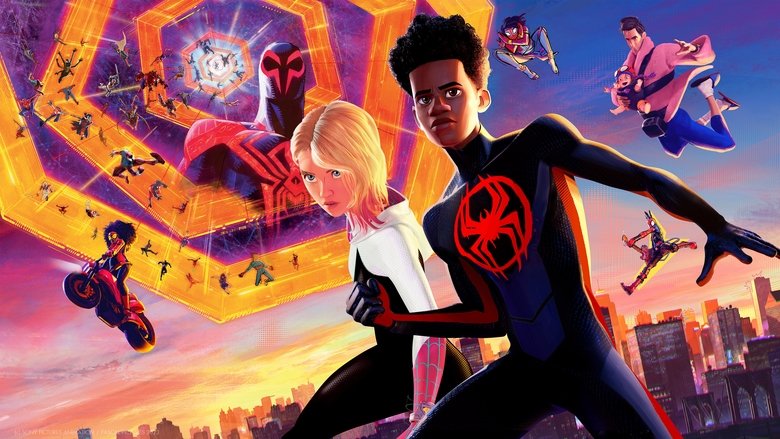
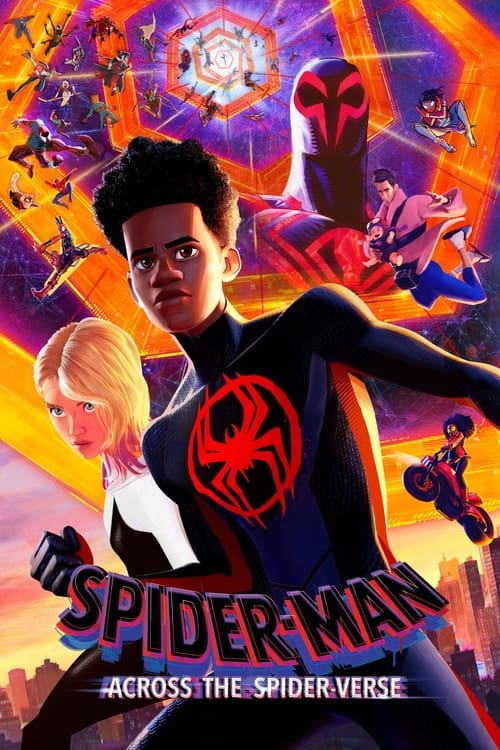
"It's how you wear the mask that matters."
Spider-Man: Across the Spider-Verse - Symbolism & Philosophy
Symbols & Motifs
Canon Events
"Canon events" symbolize the concept of fate, destiny, and the unchangeable narrative threads that are believed to define a hero's journey. They represent the established rules and expectations that characters are told they must follow. The idea that every Spider-Person must experience certain tragedies, like the death of an uncle or a police captain, serves as a metaphor for the societal and narrative pressures that shape our lives.
Miguel O'Hara explains the concept of canon events to Miles at the Spider Society headquarters, showing him holographic projections of these moments repeating across different universes. Miles's decision to save Captain Singh in Mumbattan is a direct violation of a canon event, which sets him on a collision course with the entire Spider Society.
The Number 42
The number 42 is a significant recurring motif that symbolizes Miles's status as an "anomaly." It is the number on the spider that bit him, a spider from another dimension (Earth-42) that was never meant for him. This number underscores the idea that Miles's existence as Spider-Man is a glitch in the multiverse, a deviation from the established canon. The number also pays tribute to Jackie Robinson, who wore number 42 and broke racial barriers in baseball, mirroring Miles's own journey of breaking the mold.
The number 42 appears on the back of the spider that bites Miles in a flashback. Later, when Miles tries to return to his own universe, the Spider Society's teleporter sends him to Earth-42 because the spider's DNA originates from there. This is where he discovers a world without a Spider-Man and where a different version of himself has become the Prowler.
The Leap of Faith
While a central symbol in the first film, the "leap of faith" continues to represent self-acceptance and the courage to embrace one's own path. In "Across the Spider-Verse," it evolves to symbolize Miles's decision to defy the entire Spider Society and forge his own destiny. It's no longer just about becoming Spider-Man, but about defining what kind of Spider-Man he will be, even if it means being the only one.
The concept is referenced throughout Miles's journey as he makes increasingly difficult choices that pit him against his supposed allies. His escape from the Spider Society headquarters is a literal and metaphorical leap of faith, trusting his own instincts and abilities against overwhelming odds.
Gwen's Watercolor World
The animation style of Gwen's universe, Earth-65, is a living watercolor painting where the colors and textures shift and bleed to reflect her emotional state. This symbolizes her inner turmoil, her feelings of isolation, and the fluid, often chaotic nature of her emotions. The dripping colors can represent her sorrow and guilt, while vibrant splashes can signify hope or anger. It's a visual manifestation of her character's internal landscape.
This is showcased prominently in the film's opening sequence. As Gwen argues with her father, the colors around them become more intense and chaotic. When she feels isolated, the backgrounds can become muted and abstract. The style is a constant visual cue to her emotional journey throughout the film.
Philosophical Questions
Is our destiny predetermined, or do we have the power to create our own?
The film explores this question through the central conflict between Miles Morales and Miguel O'Hara. Miguel's philosophy is rooted in determinism, believing that certain events are fated to happen to maintain order. Miles champions free will, arguing that he can and should save his father, regardless of what the "canon" dictates. The entire narrative functions as a large-scale version of the trolley problem, asking whether it is ethical to sacrifice one person to save many. Miles's response is to reject the premise of the dilemma entirely, believing a third option where everyone can be saved is possible.
What is the relationship between suffering and heroism?
The Spider Society operates under the assumption that tragedy is a necessary crucible for creating a hero; specifically, a Spider-Man. The loss of an Uncle Ben or a Captain Stacy is presented as a formative, essential event. Miles's journey fundamentally questions this premise. By refusing to accept his father's death, he challenges the idea that heroism must be born from personal trauma. The film asks if a hero can be defined by their love and their will to protect, rather than by the ghosts of their past.
When is it right to defy authority?
The film presents the Spider Society as a seemingly benevolent authority with a noble goal: protecting the multiverse. However, their methods are authoritarian and demand conformity. Miles's decision to rebel is portrayed as a morally courageous act. The film uses characters like the anarchic Spider-Punk to reinforce the idea that questioning and resisting established systems is not only valid but sometimes necessary, especially when those systems demand the sacrifice of individual morality for a perceived greater good.
Core Meaning
"Spider-Man: Across the Spider-Verse" delves into the profound theme of self-determination versus predestination. The central conflict revolves around whether one's story is already written or if it can be forged through individual choice. Miles Morales becomes the ultimate symbol of this struggle, rejecting the notion that tragedy is a prerequisite for heroism. The film posits that true heroism lies not in conforming to a pre-ordained path, but in having the courage to create a new one, challenging established norms and authorities in the process. It's a powerful message about identity, agency, and the radical act of insisting on your own narrative, even when the entire multiverse tells you it's impossible.