Spider-Man: Across the Spider-Verse
"It's how you wear the mask that matters."
Overview
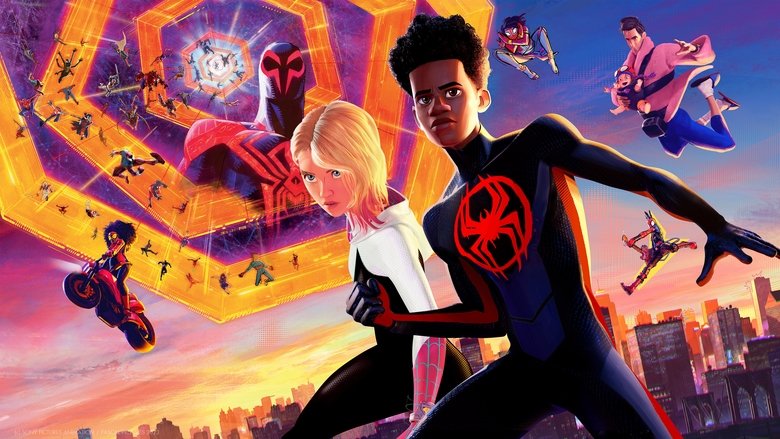
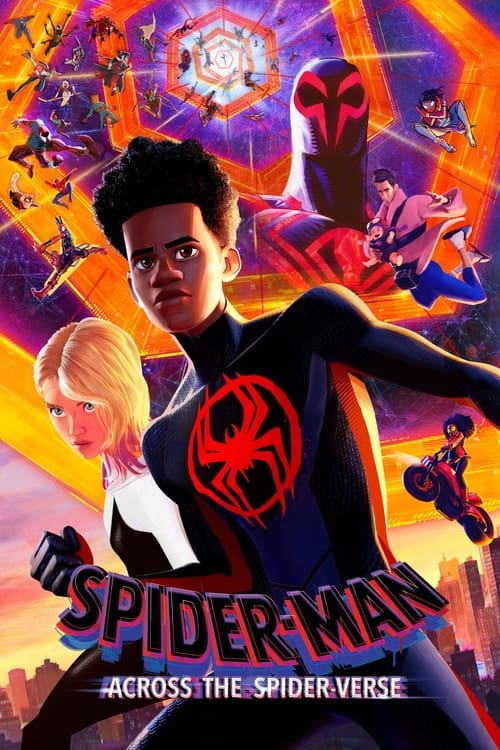
"Spider-Man: Across the Spider-Verse" picks up over a year after the events of the first film, with Miles Morales (Shameik Moore) growing into his role as Brooklyn's one and only Spider-Man. He's reunited with Gwen Stacy (Hailee Steinfeld), who introduces him to the Spider Society, a vast team of Spider-People from across the multiverse tasked with protecting its very existence.
Led by the formidable Miguel O'Hara (Oscar Isaac), also known as Spider-Man 2099, the Spider Society's mission is to contain anomalies and villains who cross dimensional borders. However, Miles soon discovers a darker side to their purpose: upholding the "Canon," a series of predetermined tragic events that are believed to be essential to the stability of every Spider-Person's timeline. When Miles learns that his own father's impending death is considered a necessary "canon event," he rebels against the Spider Society, finding himself pitted against hundreds of other Spider-People. This forces him to question the nature of destiny and heroism as he fights to save his family and rewrite his own story.
Core Meaning
"Spider-Man: Across the Spider-Verse" delves into the profound theme of self-determination versus predestination. The central conflict revolves around whether one's story is already written or if it can be forged through individual choice. Miles Morales becomes the ultimate symbol of this struggle, rejecting the notion that tragedy is a prerequisite for heroism. The film posits that true heroism lies not in conforming to a pre-ordained path, but in having the courage to create a new one, challenging established norms and authorities in the process. It's a powerful message about identity, agency, and the radical act of insisting on your own narrative, even when the entire multiverse tells you it's impossible.
Thematic DNA
Destiny vs. Free Will
The core conflict of the film is the clash between the Spider Society's belief in unchangeable "canon events" and Miles's determination to save his father, defying his supposed destiny. Miguel O'Hara represents the deterministic view, arguing that to deviate from the canon is to risk catastrophic consequences for the entire multiverse. Miles, on the other hand, embodies the spirit of free will, believing he can "do both": save his loved ones and protect the multiverse. This theme questions whether our paths are predetermined or if we have the power to shape our own futures.
Identity and Belonging
Miles grapples with his identity as Spider-Man, feeling isolated and struggling to balance his superhero life with his family. His journey into the multiverse introduces him to a community of others like him, yet he is ultimately labeled an "anomaly" — the original sin that threatens the fabric of their reality. This forces him to define who he is on his own terms, not by the expectations of others or the label they place on him. Gwen Stacy's arc also deeply explores this theme, as she feels like an outcast in her own world and seeks a place where she belongs.
Authority vs. Rebellion
The film presents a classic conflict between an established order and a rebellious individual. The Spider Society, led by the authoritarian Miguel O'Hara, acts as a multiversal police force enforcing a rigid set of rules. Miles, along with characters like the anarchistic Hobie Brown (Spider-Punk), challenges this authority, questioning the morality and necessity of their methods. The film suggests that true morality comes from personal conviction rather than blind adherence to rules, no matter how well-intentioned.
Sacrifice and Heroism
The traditional Spider-Man narrative is built on the idea of sacrifice for the greater good. "Across the Spider-Verse" deconstructs this concept, asking what the true cost of heroism should be. Is it necessary to endure personal tragedy to become a hero? Miles's journey challenges this notion, as he refuses to accept the sacrifice of his father as a foregone conclusion. The film explores different facets of sacrifice, from Gwen's strained relationship with her father to Peter B. Parker's struggles with parenthood, ultimately redefining what it means to be a hero.
Character Analysis
Miles Morales / Spider-Man
Shameik Moore
Motivation
His primary motivation is to save his family and prove that he doesn't have to choose between being a good son and being a good hero. He is driven by love for his parents and a deep-seated belief in his own agency and the possibility of a better way.
Character Arc
Miles begins the film more confident in his role as Spider-Man but still struggles with balancing his dual life and feeling misunderstood by his parents. His journey across the multiverse challenges his understanding of heroism. Initially wanting to join the Spider Society and find a sense of belonging, he ultimately rejects their rigid ideology to save his father. His arc is about moving from seeking acceptance to defining his own path, asserting that he can write his own story, even if it means being an enemy to those he once admired. He ends the film not as just another Spider-Man, but as an anomaly ready to defy fate.
Gwen Stacy / Spider-Woman
Hailee Steinfeld
Motivation
Gwen is motivated by a desire for connection and a place to belong. Haunted by the death of her Peter Parker, she is afraid of getting close to people but is ultimately driven to protect Miles, the one person she feels truly understands her. Her journey is about finding her own found family.
Character Arc
Gwen starts the film isolated and estranged from her father, who is hunting her as Spider-Woman. Joining the Spider Society offers her a community and a purpose, but she is torn between her loyalty to the group and her feelings for Miles. Her arc is about finding the courage to reconnect with her father by revealing her identity and, ultimately, choosing to stand with Miles against the Spider Society's deterministic rules. She goes from running from her problems to confronting them head-on, forming her own team to save her friend.
Miguel O'Hara / Spider-Man 2099
Oscar Isaac
Motivation
Miguel is driven by a profound sense of responsibility and a deep-seated fear of repeating his past mistakes. His motivation is to prevent the collapse of any more universes, even if it means making morally questionable decisions and enforcing tragic fates upon others.
Character Arc
Miguel is the stern, imposing leader of the Spider Society. His backstory reveals that his attempt to replace a dead version of himself in another universe led to that universe's complete destruction, fueling his zealous protection of the canon. He is not a traditional villain but an antagonist whose traumatic past has led him to believe that sacrificing individuals is necessary for the greater good. He is uncompromising and sees Miles as a threat to the entire multiverse. His arc is static within this film; he remains a rigid enforcer of his own rules, setting him up for a future confrontation.
Jonathan Ohnn / The Spot
Jason Schwartzman
Motivation
Initially, his motivation is simple revenge against Miles, whom he feels created him and then forgot about him. This evolves into a lust for power and a desire to prove he is not a "villain of the week," but a truly formidable foe. His goal becomes to take everything from Miles, starting with the death of his father, to complete his arc as Miles's nemesis.
Character Arc
The Spot begins as a seemingly comical, B-list villain who blames Miles for his transformation. Initially, he just wants to be taken seriously as a nemesis. However, as he learns to control his powers and travels the multiverse, he discovers the ability to absorb the energy of other universes' colliders. His arc is one of terrifying transformation, from a joke villain into a multiversal-level threat capable of destroying entire realities. He becomes a dark mirror of Miles, another character whose existence is tied to a multiversal anomaly.
Symbols & Motifs
Canon Events
"Canon events" symbolize the concept of fate, destiny, and the unchangeable narrative threads that are believed to define a hero's journey. They represent the established rules and expectations that characters are told they must follow. The idea that every Spider-Person must experience certain tragedies, like the death of an uncle or a police captain, serves as a metaphor for the societal and narrative pressures that shape our lives.
Miguel O'Hara explains the concept of canon events to Miles at the Spider Society headquarters, showing him holographic projections of these moments repeating across different universes. Miles's decision to save Captain Singh in Mumbattan is a direct violation of a canon event, which sets him on a collision course with the entire Spider Society.
The Number 42
The number 42 is a significant recurring motif that symbolizes Miles's status as an "anomaly." It is the number on the spider that bit him, a spider from another dimension (Earth-42) that was never meant for him. This number underscores the idea that Miles's existence as Spider-Man is a glitch in the multiverse, a deviation from the established canon. The number also pays tribute to Jackie Robinson, who wore number 42 and broke racial barriers in baseball, mirroring Miles's own journey of breaking the mold.
The number 42 appears on the back of the spider that bites Miles in a flashback. Later, when Miles tries to return to his own universe, the Spider Society's teleporter sends him to Earth-42 because the spider's DNA originates from there. This is where he discovers a world without a Spider-Man and where a different version of himself has become the Prowler.
The Leap of Faith
While a central symbol in the first film, the "leap of faith" continues to represent self-acceptance and the courage to embrace one's own path. In "Across the Spider-Verse," it evolves to symbolize Miles's decision to defy the entire Spider Society and forge his own destiny. It's no longer just about becoming Spider-Man, but about defining what kind of Spider-Man he will be, even if it means being the only one.
The concept is referenced throughout Miles's journey as he makes increasingly difficult choices that pit him against his supposed allies. His escape from the Spider Society headquarters is a literal and metaphorical leap of faith, trusting his own instincts and abilities against overwhelming odds.
Gwen's Watercolor World
The animation style of Gwen's universe, Earth-65, is a living watercolor painting where the colors and textures shift and bleed to reflect her emotional state. This symbolizes her inner turmoil, her feelings of isolation, and the fluid, often chaotic nature of her emotions. The dripping colors can represent her sorrow and guilt, while vibrant splashes can signify hope or anger. It's a visual manifestation of her character's internal landscape.
This is showcased prominently in the film's opening sequence. As Gwen argues with her father, the colors around them become more intense and chaotic. When she feels isolated, the backgrounds can become muted and abstract. The style is a constant visual cue to her emotional journey throughout the film.
Memorable Quotes
Everyone keeps telling me how my story is supposed to go. Nah, I'm-a do my own thing.
— Miles Morales
Context:
Miles says this as he is cornered by the entire Spider Society. It is his ultimate act of defiance before he uses his powers to escape and attempt to save his father, setting up the film's climactic chase sequence.
Meaning:
This quote encapsulates the central theme of the film. It's Miles's declaration of independence against the deterministic rules of the Spider Society and the concept of "canon events." It signifies his decision to forge his own destiny rather than accept a pre-written tragic narrative.
In every other universe, Gwen Stacy falls for Spider-Man. And in every other universe, it doesn't end well.
— Gwen Stacy
Context:
Gwen says this to Miles during a quiet moment as they overlook the city. It's a vulnerable confession that explains her hesitation and the pain of her past, particularly the loss of her universe's Peter Parker.
Meaning:
This line reveals Gwen's deep-seated fear and the emotional weight she carries. It speaks to the theme of destiny and the tragic tropes associated with the Spider-Man mythos. She is aware of the narrative pattern and is terrified of it repeating with Miles, which is why she tries to keep him at a distance.
Being Spider-Man is a sacrifice. That's the job.
— Miguel O'Hara
Context:
Miguel says this to Miles at the Spider Society headquarters while explaining the necessity of canon events and why Miles's father must die. It is a stark, uncompromising statement of his worldview.
Meaning:
This quote represents the opposing philosophy to Miles's. It is the core belief of Miguel and the Spider Society: that heroism is inextricably linked to personal loss and suffering. It justifies their enforcement of the canon, no matter how cruel it may seem.
Nah, man. I'm my own boss. It's a metaphor for capitalism.
— Hobie Brown / Spider-Punk
Context:
Hobie says this to Miles in Mumbattan when Miles questions his methods. It's a humorous but pointed line that quickly establishes his character's ideology.
Meaning:
Hobie's lines often provide anti-establishment commentary. This quote reflects his anarchic, anti-authoritarian nature. He rejects labels, teams, and consistency, making him a natural ally for Miles's rebellion. His mention of capitalism is a quick, witty critique of hierarchical systems, mirroring the structure of the Spider Society.
You're the best thing I've ever done.
— George Stacy
Context:
After Gwen returns to her dimension, her father tells her he has quit being a police captain and embraces her, delivering this line. This emotional resolution gives Gwen the strength to go and help Miles.
Meaning:
This is a pivotal moment of reconciliation and unconditional love. Captain Stacy chooses his daughter over his job and his rigid view of justice. It's a powerful statement that directly contradicts the idea that being close to a hero is a death sentence, offering a glimmer of hope that canon can be broken without disaster.
Philosophical Questions
Is our destiny predetermined, or do we have the power to create our own?
The film explores this question through the central conflict between Miles Morales and Miguel O'Hara. Miguel's philosophy is rooted in determinism, believing that certain events are fated to happen to maintain order. Miles champions free will, arguing that he can and should save his father, regardless of what the "canon" dictates. The entire narrative functions as a large-scale version of the trolley problem, asking whether it is ethical to sacrifice one person to save many. Miles's response is to reject the premise of the dilemma entirely, believing a third option where everyone can be saved is possible.
What is the relationship between suffering and heroism?
The Spider Society operates under the assumption that tragedy is a necessary crucible for creating a hero; specifically, a Spider-Man. The loss of an Uncle Ben or a Captain Stacy is presented as a formative, essential event. Miles's journey fundamentally questions this premise. By refusing to accept his father's death, he challenges the idea that heroism must be born from personal trauma. The film asks if a hero can be defined by their love and their will to protect, rather than by the ghosts of their past.
When is it right to defy authority?
The film presents the Spider Society as a seemingly benevolent authority with a noble goal: protecting the multiverse. However, their methods are authoritarian and demand conformity. Miles's decision to rebel is portrayed as a morally courageous act. The film uses characters like the anarchic Spider-Punk to reinforce the idea that questioning and resisting established systems is not only valid but sometimes necessary, especially when those systems demand the sacrifice of individual morality for a perceived greater good.
Alternative Interpretations
One of the most debated aspects of the film is the true nature and validity of "canon events." While Miguel O'Hara presents them as absolute, unchangeable laws of the multiverse, some viewers have questioned if he is a reliable narrator. His entire philosophy is based on a single, traumatic experience where he caused a universe to collapse. It's possible that he misinterpreted the cause of the disaster and has since created a rigid, flawed ideology to cope with his guilt. The existence of Miles himself — an anomaly who has not caused his universe to collapse — seems to be evidence against Miguel's theory. Furthermore, Gwen's father quitting the police force seems to avert a canon event (the death of a police captain close to Spider-Gwen) without immediate negative consequences. This suggests that the "canon" might be more of a strong suggestion or a pattern rather than an unbreakable law, and that Miguel's authoritarian control is based on a flawed premise.
Another interpretation centers on the film as a meta-commentary on storytelling and fandom. The "canon" can be seen as a metaphor for rigid fan expectations and the creative constraints placed on long-running franchises. Miguel and the Spider Society represent the gatekeepers of canon who resist change and deviation from the established formula. Miles's rebellion, in this reading, is a call for creative freedom and the importance of telling new, diverse stories that break the mold, arguing that a character's identity is not defined by repeating the same tragic beats of their predecessors.
Cultural Impact
"Spider-Man: Across the Spider-Verse," much like its predecessor, has had a significant cultural impact, particularly in the realm of animation. It has been lauded for pushing the boundaries of the medium, blending diverse visual styles to create a dynamic, comic-book-come-to-life aesthetic that has inspired other studios to experiment beyond the conventional 3D animation look. The film's success reinforces the idea that animation is a medium for complex, mature storytelling, not just a genre for children.
The movie is also a landmark for representation. By centering on the Afro-Latino hero Miles Morales, it continues to provide a powerful role model for young Black and Latino audiences. The film deliberately includes Spanish dialogue without subtitles, a choice made to normalize bilingualism and reflect the cultural fabric of Miles's community. This decision was praised for its authenticity and for challenging the English-centric default in Hollywood filmmaking.
Critically and commercially, the film was a massive success, earning widespread acclaim for its artistry, emotional depth, and ambitious narrative. It has further solidified the "Spider-Verse" franchise as a cultural touchstone that celebrates diversity and individuality under the mantra that "anyone can wear the mask." Its cliffhanger ending has also generated immense online discussion and anticipation, cementing its place in contemporary pop culture conversations.
Audience Reception
"Spider-Man: Across the Spider-Verse" was met with widespread acclaim from audiences, who praised it as a worthy and even superior sequel to the beloved original. The film's groundbreaking and visually stunning animation was a major point of praise, with many viewers highlighting the unique art style of each universe as a breathtaking achievement. The emotional depth of the story, particularly the relationships between Miles and his parents and Miles and Gwen, resonated strongly with viewers.
New characters like Hobie Brown (Spider-Punk) and Pavitr Prabhakar (Spider-Man India) quickly became fan favorites. The main point of criticism, if any, was directed at the film's abrupt cliffhanger ending. While some found it frustrating, most accepted it as a bold narrative choice that effectively built anticipation for the next installment, "Beyond the Spider-Verse." Overall, the audience verdict was overwhelmingly positive, with many calling it one of the best animated films and best superhero films ever made.
Interesting Facts
- The film had the largest crew of any animated film ever, with around 1,000 people working on it.
- The movie features over 240 unique Spider-Man variants and takes place across six different universes, each with its own distinct art style.
- A 14-year-old animator, Preston Mutanga, was hired to animate a scene after the producers saw his viral trailer recreation using LEGOs.
- Daniel Kaluuya, who voices Spider-Punk, was encouraged to improvise many of his lines to better fit the character's anarchic personality.
- The animators used different frame rates for different characters. For example, Spider-Punk's jacket might be animated on 'fours' while his body is on 'threes,' creating a chaotic, collage-like effect.
- The Vulture that appears in Gwen's universe is from a dimension inspired by the Italian Renaissance and Leonardo da Vinci's drawings.
- Andy Samberg voices Ben Reilly / Scarlet Spider, a dramatic clone of Peter Parker.
Easter Eggs
Live-Action Spider-Man Footage
During Miguel O'Hara's explanation of canon events, archival footage from Tobey Maguire's and Andrew Garfield's live-action Spider-Man films is shown to illustrate the recurring deaths of Uncle Ben and Captain Stacy, directly connecting the animated multiverse to the live-action ones.
Donald Glover's Prowler Cameo
In a live-action cameo, Donald Glover appears as the Prowler, imprisoned at the Spider Society headquarters. This is a reference to his role as Aaron Davis in "Spider-Man: Homecoming" and his connection to Miles Morales in the MCU.
Reference to 'No Way Home'
Miguel O'Hara explicitly references the events of "Spider-Man: No Way Home," complaining about "Doctor Strange and the little nerd from Earth-199999" (the MCU), blaming them for tampering with the multiverse.
PS4 Spider-Man
The Spider-Man from the popular Insomniac PlayStation games makes a cameo as a member of the Spider Society. His voice actor from the game, Yuri Lowenthal, reprises the role. Additionally, Ganke is seen playing the "Marvel's Spider-Man 2" video game in his dorm room.
The 'Everything Everywhere All At Once' Bagel
The bagel that Miles threw at The Spot in the first film becomes a crucial plot point. The film also includes a visual gag with a billboard for a bagel shop that says "All Of It Always All Over The Place," a clear nod to the Oscar-winning multiverse film "Everything Everywhere All At Once," which also features a significant bagel.
The 'Spectacular Spider-Man' Cameo
The version of Spider-Man from the beloved but short-lived animated series "The Spectacular Spider-Man" appears as a member of the Spider Society, with his original voice actor, Josh Keaton, returning for the role.
⚠️ Spoiler Analysis
Click to reveal detailed analysis with spoilers
Frequently Asked Questions
Explore More About This Movie
Dive deeper into specific aspects of the movie with our detailed analysis pages
Comments (0)
No comments yet. Be the first to share your thoughts!