
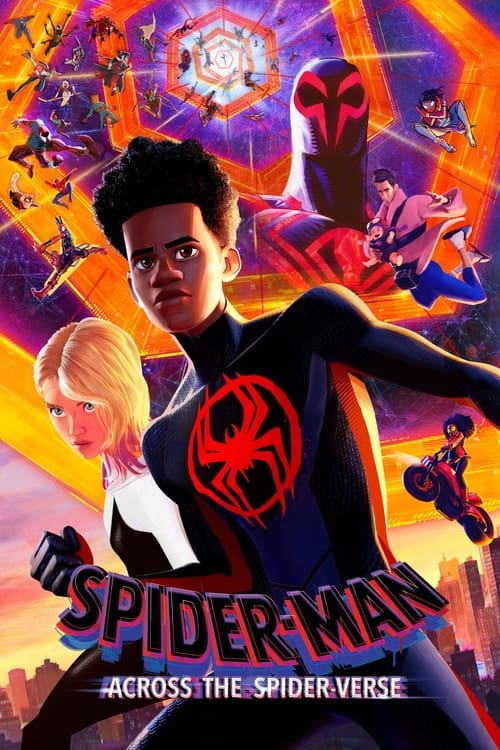
"It's how you wear the mask that matters."
Director: Justin K. Thompson, Kemp Powers, Joaquim Dos Santos
Cast: Shameik Moore, Hailee Steinfeld, Brian Tyree Henry, Luna Lauren Velez, Jake Johnson
Spider-Man: Across the Spider-Verse — Movie Quotes
Memorable Quotes
Everyone keeps telling me how my story is supposed to go. Nah, I'm-a do my own thing.
Context
Miles says this as he is cornered by the entire Spider Society. It is his ultimate act of defiance before he uses his powers to escape and attempt to save his father, setting up the film's climactic chase sequence.
Meaning
This quote encapsulates the central theme of the film. It's Miles's declaration of independence against the deterministic rules of the Spider Society and the concept of "canon events." It signifies his decision to forge his own destiny rather than accept a pre-written tragic narrative.
In every other universe, Gwen Stacy falls for Spider-Man. And in every other universe, it doesn't end well.
Context
Gwen says this to Miles during a quiet moment as they overlook the city. It's a vulnerable confession that explains her hesitation and the pain of her past, particularly the loss of her universe's Peter Parker.
Meaning
This line reveals Gwen's deep-seated fear and the emotional weight she carries. It speaks to the theme of destiny and the tragic tropes associated with the Spider-Man mythos. She is aware of the narrative pattern and is terrified of it repeating with Miles, which is why she tries to keep him at a distance.
Being Spider-Man is a sacrifice. That's the job.
Context
Miguel says this to Miles at the Spider Society headquarters while explaining the necessity of canon events and why Miles's father must die. It is a stark, uncompromising statement of his worldview.
Meaning
This quote represents the opposing philosophy to Miles's. It is the core belief of Miguel and the Spider Society: that heroism is inextricably linked to personal loss and suffering. It justifies their enforcement of the canon, no matter how cruel it may seem.
Nah, man. I'm my own boss. It's a metaphor for capitalism.
Context
Hobie says this to Miles in Mumbattan when Miles questions his methods. It's a humorous but pointed line that quickly establishes his character's ideology.
Meaning
Hobie's lines often provide anti-establishment commentary. This quote reflects his anarchic, anti-authoritarian nature. He rejects labels, teams, and consistency, making him a natural ally for Miles's rebellion. His mention of capitalism is a quick, witty critique of hierarchical systems, mirroring the structure of the Spider Society.
You're the best thing I've ever done.
Context
After Gwen returns to her dimension, her father tells her he has quit being a police captain and embraces her, delivering this line. This emotional resolution gives Gwen the strength to go and help Miles.
Meaning
This is a pivotal moment of reconciliation and unconditional love. Captain Stacy chooses his daughter over his job and his rigid view of justice. It's a powerful statement that directly contradicts the idea that being close to a hero is a death sentence, offering a glimmer of hope that canon can be broken without disaster.
Explore More About This Movie
Dive deeper into specific aspects of the movie with our detailed analysis pages