Skip to content
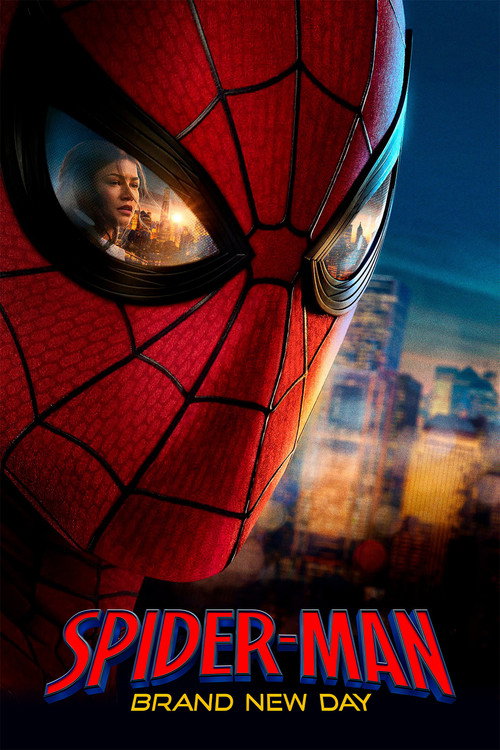
Spider-Man: Brand New Day
A lonely, electric superhero thriller about a man erased from everyone he loves — New York as a glittering aquarium he protects from the outside, pressing his mask against the glass.
Spider-Man: Brand New Day

Spider-Man: Brand New Day

"A brand new day starts now."

28 July 2026 United States of America 145 min 8.0 (280)

Director: Destin Daniel Cretton

Cast: Tom Holland, Zendaya, Sadie Sink, Jacob Batalon, Jon Bernthal

Action Adventure Science Fiction Erasure and the loneliness of being unknown The cost of unrelenting responsibility Transformation and loss of self Mercy versus retribution Growing up and being left behind
Budget: $225,000,000
Box Office: $46,000,000

Overview

Picking up in the long aftermath of Spider-Man: No Way Home, Spider-Man: Brand New Day finds Peter Parker living in total anonymity. Doctor Strange's spell wiped the world's memory of his existence, and the cost has calcified into a lifestyle: no friends, no family who knows him, no one waiting up. He is a full-time, solitary vigilante, patrolling New York City around the clock because the mask is the only identity that still has anyone in it.

The ache of the film is not the villains but the watching. MJ and Ned have moved on to MIT, building lives Peter can see but not enter, and the pressure of that separation — of being loved by no one while being needed by everyone — begins to work on him. Into that vacuum steps Frank Castle, a man who solved the same loneliness with a very different arithmetic, and whose company is exactly as dangerous as it is welcome.

Directed by Destin Daniel Cretton and released on July 31, 2026, the film is markedly more adult and character-driven than the previous MCU Spider-Man entries. Its central turn, teased throughout the marketing, is that Peter's accumulating strain sparks a change in him he may not have the power to control — a physical evolution that threatens his existence, and turns a story about a boy who wanted to be a hero into a story about a man who no longer knows what he is becoming.

Core Meaning

Cretton's film argues that anonymity is not the same as freedom, and sacrifice does not end at the moment you make it. Peter's spell was a single heroic act; the movie is about the years of bill-paying that follow, when nobility curdles into isolation and isolation starts rewriting the body that carries it.

Its message is quietly anti-mythic. The traditional Spider-Man lesson — with great power comes great responsibility — is treated here not as a triumphant creed but as a trap when it is practiced alone. A man who is only responsible, with no one to be Peter for, stops being a person and becomes a function; the film's transformation horror literalizes that erosion. Salvation, when the film reaches for it, is not a stronger punch but the terrifying act of letting someone know you again.

The title cuts both ways. Brand New Day is what Peter tells himself every morning to keep going, and it is also the flat, unchanging sameness of a life with no one in it — a fresh start and a loop, spoken in the same breath.

Thematic DNA

Erasure and the loneliness of being unknown 30%
The cost of unrelenting responsibility 22%
Transformation and loss of self 20%
Mercy versus retribution 18%
Growing up and being left behind 10%

Erasure and the loneliness of being unknown

The film's engine is Peter's total anonymity after Doctor Strange's spell. He has not lost his loved ones to death but to forgetting, which is crueler: MJ and Ned are alive at MIT, reachable, happy — and inaccessible. The plot repeatedly puts Peter in proximity to the life he gave up, so that every rescue doubles as an act of watching from outside.

The cost of unrelenting responsibility

Peter now works as a full-time vigilante with no off switch, and the film treats that as pathology rather than heroism. Without the counterweight of an ordinary life, duty stops being a choice he renews and becomes the only thing holding him together — which is precisely why the mounting pressure produces a change he cannot control.

Transformation and loss of self

The strain on Peter manifests physically: an evolution that threatens his existence. The film uses body horror as psychology — a man who has spent years being only Spider-Man begins, literally, to stop being Peter Parker. The question shifts from can he win to will there be anyone left inside the suit.

Mercy versus retribution

Jon Bernthal's Frank Castle is the film's dark mirror: another man alone in New York, another man who lost everyone, who answered the same grief with lethal certainty. Their alliance is the movie's moral argument staged as partnership — Peter's refusal to kill has never been tested by someone this persuasive, this wounded, or this useful.

Growing up and being left behind

MJ and Ned's MIT lives supply the film's most ordinary heartbreak. Their arcs move forward on schedule while Peter's is frozen at the moment of the spell, dramatizing the fear that adulthood is something friends do without you — and that the person you were is only preserved in other people's memories.

Character Analysis

Peter Parker / Spider-Man

Tom Holland

Archetype: The isolated hero / self-sacrificing martyr edging toward tragic figure Key Trait: Unbreakable dutifulness masking profound loneliness

Motivation

To justify the spell. If he protects the city relentlessly enough, the erasure of his own life was a fair price — and he never has to admit he is lonely.

Character Arc

Begins as a man who has fully committed to the consequence of his own sacrifice — anonymous, disciplined, alone — and mistakes that endurance for health. As the pressure of watching his friends live without him accumulates, his control fractures into a physical change he cannot manage, forcing him from a story about doing enough into a story about being someone at all.

Frank Castle / The Punisher

Jon Bernthal

Archetype: Dark mentor / shadow Key Trait: Absolute conviction, unclouded by hope

Motivation

To finish the work, permanently — and, in his own bleak way, to keep a younger man from arriving where he already lives.

Character Arc

Enters as an operational ally and moral hazard: the one person in New York who can meet Peter as an equal in grief. His presence functions as a slow argument that isolation and lethal certainty are the natural destination of Peter's current life, and his usefulness is exactly what makes him corrosive.

All 5 characters and cast

Symbols & Motifs

The mask worn full-time

Meaning:

Where earlier films used the mask as a disguise over a real life, here it is the only face with a name attached. It symbolizes an identity that has consumed its host — protection that has become imprisonment.

Context:

Running through the film's depiction of Peter as a solitary, round-the-clock vigilante; Tom Holland flagged the shift himself on the first day of shooting in Glasgow, noting that putting the suit on felt different this time.

New York City itself

Meaning:

The city stands in for everyone Peter loves in the abstract, since he can love no one in the particular. Saving eight million strangers is the substitute for being known by five people.

Context:

The production built three entire city blocks at Pinewood Studios and shot Manhattan skyline plates for the swinging sequences, making the city a constructed, almost dollhouse-like presence — a world Peter maintains rather than lives in.

The web

Meaning:

A connective tissue Peter can spin infinitely but never actually be caught by — the film's image of one-directional attachment, all reach and no reciprocity.

Context:

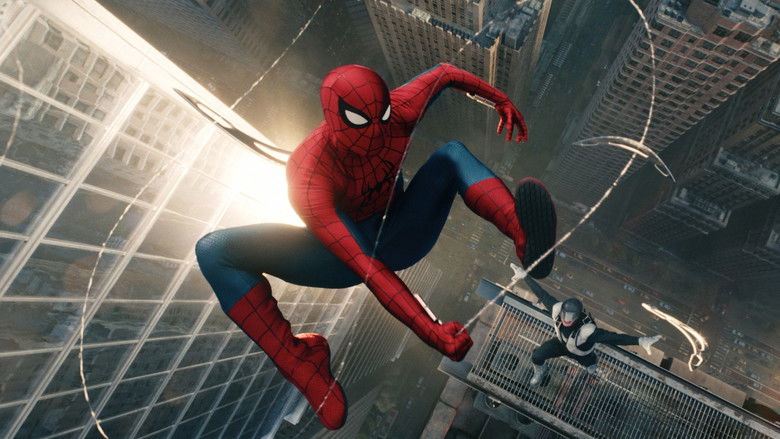
Foregrounded in the web-swinging set pieces, where the line always attaches to architecture and never to another person.

The spider's changing body

Meaning:

The transformation motif reads as arachnid nature overtaking human nature: what happens when the animal half of the hyphenate is the only half being exercised.

Context:

Emerges as the pressure of Peter's isolated life triggers a physical evolution he cannot govern, threatening his existence.

Frank Castle's skull

Meaning:

An emblem of grief converted into a brand — the endpoint of a man who let loss finish designing him. It is what Peter's insignia could become if the human side goes quiet.

Context:

Carried by Bernthal's Punisher throughout his scenes alongside Spider-Man's own arachnid emblem, the two chest symbols staged as competing philosophies.

MIT

Meaning:

The unreachable ordinary future — the brilliant, unremarkable life Peter was on track for before the spell.

Context:

Where MJ and Ned have moved on to, forming the film's off-screen ache and its measure of how much time Peter has lost.

Philosophical Questions

Does a sacrifice still count as noble if it never ends?

Peter's spell was one decision; the film is set entirely in its aftermath, where that decision has become a life sentence he re-serves daily. By stretching the moment of heroism into years of anonymous maintenance, the film asks whether virtue is located in the act or in the endurance — and whether an act that destroys the person performing it can be called good.

Are we constituted by other people's memory of us?

Peter is unchanged in body and history, yet functionally erased because no one recalls him. The film treats identity as socially held rather than internally owned: MJ and Ned are living proof that a person can be complete in themselves and still, in every way that matters, not exist. The literal transformation that follows suggests the self, unwitnessed, does not simply persist — it drifts.

What separates justice from vengeance when no one is watching either one?

Frank Castle's presence poses the question in its hardest form, because Peter now operates with no community, no oversight and no one to answer to. His refusal to kill has always been supported by the people who knew him; the film strips that scaffolding away to test whether the principle was ever load-bearing on its own.

Can you protect people you refuse to be known by?

The film's central contradiction: Peter serves the city precisely by withholding himself from it. Every rescue reinforces the barrier, and the more effectively he protects, the less he belongs to what he is protecting — a paradox the ending forces him to confront rather than resolve gracefully.

Is a fresh start possible, or only a repetition with better lighting?

The title's promise of renewal is set against a life that is structurally incapable of change. The film explores whether Peter's days constitute a series of new beginnings or a single frozen one — and whether genuine newness requires another person to notice that you have begun.

How It Ends

Alternative Interpretations

The film as horror rather than adventure. One reading takes the transformation literally and generically: this is a body-horror film wearing a blockbuster's suit, in which the hero's power set — the thing every previous entry treated as wish fulfillment — is reframed as an infection that was always going to finish claiming him. Under this reading the villains are almost incidental, and the antagonist is Peter's own biology.

Full ending explanation

Cultural Impact

Commercially, the film is a landmark. Released on July 31, 2026, it grossed $2.333 billion worldwide off a roughly $932 million global opening ($360 million domestic), making it the highest-grossing Spider-Man film ever made, the highest-grossing film of 2026, and the fourth-highest-grossing film of all time. It held the top of the box office for weeks, an increasingly rare feat in a market defined by front-loaded openings, and it did so as a mid-summer release rather than the character's traditional December slot.

Critically, it arrived as a course correction. Reviews were largely positive, with particular praise for Holland's performance, the action sequences, and a more mature, character-driven story than the previous MCU Spider-Man films. That framing matters: after a stretch in which the superhero genre was widely diagnosed as suffering fatigue, Brand New Day's success was read as evidence that audiences had not tired of the form so much as of its weightlessness — a $2.3 billion vote for smaller stakes and heavier interiority.

Its structural significance is the merging of two Marvel worlds. By pairing Holland's Spider-Man with Jon Bernthal's Punisher — a performance born on Netflix and long thought quarantined from the films — and by drawing in the Hand, the movie formally absorbed street-level Marvel into the flagship franchise. Culturally it also inverts the superhero-secret-identity tradition: where the genre has spent a century dramatizing the fear of being found out, this film dramatizes the horror of never being found at all, a preoccupation that lands squarely in an era fluent in the difference between visibility and connection.

Audience Reception

Broadly enthusiastic, and unusually durable. The film opened to roughly $360 million domestically and $932 million globally and then continued climbing in subsequent weekends rather than collapsing — behavior that indicates strong word of mouth and repeat attendance. Its eventual $2.333 billion worldwide total made it the highest-grossing Spider-Man film, the highest-grossing release of 2026, and the fourth-highest-grossing film ever, figures that only accrue when general audiences, not just the built-in fanbase, turn out repeatedly.

What drew praise. Critics singled out Tom Holland's performance, the action sequences, and the more mature, character-driven storytelling — the sense that the franchise had finally let its lead grow up. The decision to build practical environments, including three full city blocks at Pinewood and real-location work in Glasgow and across England, gave the film a physical texture that reviewers contrasted favorably with the weightless digital New York of comparable blockbusters. Jon Bernthal's return as the Punisher was widely treated as an event in itself.

Points of friction. The film's tonal shift is its most divisive quality: viewers who came to the Holland era for its warmth and comic timing found the sustained loneliness and the darker, body-horror-adjacent turn a substantial departure, while others considered that exactly the maturation the character needed. Its heavy dependence on the emotional bookkeeping of No Way Home also drew comment, since much of the film's power assumes an audience carrying five years of prior context into the theater.

Verdict. A genuine popular and critical success, and the rare late-franchise entry received as a deepening rather than a dilution — with the caveat that it trades charm for gravity, and not every viewer wanted the exchange.

Interesting Facts

  • Principal photography ran from August to December 2025, with soundstage work at Pinewood Studios in England and location filming in Glasgow, Scotland, and across England.
  • The production built three entire city blocks at Pinewood Studios and shot background plates of the Manhattan skyline for Peter's web-swinging sequences.
  • Glasgow became the film's most recognizable location: Bothwell Street was transformed into a stand-in for Midtown Manhattan, continuing the Scottish city's run as a favorite blockbuster double for New York thanks to its mix of historic architecture and modern high-rises.
  • Production was temporarily halted in September 2025 after Tom Holland, then 29, was hospitalized with a mild concussion following a fall during a stunt.
  • Sony released a video of Holland on set during his first day of shooting in Glasgow, in the middle of an elaborate stunt sequence, in which he said: "It's funny, putting the suit on, it feels different this time, somehow."
  • Behind-the-scenes photos revealed a sequence built around Spider-Man's classic comics battle with Tarantula, staged practically — stunt performers in body stockings physically supported the villain during filming so the character could be composited later.
  • Scenes were shot in Basingstoke, Hampshire, and at various London locations in addition to the Scottish and Pinewood work.
  • The production filmed at Dorchester Prison in November 2025 for sequences involving Spider-Man and members of the shadowy criminal organization the Hand.
  • Destin Daniel Cretton, who directed Shang-Chi and the Legend of the Ten Rings, took over the franchise from Jon Watts, who helmed the first three Holland-led Spider-Man films.
  • The film was rated PG-13 for sequences of action/violence and some language.
  • It was released on July 31, 2026, and went on to gross $2.333 billion worldwide — the highest-grossing Spider-Man film, the highest-grossing film of 2026, and the fourth-highest-grossing film of all time.
  • Its opening weekend brought in roughly $360 million domestically and $932 million globally.

Easter Eggs

The Tarantula fight

A deep-cut pull from the comics: Tarantula is a classic Spider-Man rogue rarely adapted to screen. Staging the battle practically, with stunt performers physically supporting the villain on set, signals a film consciously recreating iconic imagery from the page rather than inventing wholesale.

The Hand

Sequences shot at Dorchester Prison involve the Hand, the ninja organization most associated with Daredevil, Elektra and the Netflix Marvel corner. Their presence, alongside Bernthal's returning Punisher, quietly folds the street-level New York mythology into the mainline Spider-Man film.

Jon Bernthal's Frank Castle

Bernthal originated the role in Netflix's Daredevil and The Punisher, making his appearance a payoff nearly a decade in the making — the continuation of a performance fans long assumed had been stranded outside the main film canon.

MIT as the friends' destination

A callback to Spider-Man: No Way Home, in which MIT admission was the goal Peter's spell-breaking interference nearly cost MJ and Ned. That they made it anyway — without him — is the earlier film's ending cashed as this film's grief.

Glasgow standing in for Manhattan

Bothwell Street's transformation into Midtown continues a lineage of Scottish-shot Marvel New York that includes Avengers: Infinity War, an in-joke for location-spotters that also explains the film's slightly denser, more masonry-heavy Manhattan.

Frequently Asked Questions

Explore More About This Movie

Dive deeper into specific aspects of the movie with our detailed analysis pages

Comments (0)

Leave a comment

No comments yet. Be the first to share your thoughts!

Similar Movies