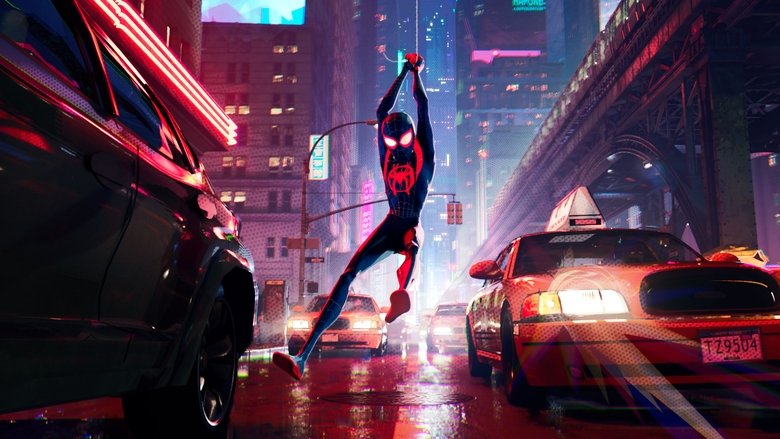

Spider-Man: Into the Spider-Verse
A dizzying, vibrant animated masterpiece where comic book panels explode to life, celebrating the heroic potential within everyone through a kaleidoscope of stunning visuals and heartfelt emotion.
Spider-Man: Into the Spider-Verse

"More than one wears the mask."

06 December 2018 United States of America 117 min ⭐ 8.4 (16,488)
Director: Bob Persichetti Peter Ramsey Rodney Rothman
Cast: Shameik Moore, Jake Johnson, Hailee Steinfeld, Mahershala Ali, Brian Tyree Henry
Animation Action Adventure Science Fiction
Anyone Can Be a Hero The Leap of Faith and Self-Acceptance Responsibility and Consequence Found Family and Mentorship
Budget: $90,000,000
Box Office: $393,602,435

Spider-Man: Into the Spider-Verse - Ending Explained

⚠️ Spoiler Analysis

The central twist of the film is the revelation that Miles's cool, supportive Uncle Aaron is secretly the menacing villain, the Prowler, who works for Kingpin. This discovery is devastating for Miles, creating a deep internal conflict. Aaron's subsequent death while protecting Miles from Kingpin is the film's version of the 'Uncle Ben' tragedy; it's the personal loss that galvanizes Miles to fully embrace his heroic destiny. Aaron's final words, telling Miles he's the "best of all of us," serve as a crucial encouragement that helps Miles overcome his self-doubt.

Another key reveal is the true motivation behind Peter B. Parker's willingness to sacrifice himself. It's not purely heroic selflessness but is rooted in depression and a suicidal desire to escape his failed life. Miles recognizing this and forcing Peter to go home and face his problems is a pivotal moment, showing Miles's growth into a hero who saves not just physically, but emotionally. The film's ending sees all the Spider-People returned to their home dimensions, but they are changed by the experience. Peter B. Parker reconciles with Mary Jane, and Gwen finds a way to open a portal to communicate with Miles, setting up the sequel. Miles fully embraces his role, balancing his family life with his duties as the one and only Spider-Man of his universe, having earned his father's respect after Jefferson witnesses him defeat Kingpin and save the city.

Alternative Interpretations

While the film's primary message is a straightforward and uplifting one about heroism, some analyses delve deeper into its subtext. One interpretation views the film through a queer theory lens, suggesting that Miles's journey mirrors a coming-out narrative. His struggle to hide his new identity from his parents, the fear of their rejection, and his eventual embrace of his true self in a vibrant, self-designed costume can be seen as an allegory for accepting and revealing one's queer identity in the face of a heteronormative world. The theme of a 'found family' with the other Spider-People further supports this reading, reflecting the importance of community for those who feel misunderstood by their biological families.

Another interpretation focuses on the film as a commentary on grief and trauma. Each Spider-Person has experienced a profound loss (an Uncle Ben, a best friend, etc.), which is foundational to their identity. In this light, Kingpin is a dark mirror to the heroes; while they process their grief and use it as motivation to help others, Kingpin is consumed by his, willing to destroy reality itself to undo his loss. This frames the central conflict not just as good vs. evil, but as a healthy versus a pathological response to trauma.