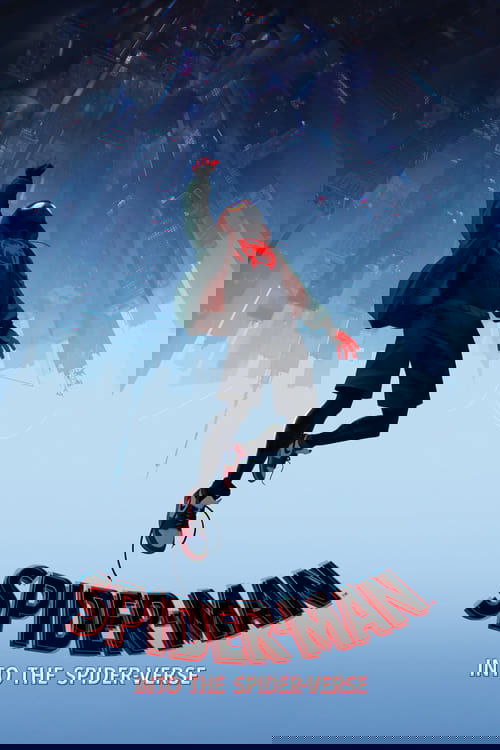
Spider-Man: Into the Spider-Verse
"More than one wears the mask."
Overview
"Spider-Man: Into the Spider-Verse" introduces Miles Morales, a Brooklyn teenager struggling to find his place while adjusting to a new prestigious school. His life takes a dramatic turn when he's bitten by a radioactive spider in an abandoned subway station, granting him spider-like abilities. While returning to the scene of the bite, Miles discovers a massive underground particle collider built by the villainous Kingpin. Kingpin's goal is to access parallel universes to reunite with alternate versions of his deceased wife and son.
During a battle between the original Spider-Man (Peter Parker) and Kingpin's forces, the collider malfunctions, pulling several other Spider-People from different dimensions into Miles's universe. After the original Spider-Man is tragically killed by Kingpin, Miles is left with the responsibility of stopping the villain. He soon encounters a jaded, older Peter B. Parker from another dimension who reluctantly becomes his mentor. Together, they team up with other displaced heroes: the graceful Spider-Gwen, the brooding Spider-Man Noir, the futuristic Peni Parker, and the cartoonish Spider-Ham.
The group of heroes, all suffering from cellular decay due to being in the wrong dimension, must work together to find a way back to their own universes before it's too late. Miles, plagued by self-doubt and inexperience, must learn to master his unique powers, including camouflage and a venom strike, to embrace his new role as Spider-Man and save not only his city but all of reality from collapsing under the strain of Kingpin's collider.
Core Meaning
The central message of "Spider-Man: Into the Spider-Verse" is that anyone can wear the mask. The film powerfully argues that heroism isn't about being perfect or being 'the chosen one,' but about the willingness to get back up after being knocked down and the courage to take a 'leap of faith' into the unknown. It redefines the classic Spider-Man mantra of "with great power comes great responsibility" by emphasizing that this responsibility is a choice available to everyone, regardless of their background or experience. The film champions the idea of finding strength in one's own unique identity, as Peter B. Parker advises Miles, "Don't do it like me. Do it like you." Ultimately, it's a celebration of diversity, self-acceptance, and the extraordinary potential that lies within the ordinary individual.
Thematic DNA
Anyone Can Be a Hero
The film's most prominent theme is the idea that the identity of Spider-Man is not limited to one person. The introduction of multiple Spider-People from different universes—varying in gender, age, ethnicity, and even species—reinforces the message that heroism is a universal potential. Miles Morales's journey is central to this theme; as an Afro-Latino teenager, he breaks the mold of the traditional Peter Parker, demonstrating that a hero can look like anyone. The recurring phrase, "Anyone can wear the mask," encapsulates this idea, encouraging audiences to see the hero within themselves.
The Leap of Faith and Self-Acceptance
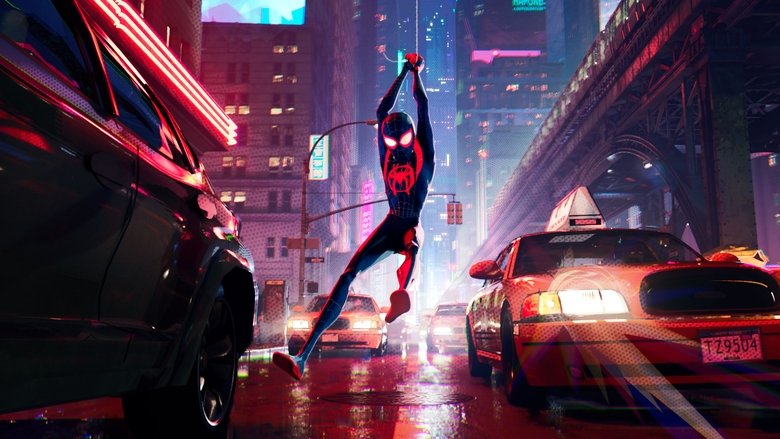
A crucial theme is the necessity of taking a 'leap of faith'—a metaphor for embracing one's potential despite fear and self-doubt. Miles consistently struggles with believing in himself and mastering his new abilities. His character arc culminates in him willingly jumping from a skyscraper, not knowing if he can succeed, but trusting in himself. This act symbolizes his transformation and acceptance of his role as Spider-Man. The theme suggests that true growth and heroism come from moving forward into uncertainty with courage.
Responsibility and Consequence
The classic Spider-Man theme of responsibility is re-contextualized through Miles's experience. His father's version, "With great ability comes great accountability," shifts the focus from a burden to a promise. Miles witnesses the death of his universe's Peter Parker and his own Uncle Aaron, who reveals himself to be the Prowler. These events force Miles to confront the real-world consequences of action and inaction, understanding that his powers give him a duty to protect others, a lesson all the Spider-People have had to learn in their own tragic ways.
Found Family and Mentorship
The film explores the power of connection and community. Miles feels isolated at his new school and misunderstood by his father. The arrival of the other Spider-People provides him with a 'found family' of individuals who truly understand his struggles. The reluctant mentorship of the jaded Peter B. Parker is particularly significant, as teaching Miles helps Peter rediscover his own heroic purpose. This dynamic highlights that people are stronger together and that guidance and support are crucial for growth.
Character Analysis
Miles Morales
Shameik Moore
Motivation
Initially motivated by a desire to honor the memory of his universe's Peter Parker, Miles's motivation evolves into a deep-seated need to protect his family and his newfound friends. The death of his uncle, Aaron, at the hands of Kingpin solidifies his resolve to stop the villain and accept the responsibilities of being Spider-Man.
Character Arc
Miles begins as an artistically gifted but insecure teenager struggling with the pressures of a new school and his father's expectations. After gaining his powers, he is overwhelmed by fear and self-doubt, refusing the call to adventure until the death of his universe's Peter Parker thrusts responsibility upon him. Through the reluctant mentorship of Peter B. Parker and the camaraderie of the other Spider-People, Miles learns to control his unique abilities. His journey culminates in him overcoming his fear, creating his own identity as Spider-Man, and taking a 'leap of faith' to save his friends and the multiverse, transforming from a withdrawn kid into a confident hero.
Peter B. Parker
Jake Johnson
Motivation
His primary motivation is to get back to his own dimension. He is driven by regret and a sense of failure in his personal life. This selfishness slowly gives way to a genuine desire to help Miles succeed and protect his new friends, leading to his own redemption.
Character Arc
This version of Peter Parker is older, divorced, out of shape, and deeply cynical after years of being Spider-Man have taken a personal toll. Initially, he wants nothing to do with mentoring Miles, focused only on returning to his own dimension. His plan to sacrifice himself is revealed to be borderline suicidal, born from a desire to escape his failures. However, teaching and watching Miles grow forces Peter to confront his own despair and reconnect with the hero he used to be. By the end, he is inspired to return home and try to mend his own life, particularly his relationship with Mary Jane.
Gwen Stacy (Spider-Gwen)
Hailee Steinfeld
Motivation
Like the other displaced heroes, her main goal is to return home. However, she is also motivated by a strong moral compass and a protective instinct. Having failed to save her Peter, she is determined not to let her new friends suffer the same fate, pushing her to engage despite her emotional reservations.
Character Arc
Gwen is a highly skilled and confident hero from her own dimension. However, she is emotionally closed off, having lost her best friend, Peter Parker, in a tragic accident she blames herself for. This trauma makes her wary of getting close to anyone. Her journey in Miles's dimension involves learning to trust others and open herself up to friendship again, particularly with Miles. By the film's end, she has moved past her self-imposed isolation, valuing the connection she made with the team and finding a way to contact Miles from her own universe.
Wilson Fisk (Kingpin)
Liev Schreiber
Motivation
Kingpin's sole motivation is to reunite with his family. This seemingly sympathetic goal is corrupted by his monstrous selfishness; he is willing to destroy entire universes and kill anyone who stands in his way, including multiple Spider-Men, to achieve it. His love is possessive and destructive, not selfless.
Character Arc
Kingpin is the film's central antagonist, but his motivations are rooted in a personal tragedy. His wife and son left him in horror after discovering his criminal life, and were then killed in a car accident. He is obsessed with using the super-collider to bring back alternate versions of his family, regardless of the catastrophic risk to all of reality. His arc is a refusal to accept loss, contrasting sharply with the heroes who are all defined by their ability to endure and grow from tragedy. He remains unrepentant, doubling down on his destructive path until his defeat.
Symbols & Motifs
The Leap of Faith
The 'Leap of Faith' symbolizes the ultimate act of self-belief and courage in the face of uncertainty. It represents overcoming crippling self-doubt and embracing one's true potential. It's the moment of transition from being a passive observer to an active hero, a universal metaphor for personal growth and transformation.
This is most iconically depicted when Miles, having finally gained control of his powers and created his own suit, jumps off a skyscraper to join the final battle. The shot is a direct callback to Peter B. Parker's advice, "It's a leap of faith." Miles's successful swing after the fall signifies his complete acceptance of his role as Spider-Man.
Graffiti and Street Art
Graffiti represents Miles's identity, creativity, and his connection to his community and his uncle, Aaron. It's a form of self-expression that is initially disapproved of by his father but is ultimately integrated into his superhero persona. It symbolizes the idea of taking something established (the Spider-Man mantle) and making it one's own.
Miles is introduced as a talented graffiti artist. He and his Uncle Aaron bond over painting in a subway station, the same place he is bitten by the spider. Later, when designing his own suit, he spray-paints the classic Spider-Man symbol in his own style, merging his artistic identity with his new heroic one.
The Spider-Man Suit
The suit symbolizes the mantle of heroism and the responsibilities that come with it. Initially, Miles wears a cheap, store-bought costume, signifying his immaturity and impostor syndrome. By creating his own unique suit, he accepts the mantle on his own terms, signifying his growth into a confident and distinct hero.
After failing to live up to the original suit, Miles is given the tools to make his own by Aunt May. He redesigns it, spray-painting it black and red. The act of creating and donning his own suit is the final step in his transformation, occurring just before he takes his 'leap of faith' to join the final battle.
The Multiverse
The multiverse serves as a powerful metaphor for diversity and the idea that there are infinite ways to be a hero. It visually represents the film's core theme that anyone can wear the mask, showing that Spider-Man is not defined by one person's story but is a concept that can be embodied by many different people from all walks of life.
The plot is driven by Kingpin's collider opening a portal to the multiverse, bringing Spider-Gwen, Peter B. Parker, Spider-Man Noir, Peni Parker, and Spider-Ham into Miles's dimension. Their varied appearances, personalities, and animation styles constantly reinforce the theme of diversity within a shared heroic identity.
Memorable Quotes
That's all it is, Miles. A leap of faith.
— Peter B. Parker
Context:
Peter B. Parker says this to Miles as he tries to teach him how to web-swing. Miles asks when he'll know he's ready, and Peter's response emphasizes that there's no magic moment of certainty; you just have to trust yourself and take the jump.
Meaning:
This line is the thematic core of the film. It encapsulates the idea that becoming a hero—or achieving anything worthwhile—isn't about knowing you'll succeed, but about having the courage to try despite fear and uncertainty. It's the central lesson Miles must learn to truly become Spider-Man.
Anyone can wear the mask. You could wear the mask. If you didn't know that before, I hope you do now.
— Miles Morales (in narration)
Context:
This is part of Miles's closing monologue at the end of the film. After accepting his role and becoming his universe's new Spider-Man, he reflects on his journey and the meaning of the mantle he has inherited, sharing this empowering conclusion with the viewer.
Meaning:
This quote directly states the film's central message of inclusivity and universal potential for heroism. It breaks down the fourth wall to speak directly to the audience, reinforcing the idea that Spider-Man is more than a single person—it's a symbol that anyone can embody.
With great ability comes great accountability.
— Jefferson Davis
Context:
Jefferson says this to Miles after dropping him off at school, trying to connect with his son and impart some fatherly wisdom. Miles dismisses it, saying "That's not how it goes," but the line foreshadows the unique path he will take as a hero.
Meaning:
This is a subtle but significant twist on the classic Spider-Man line, "With great power comes great responsibility." Jefferson's version frames the hero's duty not as a heavy burden ('responsibility'), but as an active, empathetic promise to others ('accountability'). It reflects the film's more modern and personal take on the Spider-Man ethos.
It always fits... eventually.
— Stan
Context:
Miles buys a cheap Spider-Man costume from a shop run by a character voiced by Stan Lee. When Miles questions if it will fit, Stan offers this wise and comforting advice, which carries extra weight as a meta-commentary on inheriting the Spider-Man legacy.
Meaning:
This poignant line, delivered by Stan Lee in his cameo, works on two levels. Literally, it refers to the Spider-Man costume Miles is buying. Metaphorically, it speaks to the idea of growing into a role or responsibility. It reassures both Miles and the audience that even if you don't feel ready, you will eventually fit the part you're meant to play.
No matter how many times I get hit, I always get back up.
— Peter Parker (and others)
Context:
This idea is first stated by Miles's universe's Peter Parker and is later echoed by the other Spider-People as they explain to Miles what it truly takes to be a hero. It becomes a mantra for Miles as he faces his final confrontation with Kingpin.
Meaning:
This line defines the core trait of any Spider-Person: resilience. It's not about never falling, but about the unbreakable will to rise again after every setback. This perseverance is presented as the true superpower of Spider-Man, a quality that Miles must discover within himself.
Philosophical Questions
What is the nature of identity?
The film explores whether identity is a fixed essence or a fluid construct. By presenting multiple versions of Spider-Man, it suggests that a core identity (heroism, responsibility) can be expressed through countless unique individuals. Miles's journey is one of forging his own identity by integrating parts of his heritage (his art, his family) with the new mantle he has inherited. The film argues that our identity is not something we simply discover, but something we actively create through our choices, actions, and the 'leap of faith' we take in ourselves.
Can anyone be a hero, and what does that truly mean?
"Into the Spider-Verse" directly challenges the 'chosen one' trope. It posits that heroism is not an innate quality but a choice and a continuous action. The defining characteristic of a hero in the film is not power, but resilience—the ability to get back up after being defeated. The film explores this through the diverse cast of Spider-People, none of whom were destined for greatness but all of whom chose to use their abilities for the good of others, often after experiencing a great personal loss. It broadens the definition of a hero to be more inclusive and accessible.
How do we find our place in the world?
Miles's initial struggle is one of alienation; he feels he doesn't belong at his new school or fully fit his parents' expectations. The film suggests that finding one's place isn't about fitting into a pre-existing mold, but about embracing one's own uniqueness. Miles finds his purpose not by perfectly imitating Peter Parker, but by becoming his own kind of Spider-Man. The film advocates for the idea that community and belonging are found when we are true to ourselves and connect with others who understand and accept our individuality.
Alternative Interpretations
While the film's primary message is a straightforward and uplifting one about heroism, some analyses delve deeper into its subtext. One interpretation views the film through a queer theory lens, suggesting that Miles's journey mirrors a coming-out narrative. His struggle to hide his new identity from his parents, the fear of their rejection, and his eventual embrace of his true self in a vibrant, self-designed costume can be seen as an allegory for accepting and revealing one's queer identity in the face of a heteronormative world. The theme of a 'found family' with the other Spider-People further supports this reading, reflecting the importance of community for those who feel misunderstood by their biological families.
Another interpretation focuses on the film as a commentary on grief and trauma. Each Spider-Person has experienced a profound loss (an Uncle Ben, a best friend, etc.), which is foundational to their identity. In this light, Kingpin is a dark mirror to the heroes; while they process their grief and use it as motivation to help others, Kingpin is consumed by his, willing to destroy reality itself to undo his loss. This frames the central conflict not just as good vs. evil, but as a healthy versus a pathological response to trauma.
Cultural Impact
"Spider-Man: Into the Spider-Verse" had a profound cultural impact, widely regarded as a watershed moment for animation. Its groundbreaking visual style, which blended 3D CGI with 2D, hand-drawn comic book aesthetics—including Ben-Day dots, line work, and pop-up text—revolutionized the industry. This 'Spider-Verse' style has been cited as a major influence on subsequent animated films like "The Mitchells vs. The Machines" and "Puss in Boots: The Last Wish."
Critically, the film was a massive success, winning the Academy Award for Best Animated Feature in 2019, a significant achievement for a non-Disney/Pixar film. More importantly, its narrative centered on Miles Morales, an Afro-Latino teenager, which was a landmark for representation in mainstream superhero cinema. The film's success proved that audiences were eager for diverse stories and heroes, empowering many young viewers who saw themselves represented on screen for the first time. It expanded the cultural understanding of who Spider-Man could be, solidifying the idea that the hero is a symbol anyone can embody, regardless of race or background. The film's influence extended to Sony itself, which launched the LENS program to empower new storytellers from marginalized communities following the movie's success.
Audience Reception
Audience reception for "Spider-Man: Into the Spider-Verse" was overwhelmingly positive, with many viewers hailing it as one of the best superhero and animated films ever made. The most frequently praised aspect was its revolutionary and visually stunning animation style, which successfully mimicked the feel of a comic book come to life. Viewers also lauded the heartfelt story, the compelling character development of Miles Morales, and the film's humor. The emotional depth, particularly the relationship between Miles and his family, and the mentor-mentee dynamic with Peter B. Parker, resonated strongly with audiences. The film's inclusive message that "anyone can wear the mask" was also a significant point of praise, celebrated for its empowering and timely nature. Criticism was minimal and often related to personal taste regarding the fast-paced, sometimes chaotic visual style, but the general consensus was that the film was a creative and emotional triumph.
Interesting Facts
- The film's unique animation style was achieved by combining 3D computer animation with 2D hand-drawn techniques to make it look like a living comic book. Animators often worked 'on twos,' holding each image for two frames, which created a crisper, less fluid motion mimicking comic panels.
- Nicolas Cage, who voiced Spider-Man Noir, based his character's distinctive voice on the speaking patterns of 1930s and '40s actors like Humphrey Bogart.
- The character Ganke Lee, Miles's best friend in the comics, was originally intended to have a larger role but it was reduced to avoid similarities with Ned Leeds in 'Spider-Man: Homecoming'.
- During Stan Lee's cameo, he can be seen on passing trains throughout the movie. The animators, all fans, wanted to draw him, so they placed him in numerous background shots.
- The idea to cast Tobey Maguire as the older Peter B. Parker was considered but ultimately dropped to avoid confusing the audience with the introduction of the Spider-Verse concept.
- The film was announced by mistake in 2014 when a massive Sony data leak revealed upcoming projects, including the animated Spider-Man feature, months before its official announcement.
- A Christmas album, 'A Very Spidey Christmas', featuring songs sung by the cast members, was released digitally. It was initially just a joke within the film but was produced due to positive reception.
- The film required the largest crew of animators ever used by Sony Pictures Animation on a feature film.
Easter Eggs
Miles's Phone Contacts
When Miles is trying to call his dad, his contact list includes "B. Bendis" and "S. Pichelli," who are Brian Michael Bendis and Sara Pichelli, the writer and artist who co-created the character of Miles Morales. Another contact is "Steve Ditko," the legendary artist who co-created the original Spider-Man with Stan Lee.
Sam Raimi Trilogy References
The origin story of Peter B. Parker includes several visual nods to Sam Raimi's live-action 'Spider-Man' trilogy. These include the iconic upside-down kiss with Mary Jane in the rain, stopping a train with his webs ('Spider-Man 2'), and a scene where a car is thrown through a café window ('Spider-Man 2').
Alternate Universe Comic Covers
Each time a new Spider-Person is introduced, a comic book cover flashes on screen. These covers are homages to the real-life comics where these characters originate, featuring the art styles of their respective creators like Jason Latour and Robbi Rodriguez for Spider-Gwen.
The 'Clone High' Joke
In Times Square, a billboard can be seen for a movie called "Clone College," a direct reference to the cult classic animated series "Clone High," which was also created by Phil Lord and Christopher Miller, two of the producers and writers of "Into the Spider-Verse."
Earth-616 and Other Universe Numbers
When the multiverse is being explained, several Earth designations appear on screen. These numbers correspond to their designations in the Marvel Comics lore. For example, Miles's universe is Earth-1610 (the Ultimate Universe), Peter B. Parker is implied to be from a universe similar to Earth-616 (the main Marvel universe), and Spider-Gwen is from Earth-65.
Post-Credits Scene: Spider-Man 2099
The post-credits scene features Miguel O'Hara, also known as Spider-Man 2099 (voiced by Oscar Isaac), traveling to Earth-67. This dimension is a reference to the 1967 'Spider-Man' animated series, and the scene hilariously recreates the popular "pointing Spider-Man" internet meme.
⚠️ Spoiler Analysis
Click to reveal detailed analysis with spoilers
Frequently Asked Questions
Explore More About This Movie
Dive deeper into specific aspects of the movie with our detailed analysis pages
Comments (0)
No comments yet. Be the first to share your thoughts!