The central message of "Spider-Man: Into the Spider-Verse" is that anyone can wear the mask. The film powerfully argues that heroism isn't about being perfect or being 'the chosen one,' but about the willingness to get back up after being knocked down and the courage to take a 'leap of faith' into the unknown. It redefines the classic Spider-Man mantra of "with great power comes great responsibility" by emphasizing that this responsibility is a choice available to everyone, regardless of their background or experience. The film champions the idea of finding strength in one's own unique identity, as Peter B. Parker advises Miles, "Don't do it like me. Do it like you." Ultimately, it's a celebration of diversity, self-acceptance, and the extraordinary potential that lies within the ordinary individual.
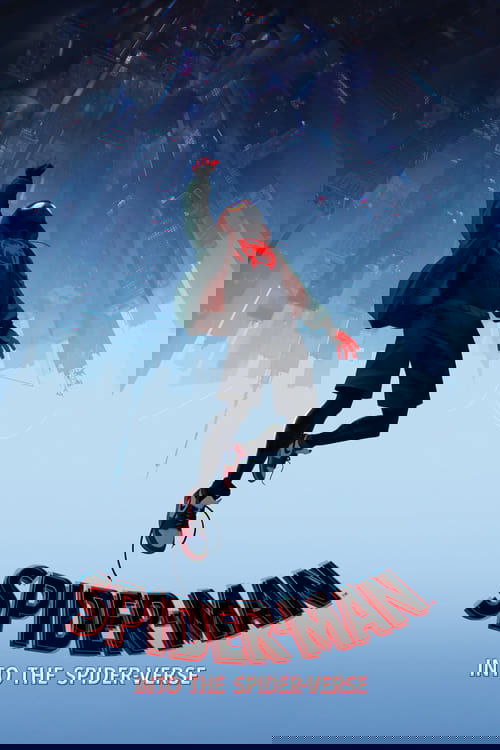
"More than one wears the mask."
Director: Bob Persichetti, Peter Ramsey, Rodney Rothman
Cast: Shameik Moore, Jake Johnson, Hailee Steinfeld, Mahershala Ali, Brian Tyree Henry
Spider-Man: Into the Spider-Verse — Symbolism & Philosophy
Symbols & Motifs
The Leap of Faith
The 'Leap of Faith' symbolizes the ultimate act of self-belief and courage in the face of uncertainty. It represents overcoming crippling self-doubt and embracing one's true potential. It's the moment of transition from being a passive observer to an active hero, a universal metaphor for personal growth and transformation.
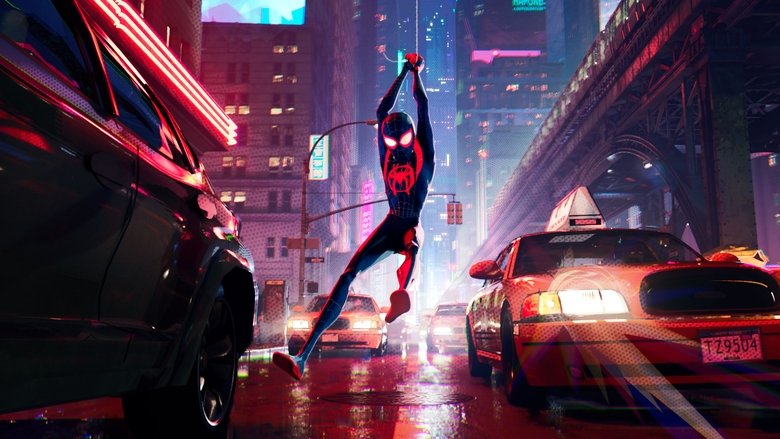
This is most iconically depicted when Miles, having finally gained control of his powers and created his own suit, jumps off a skyscraper to join the final battle. The shot is a direct callback to Peter B. Parker's advice, "It's a leap of faith." Miles's successful swing after the fall signifies his complete acceptance of his role as Spider-Man.
Graffiti and Street Art
Graffiti represents Miles's identity, creativity, and his connection to his community and his uncle, Aaron. It's a form of self-expression that is initially disapproved of by his father but is ultimately integrated into his superhero persona. It symbolizes the idea of taking something established (the Spider-Man mantle) and making it one's own.
Miles is introduced as a talented graffiti artist. He and his Uncle Aaron bond over painting in a subway station, the same place he is bitten by the spider. Later, when designing his own suit, he spray-paints the classic Spider-Man symbol in his own style, merging his artistic identity with his new heroic one.
The Spider-Man Suit
The suit symbolizes the mantle of heroism and the responsibilities that come with it. Initially, Miles wears a cheap, store-bought costume, signifying his immaturity and impostor syndrome. By creating his own unique suit, he accepts the mantle on his own terms, signifying his growth into a confident and distinct hero.
After failing to live up to the original suit, Miles is given the tools to make his own by Aunt May. He redesigns it, spray-painting it black and red. The act of creating and donning his own suit is the final step in his transformation, occurring just before he takes his 'leap of faith' to join the final battle.
The Multiverse
The multiverse serves as a powerful metaphor for diversity and the idea that there are infinite ways to be a hero. It visually represents the film's core theme that anyone can wear the mask, showing that Spider-Man is not defined by one person's story but is a concept that can be embodied by many different people from all walks of life.
The plot is driven by Kingpin's collider opening a portal to the multiverse, bringing Spider-Gwen, Peter B. Parker, Spider-Man Noir, Peni Parker, and Spider-Ham into Miles's dimension. Their varied appearances, personalities, and animation styles constantly reinforce the theme of diversity within a shared heroic identity.
Philosophical Questions
What is the nature of identity?
The film explores whether identity is a fixed essence or a fluid construct. By presenting multiple versions of Spider-Man, it suggests that a core identity (heroism, responsibility) can be expressed through countless unique individuals. Miles's journey is one of forging his own identity by integrating parts of his heritage (his art, his family) with the new mantle he has inherited. The film argues that our identity is not something we simply discover, but something we actively create through our choices, actions, and the 'leap of faith' we take in ourselves.
Can anyone be a hero, and what does that truly mean?
"Into the Spider-Verse" directly challenges the 'chosen one' trope. It posits that heroism is not an innate quality but a choice and a continuous action. The defining characteristic of a hero in the film is not power, but resilience—the ability to get back up after being defeated. The film explores this through the diverse cast of Spider-People, none of whom were destined for greatness but all of whom chose to use their abilities for the good of others, often after experiencing a great personal loss. It broadens the definition of a hero to be more inclusive and accessible.
How do we find our place in the world?
Miles's initial struggle is one of alienation; he feels he doesn't belong at his new school or fully fit his parents' expectations. The film suggests that finding one's place isn't about fitting into a pre-existing mold, but about embracing one's own uniqueness. Miles finds his purpose not by perfectly imitating Peter Parker, but by becoming his own kind of Spider-Man. The film advocates for the idea that community and belonging are found when we are true to ourselves and connect with others who understand and accept our individuality.
Core Meaning
Explore More About This Movie
Dive deeper into specific aspects of the movie with our detailed analysis pages