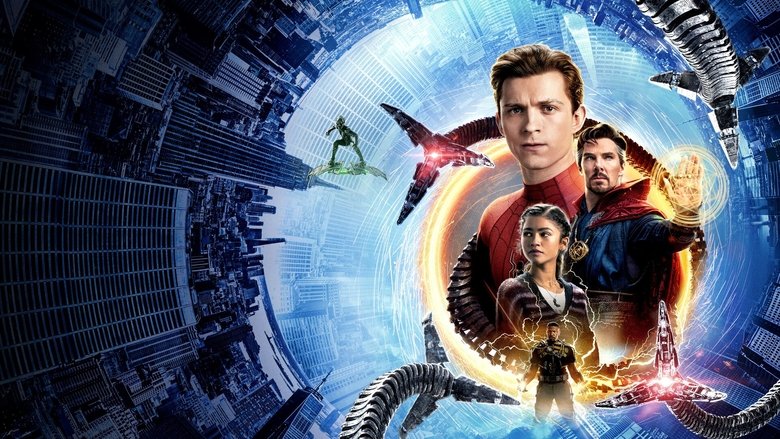
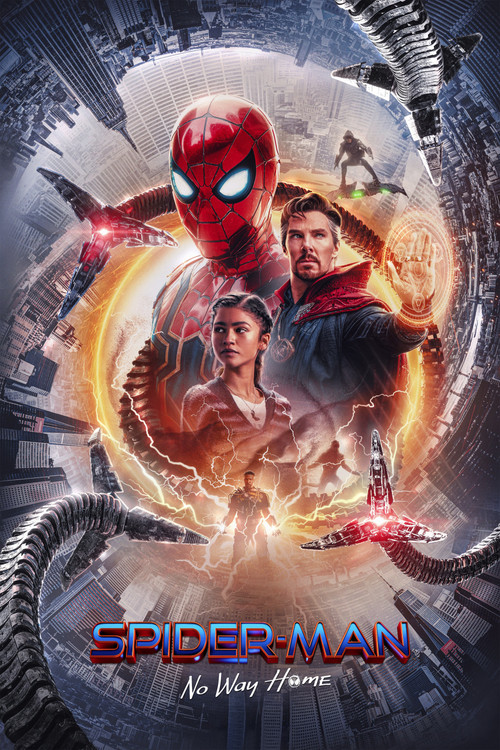
Spider-Man: No Way Home
A heartfelt, dimension-shattering action epic where immense sacrifice collides with nostalgia, painting a portrait of heroism defined by loss and anonymity.
Spider-Man: No Way Home

"Enter the Multiverse."

15 December 2021 United States of America 148 min ⭐ 7.9 (21,187)
Director: Jon Watts
Cast: Tom Holland, Zendaya, Benedict Cumberbatch, Jacob Batalon, Jon Favreau
Action Adventure Science Fiction
Sacrifice and Loss Identity Second Chances and Redemption The Weight of Choices
Budget: $200,000,000
Box Office: $1,921,847,111

Spider-Man: No Way Home - Ending Explained

⚠️ Spoiler Analysis

Spider-Man: No Way Home's plot hinges on several major spoilers. The central twist is the return of previous Spider-Man actors Tobey Maguire and Andrew Garfield, who are pulled into the MCU after Ned Leeds accidentally opens portals with Doctor Strange's Sling Ring. Their appearance transforms the film into a multi-generational team-up, where the three Peters share their grief and wisdom, ultimately working together to cure the villains.

A pivotal and tragic turn is the death of Aunt May at the hands of the Green Goblin. She is killed by his glider after he attacks Peter in Happy's apartment building. Her final words to Peter, "With great power, there must also come great responsibility," firmly establish her as the MCU's 'Uncle Ben' figure, providing the definitive moral lesson that shapes Peter's destiny. This loss fuels Peter's rage, and he nearly kills the Goblin in the final battle, only to be stopped by Tobey Maguire's Peter, who is then stabbed himself (though he survives).

The film's ending is perhaps its biggest revelation. To stop the multiverse from collapsing completely, as beings from every universe who know Peter Parker is Spider-Man begin to break through, Peter asks Doctor Strange to cast a final, corrected spell: make everyone, everywhere, forget who Peter Parker is. This includes MJ, Ned, Happy, and the Avengers. The spell works, and Peter is left completely alone and anonymous in the world. In the final scenes, he visits MJ and Ned, who do not recognize him, and chooses not to reintroduce himself to protect them. He then creates a simple, homemade suit and resumes his life as a solitary, street-level hero, fully embracing his identity as Spider-Man at the cost of his entire personal life.

The post-credits scene reveals Eddie Brock/Venom (from the Sony universe) being transported back to his reality by Strange's spell, but leaving behind a small piece of the symbiote, teasing a future confrontation between the MCU's Spider-Man and Venom.

Alternative Interpretations

One alternative interpretation views the film's central conflict not as Peter's mistake, but as a critique of a society that demands heroes be flawless. The public's immediate turn on Peter, fueled by J. Jonah Jameson's sensationalism, can be seen as a metaphor for cancel culture and the impossibly high standards placed on public figures. In this reading, Peter's final choice to be forgotten is not just a sacrifice, but a tragic retreat from a world that is incapable of forgiving or understanding the complexities of being a hero.

Another perspective focuses on the theme of restorative justice. Instead of punishing the villains by sending them to their deaths, Peter insists on 'curing' them. This can be interpreted as an argument for rehabilitation over retribution. The film offers a vision where even the most dangerous individuals are seen as people suffering from afflictions that can be treated. This challenges the traditional superhero narrative of simply defeating the 'bad guys' and instead promotes a more compassionate and progressive approach to justice.

Finally, some have viewed the ending as a meta-commentary on the Spider-Man franchise itself. By stripping away the MCU connections, the Stark technology, and his supporting cast, the film effectively reboots the character. This interpretation suggests the filmmakers are acknowledging that the character had become too enmeshed in the larger Avengers narrative and needed to return to his roots as a solitary, 'friendly neighborhood' hero to remain true to his comic book origins.