Spider-Man: No Way Home
"Enter the Multiverse."
Overview
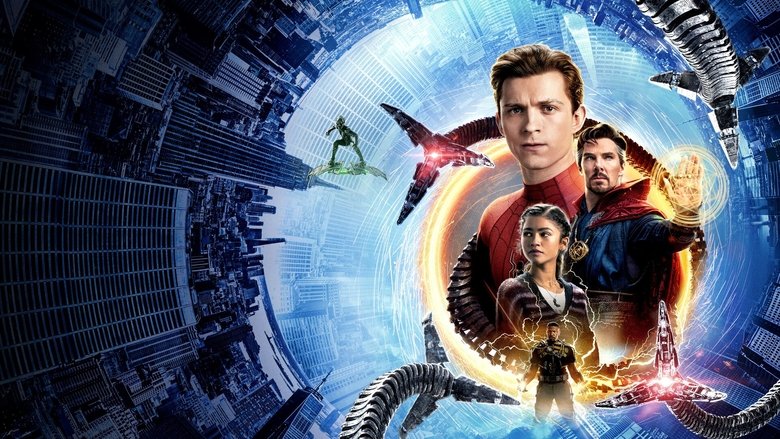
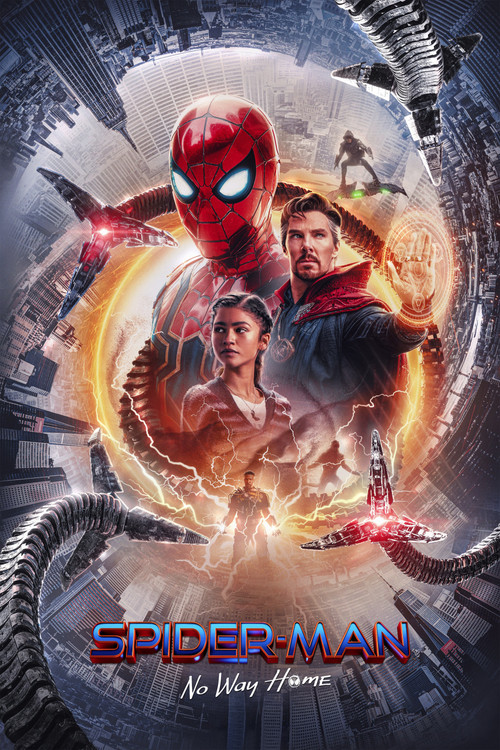
Following the events of Spider-Man: Far From Home, Peter Parker's life is thrown into chaos after his identity as Spider-Man is publicly revealed by Mysterio. Facing intense public scrutiny and federal charges, Peter, along with his girlfriend MJ and best friend Ned Leeds, finds their futures jeopardized when their college applications are rejected due to the controversy.
Desperate to reclaim a normal life for his friends, Peter seeks the help of Doctor Strange to cast a spell that would make everyone forget he is Spider-Man. However, Peter's interference during the casting corrupts the spell, inadvertently opening a rift in the multiverse. This breach pulls in visitors from other realities who know Peter Parker's identity, including a host of villains from past Spider-Man timelines.
Now confronted with formidable foes like the Green Goblin, Doctor Octopus, and Electro, Peter must grapple with the true meaning of being Spider-Man. The challenge forces him to understand that his choices have consequences not just for his world, but for the entire multiverse, leading to his most personal and difficult battle yet.
Core Meaning
The core meaning of Spider-Man: No Way Home revolves around the themes of sacrifice, responsibility, and the nature of heroism. The film deconstructs the character of Peter Parker, forcing him to learn the hardest lesson of his journey: that true heroism often requires immense personal loss. It explores the idea that 'with great power, there must also come great responsibility,' not as a cliché, but as a painful, defining principle.
The director, Jon Watts, seems to convey that being a hero isn't about having everything—fame, friends, and personal happiness—but about what one is willing to give up for the greater good. Peter's ultimate decision to erase himself from everyone's memory signifies his maturation. He sheds the identity of a kid who wants a normal life and fully embraces the solitary, selfless duty of being Spider-Man. The film posits that the greatest act of power is not in winning fights, but in the strength to make devastating sacrifices for others.
Thematic DNA
Sacrifice and Loss
This theme is central to the film, culminating in its emotional climax. Peter initially wants to reverse the consequences of his identity reveal without any personal sacrifice. However, the narrative forces him to confront escalating losses, starting with his and his friends' futures, and tragically, the death of Aunt May. Her death becomes the crucible that forges his understanding of true responsibility. The film's resolution is the ultimate sacrifice: Peter gives up every personal relationship and his entire history to save the multiverse, choosing the lonely path of a hero over his own happiness.
Identity
The film opens with the destruction of Peter's dual identity, forcing him to confront who he is without the mask. Doctor Strange points out that Peter's problem is trying to live two separate lives. The narrative explores what it means to be Peter Parker versus what it means to be Spider-Man. By the end, having lost everyone who knew him, he is left with only the mantle of Spider-Man, suggesting a complete integration and acceptance of his heroic self over his personal one.
Second Chances and Redemption
Aunt May champions the idea of helping the multiversal villains, believing they deserve a second chance rather than being sent back to their fatal destinies. This theme drives the main conflict, as Peter fights Doctor Strange to cure the antagonists of the afflictions that made them evil. The film extends this theme to the previous Spider-Men as well; Andrew Garfield's character finds redemption by saving MJ, a moment that mirrors his failure to save Gwen Stacy.
The Weight of Choices
The entire plot is set in motion by Peter's impulsive decisions: first, by asking Doctor Strange for a dangerous spell, and second, by tampering with it. The film consistently shows how his well-intentioned choices lead to disastrous consequences, culminating in Aunt May's death. This reinforces the recurring Spider-Man lesson that good intentions are not enough, and that every action, especially for someone with great power, carries immense weight and responsibility.
Character Analysis
Peter Parker / Spider-Man
Tom Holland
Motivation
Initially, his motivation is to restore the lives of his friends, which were ruined by his identity reveal. After May's death, his motivation shifts to honoring her belief in second chances by curing the villains, and ultimately, to protect the multiverse by making the ultimate sacrifice.
Character Arc
Peter begins the film as a teenager desperately trying to hold onto his personal life and fix a mistake he made. His arc is a painful journey from youthful irresponsibility to mature self-sacrifice. He learns that heroism isn't about having it all, but about giving it all up. He is forced to confront true loss with the death of Aunt May, which solidifies his moral compass. He ends the film completely alone, having erased his existence from everyone he loves to save the world, fully embracing the responsibility of being Spider-Man.
Michelle 'MJ' Jones-Watson
Zendaya
Motivation
Her primary motivation is to protect and support Peter. She consistently puts his well-being first and actively participates in trying to solve the multiversal crisis, demonstrating immense loyalty and courage despite not having any powers.
Character Arc
MJ's arc is one of unwavering support and bravery. She starts as Peter's girlfriend, thrust into the chaos of his superhero life. Throughout the film, she remains his emotional anchor, providing steadfast support and courage, even in the face of mortal danger. Her arc culminates in her tragic forgetting of Peter, a fate she unknowingly accepts. She ends the film as a stranger to the person she loves, poised to live the normal life Peter wanted for her.
Dr. Stephen Strange
Benedict Cumberbatch
Motivation
His motivation is to protect the stability of spacetime and reality. He acts from a place of cosmic responsibility, viewing the deaths of a few villains as a necessary sacrifice to prevent a multiversal collapse, putting him in direct opposition to Peter's more compassionate approach.
Character Arc
Strange acts as a reluctant mentor figure whose pragmatism clashes with Peter's idealism. His arc involves recognizing the consequences of his own arrogance and underestimating Peter. Initially, he sees the problem in purely logical terms—send the villains back to their fate to protect reality. He is forced into a secondary role when Peter traps him, and upon his return, he witnesses the catastrophic results of Peter's moral stance. He ultimately respects Peter's final, sacrificial decision, casting the spell that erases him from existence.
Norman Osborn / Green Goblin
Willem Dafoe
Motivation
Norman's motivation is to be free of the Goblin persona that controls him. Conversely, the Green Goblin is motivated by a nihilistic desire to prove that power corrupts and that Peter's idealism is a weakness. He seeks to break Peter by taking away what he loves most.
Character Arc
Norman Osborn's arc is a tragic battle for control against his sinister alter ego, the Green Goblin. He appears in the MCU confused and seeking help, showing a desire for redemption. However, the Goblin persona, representing his darkest impulses, consistently re-emerges to cause chaos and pain, culminating in the murder of Aunt May. His arc concludes when Peter, with the help of the other Spider-Men, finally cures him, freeing the remorseful and broken Norman from the Goblin's influence.
Symbols & Motifs
The Statue of Liberty with Captain America's Shield
It symbolizes a changing world and contested ideals of heroism. The addition of the shield, a symbol of an established, government-sanctioned hero, contrasts with Spider-Man's status as a vigilante. The final battle taking place here forces a confrontation over what it truly means to be a hero—a celebrated icon or an anonymous protector.
The location of the climactic battle where the three Spider-Men team up to cure the villains. The shield is destroyed during the fight, symbolically shattering the old ideas of heroism as Peter forges his new, solitary path.
The Broken Black Dahlia Necklace
It represents Peter's relationship with MJ and the life he is forced to leave behind. It is a tangible piece of his past and his love for her. Even after the memory wipe, she is still wearing it, suggesting a lingering, unconscious connection or a remnant of the love that was erased.
MJ is seen wearing the broken necklace throughout the film. In the final scene at the coffee shop, after her memories of Peter have been erased, she is still wearing it. Peter notices this, which makes his decision to leave her alone even more poignant.
Peter's Homemade Suit
Symbolizes Peter's return to his core identity as a self-sufficient, "friendly neighborhood" hero. After relying on advanced Stark technology for several films, the simple, classic suit represents his maturation and independence. He is no longer Iron Man's protégé but his own man, embracing the foundational principles of being Spider-Man.
In the final scene of the film, Peter is shown swinging through the city in a new, self-stitched suit that is visually distinct from the high-tech suits he's used before. This is the suit he wears as he begins his new, anonymous life.
Memorable Quotes
With great power, there must also come great responsibility.
— May Parker
Context:
Aunt May says this to Peter after being mortally wounded by the Green Goblin. She is comforting a devastated Peter, ensuring that he understands that doing the right thing was the only choice, despite the horrific consequences.
Meaning:
This is the most iconic line in Spider-Man's history, and its placement here is pivotal. Spoken by Aunt May just before she dies, it solidifies her role as the Uncle Ben figure of this universe. It's the moment the MCU's Peter Parker truly understands the profound moral weight of his abilities, transforming the phrase from a known adage into a deeply personal and tragic lesson.
You're struggling to have everything you want while the world tries to make you choose.
— Norman Osborn
Context:
Spoken by the Green Goblin to Peter at the F.E.A.S.T. center. He is trying to tempt Peter by highlighting the inherent contradiction and struggle in his life, planting seeds of doubt about his mission to 'fix' the villains.
Meaning:
This quote cuts to the core of Peter's internal conflict. The Green Goblin, in his manipulative way, correctly identifies Peter's youthful desire to live a normal life while also being a world-saving hero. The line foreshadows the film's ultimate conclusion: Peter cannot have both, and the world will, in fact, force him to choose.
I lost Gwen. She was my MJ. I couldn't save her. I'm never gonna be able to forgive myself for that.
— Peter Parker (Andrew Garfield)
Context:
Andrew Garfield's Peter says this to Tobey Maguire's Peter as they share their experiences and losses. He explains the origin of his deep-seated sadness and why he stopped pulling his punches, revealing the lasting pain of Gwen Stacy's death.
Meaning:
This quote provides deep emotional context for Andrew Garfield's Spider-Man, connecting his journey to the current crisis. It expresses the lasting trauma and guilt that defines his character. This confession not only enriches his own story but sets up his redemptive act of saving MJ later in the film, giving him a moment of closure.
If you expect disappointment, then you can never really get disappointed.
— MJ
Context:
MJ says this to Peter early in the film while they are on a rooftop. It's a moment of character-building intimacy, where she shares a piece of her personal philosophy with him.
Meaning:
This line perfectly encapsulates MJ's character philosophy: a defense mechanism born from a protective and perhaps pessimistic worldview. It reflects her guarded nature but also her pragmatism. In the context of the film, it serves as a poignant piece of foreshadowing for the ultimate disappointment she will face: forgetting the love of her life without even knowing it.
Philosophical Questions
Is it morally right to change a person's fate, even to save their life?
The film explores this question through the central conflict between Peter and Doctor Strange. Peter believes the villains, who are destined to die in their universes, deserve a second chance and a cure. Strange argues from a utilitarian perspective that their fates are sealed and tampering with them risks the stability of the entire multiverse. The narrative forces the audience to consider whether one's compassion for an individual's life outweighs the potential for catastrophic, large-scale consequences. Peter's choice affirms a belief in the potential for redemption, regardless of the risk.
Does true heroism require complete self-sacrifice and anonymity?
No Way Home pushes this question to its extreme. Peter Parker begins the story wanting to have both a personal life and a heroic one. By the end, he is forced to conclude that the two are incompatible and that to truly protect people, he must give up everyone and everything he loves. The film's somber ending suggests that the purest form of heroism is a solitary and thankless path, devoid of personal reward. It challenges the modern superhero trope of the celebrity hero, returning Spider-Man to his roots as an anonymous protector.
Are we defined by our mistakes or by how we respond to them?
The entire plot is initiated by Peter's mistake in botching Doctor Strange's spell. The film becomes a study in accountability. Peter doesn't just try to undo his error; he takes responsibility for the beings he brought into his world. His journey, and those of the other two Spider-Men, is defined by their past failures—failing to save loved ones—and their collective effort to do better this time. The movie argues that failure is an inevitable part of life, but one's character is ultimately defined by the persistent effort to learn, grow, and atone.
Alternative Interpretations
One alternative interpretation views the film's central conflict not as Peter's mistake, but as a critique of a society that demands heroes be flawless. The public's immediate turn on Peter, fueled by J. Jonah Jameson's sensationalism, can be seen as a metaphor for cancel culture and the impossibly high standards placed on public figures. In this reading, Peter's final choice to be forgotten is not just a sacrifice, but a tragic retreat from a world that is incapable of forgiving or understanding the complexities of being a hero.
Another perspective focuses on the theme of restorative justice. Instead of punishing the villains by sending them to their deaths, Peter insists on 'curing' them. This can be interpreted as an argument for rehabilitation over retribution. The film offers a vision where even the most dangerous individuals are seen as people suffering from afflictions that can be treated. This challenges the traditional superhero narrative of simply defeating the 'bad guys' and instead promotes a more compassionate and progressive approach to justice.
Finally, some have viewed the ending as a meta-commentary on the Spider-Man franchise itself. By stripping away the MCU connections, the Stark technology, and his supporting cast, the film effectively reboots the character. This interpretation suggests the filmmakers are acknowledging that the character had become too enmeshed in the larger Avengers narrative and needed to return to his roots as a solitary, 'friendly neighborhood' hero to remain true to his comic book origins.
Cultural Impact
Spider-Man: No Way Home became a monumental cultural event upon its release, transcending the typical superhero film. Released during the COVID-19 pandemic, its staggering box office success (grossing over $1.7 billion worldwide) was seen as a revitalization of the cinema industry. The film's primary cultural impact stems from its unprecedented use of the multiverse to unite three generations of live-action Spider-Man actors. This wasn't merely fan service; it was a celebration of two decades of the character's cinematic history, creating a shared, nostalgic experience for a wide range of audiences.
Critics and audiences alike lauded the film for its emotional depth and ambitious narrative, which successfully balanced spectacle with a deeply personal story about sacrifice. It sparked widespread online discussion and became a dominant force on social media, with the return of Tobey Maguire and Andrew Garfield being a major, though poorly kept, secret that fueled immense hype. The movie was praised for giving Garfield's iteration of the character a sense of redemption and closure that his own films did not provide.
Furthermore, the film's ending, which resets Peter Parker's status to a more classic, street-level hero without friends or advanced technology, was seen as both a bold narrative choice and a love letter to the character's comic book origins. It has fundamentally altered the trajectory of its main character within the MCU and set a new standard for what crossover events in franchise filmmaking can achieve, proving that nostalgia, when wielded with genuine love for the source material, can result in both critical and commercial triumph.
Audience Reception
Audience reception for Spider-Man: No Way Home was overwhelmingly positive, with many viewers hailing it as one of the best Spider-Man films and a top-tier Marvel entry. The film garnered a 98% audience score on Rotten Tomatoes. The most universally praised aspect was the emotional weight and nostalgic payoff of bringing back Tobey Maguire and Andrew Garfield. Audiences reacted with immense enthusiasm to the interactions between the three Spider-Men, feeling that the film honored the legacies of all three actors. Andrew Garfield's performance, in particular, received widespread acclaim, with many viewers expressing that the film provided his version of the character with a much-needed sense of redemption and closure.
Willem Dafoe's return as the Green Goblin was also a major point of praise, with many considering his performance genuinely menacing and compelling. The film's emotional core, especially the death of Aunt May and the devastating final act where Peter sacrifices his personal life, resonated deeply with viewers, who found the ending to be both heartbreaking and a fitting maturation for the character. Criticisms were minor and often directed at the plot's reliance on convenience in certain moments and the feeling that some of the villains were underdeveloped compared to others. However, the consensus was that the powerful character moments and sheer joy of the crossover event far outweighed any narrative shortcomings.
Interesting Facts
- Willem Dafoe agreed to reprise his role as the Green Goblin on the condition that he could perform his own stunts.
- To maintain secrecy, many of the returning actors like Willem Dafoe were cloaked on set. Tom Holland first met him by accidentally bumping into him.
- Alfred Molina (Doctor Octopus) was digitally de-aged to match his appearance in 'Spider-Man 2' (2004). Unlike the original film, his tentacles were created entirely with CGI.
- The film was originally supposed to be released after 'Doctor Strange in the Multiverse of Madness', but the pandemic forced a schedule change, requiring script rewrites.
- Marvel producers had to promise Jamie Foxx that his character, Electro, would not be blue as he was in 'The Amazing Spider-Man 2'.
- Tom Holland, Zendaya, and Jacob Batalon knew the third film would involve the multiverse for a couple of years before production began.
- Charlie Cox's return as Matt Murdock was a major surprise. Zendaya reportedly sat behind the monitors just to watch him film his scene.
- Andrew Garfield pitched the idea for his Spider-Man to save MJ as a redemptive moment for his character's failure to save Gwen Stacy.
- Tom Holland's emotional goodbye to Tobey Maguire and Andrew Garfield was improvised.
Easter Eggs
Graffiti tribute to Steve Ditko
Throughout the film, the name "Ditko" can be seen in graffiti, such as on the roof of the high school and on a F.E.A.S.T. truck. This is a direct homage to Steve Ditko, the legendary comic book artist who co-created Spider-Man with Stan Lee.
License Plate references Doctor Octopus' first comic appearance
During the bridge scene, the license plate on the MIT administrator's car reads '63ASM3'. This is a reference to The Amazing Spider-Man #3, published in 1963, which featured the first appearance of Doctor Octopus.
Aunt May's Gravestone Inscription
The epitaph on Aunt May's grave reads, "When you help someone, you help everyone." This is the same quote and personal motto used by Aunt May in the 2018 PlayStation video game, Marvel's Spider-Man, where it is also inscribed on her grave.
Cameo of Matt Murdock (Daredevil)
In a highly anticipated moment, Charlie Cox reprises his role as Matt Murdock from the Netflix 'Daredevil' series, acting as Peter Parker's lawyer. This cameo officially integrates his version of the character into the mainline MCU films.
Callbacks to past Spider-Man films
The film is filled with dialogue that directly references moments from the Tobey Maguire and Andrew Garfield films. Norman Osborn says his famous line, "You know, I'm something of a scientist myself," and Doctor Octopus repeats, "The power of the sun in the palm of my hand."
Reference to Miles Morales
While curing Electro, he tells Andrew Garfield's Spider-Man he's surprised he isn't Black, and says, "There's gotta be a black Spider-Man out there somewhere." This is a direct nod to Miles Morales, a popular Afro-Latino character who takes on the Spider-Man mantle in the comics and animated films.
⚠️ Spoiler Analysis
Click to reveal detailed analysis with spoilers
Frequently Asked Questions
Explore More About This Movie
Dive deeper into specific aspects of the movie with our detailed analysis pages
Comments (0)
No comments yet. Be the first to share your thoughts!