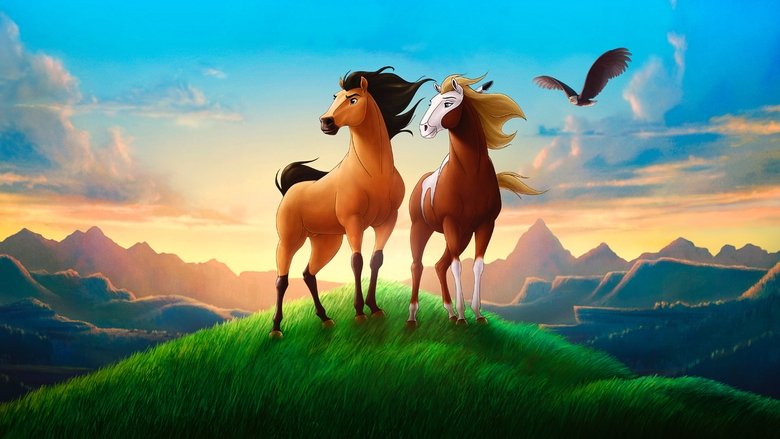
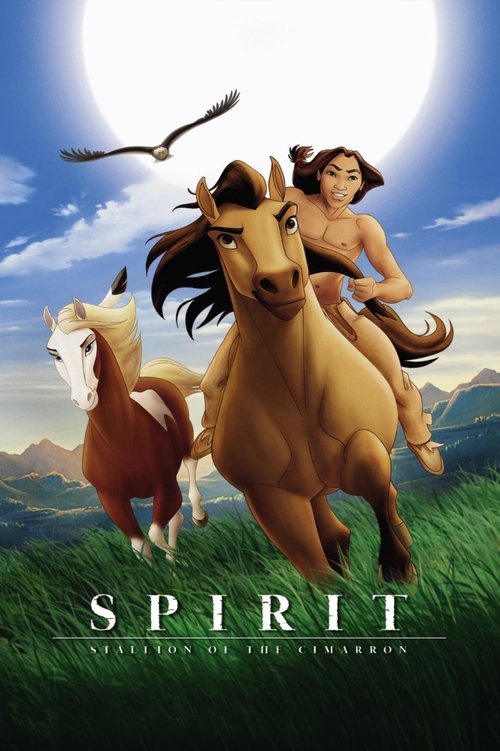
"Some legends can never be tamed."
Spirit: Stallion of the Cimarron - Symbolism & Philosophy
Symbols & Motifs
The Eagle
The eagle represents absolute freedom and Spirit's guiding conscience. It appears at key moments to remind Spirit of who he is and where he belongs.
It races Spirit in the opening, follows him during his capture, and reappears when he finally regains his freedom, symbolizing that his spirit was never truly grounded.
The Locomotive
A symbol of industrialization and inevitable change. It is an unstoppable force that consumes the land and enslaves the horses to build its own path.
Spirit is forced to pull the locomotive up a mountain. When he realizes it will destroy his homeland, he stages a revolt, literally breaking the chains of the machine.
The Canyon Jump
A leap of faith and impossibility. It symbolizes the moment Spirit transcends what is physically possible through sheer will.
Trapped by the Colonel at the edge of the Grand Canyon, Spirit chooses to leap across the massive gorge rather than be captured, earning the Colonel's silent respect.
Philosophical Questions
Is freedom a physical state or a state of mind?
The film explores this through Spirit's captivity. Even when chained and starved, he remains 'unbroken' internally. Conversely, the cavalry horses are physically well-fed but spiritually dead. The film suggests freedom is an internal will that cannot be taken, only surrendered.
Do humans have the right to 'tame' nature?
Through the contrast between Little Creek (who asks for partnership) and the Colonel (who demands submission), the film interrogates the morality of stewardship vs. dominion. It questions whether progress justifies the destruction of the natural world.
Core Meaning
At its heart, Spirit: Stallion of the Cimarron is a critique of Manifest Destiny and a celebration of the unbreakable soul. Director Kelly Asbury and the team intended to subvert the traditional Western trope by telling the history of the West not from the saddle of the conqueror, but from the perspective of the land and its native inhabitants (symbolized by the horse). It argues that while bodies can be captured and land fenced, true freedom and spirit cannot be tamed by force.