Spirit: Stallion of the Cimarron
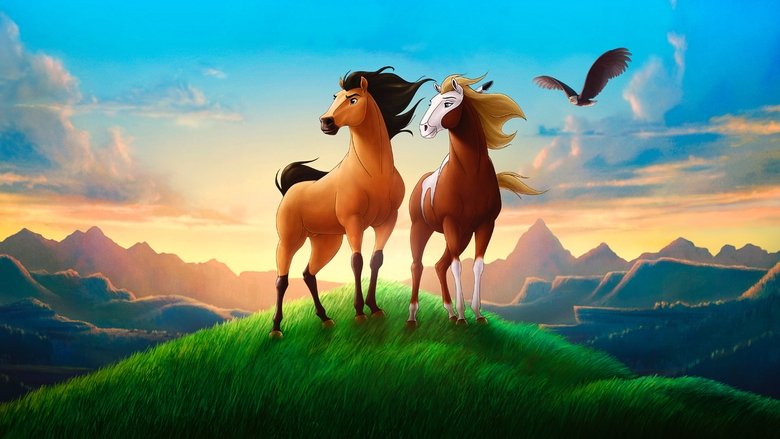
A sweeping, visually poetic Western/Adventure that captures the indomitable essence of freedom through the eyes of a wild mustang. It blends the majesty of the American frontier with a heart-stirring struggle against the chains of colonization.
Spirit: Stallion of the Cimarron

Spirit: Stallion of the Cimarron

"Some legends can never be tamed."

24 May 2002 United States of America 83 min ⭐ 7.7 (4,815)
Director: Kelly Asbury Lorna Cook
Cast: Matt Damon, James Cromwell, Daniel Studi, Chopper Bernet, Jeff LeBeau
Drama Animation Family Adventure Western
Freedom vs. Subjugation Connection to Nature Brotherhood and Respect The Cost of Progress
Budget: $80,000,000
Box Office: $122,563,539

Overview

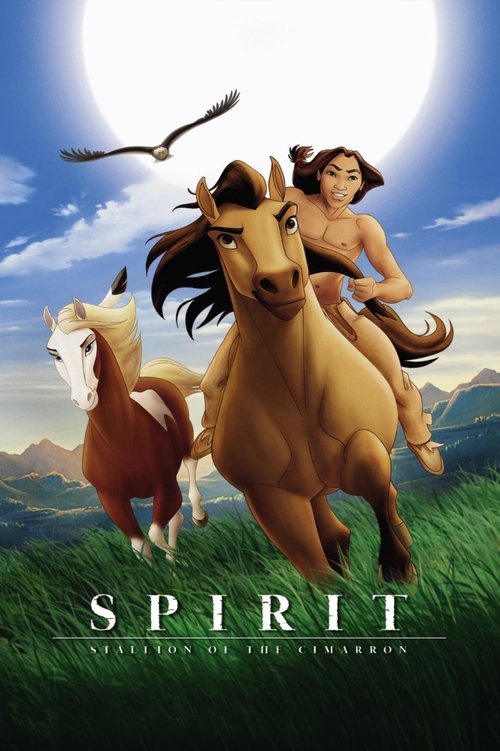
Set in the 19th-century American West, the film follows the life of a wild Kiger Mustang stallion named Spirit. Born free and serving as the leader of his Cimarron herd, his curiosity leads to his capture by the United States Cavalry. The Colonel, a stern commander representing the forces of Manifest Destiny, attempts to break the stallion's will through starvation and discipline, but Spirit refuses to submit.

Spirit eventually escapes with the help of a Lakota brave named Little Creek, who is also a captive. Unlike the soldiers, Little Creek treats Spirit with respect, though he too initially tries to ride him. Spirit eventually bonds with Little Creek and falls in love with the Native American's mare, Rain. Together, they face the encroachment of the transcontinental railroad, a mechanical monster threatening their land. The film culminates in a desperate bid for freedom that challenges the boundaries between man and beast.
Core Meaning

At its heart, Spirit: Stallion of the Cimarron is a critique of Manifest Destiny and a celebration of the unbreakable soul. Director Kelly Asbury and the team intended to subvert the traditional Western trope by telling the history of the West not from the saddle of the conqueror, but from the perspective of the land and its native inhabitants (symbolized by the horse). It argues that while bodies can be captured and land fenced, true freedom and spirit cannot be tamed by force.

Thematic DNA

Freedom vs. Subjugation 40%
Connection to Nature 25%
Brotherhood and Respect 20%
The Cost of Progress 15%

Freedom vs. Subjugation

This is the central conflict. Spirit literally fights against ropes, corrals, and chains. The Cavalry seeks to dominate and 'civilize' the wild, viewing it as a resource to be broken. Spirit's refusal to surrender his will, even when physically restrained, highlights the difference between physical captivity and spiritual defeat.

Connection to Nature

The film juxtaposes the organic harmony of the Lakota people and the horses against the rigid, destructive geometry of the US Cavalry and the railroad. Little Creek enters Spirit's world on the horse's terms, whereas the Colonel seeks to impose his own order upon nature.

Brotherhood and Respect

The relationship between Spirit and Little Creek evolves from captor-captive to mutual rescuers. Their bond is not formed through command, but through shared suffering and a mutual enemy. It suggests that true friendship requires recognizing the other's autonomy.

The Cost of Progress

The railroad is depicted not as a triumph of engineering but as a terrifying, smoke-belching monster that destroys the landscape. The film questions the narrative of 'civilizing' the West, showing the pain and destruction left in the wake of industrial expansion.

Character Analysis

Spirit

Matt Damon (Voice/Narration)

Archetype: The Unbreakable Hero
Key Trait: Defiance

Motivation

To return to his herd and protect his homeland from the encroaching human world.

Character Arc

Starts as a naive, curious leader; endures torture and humiliation but learns that not all humans are enemies. He matures from a reckless youth into a wise protector who understands the value of freedom.

The Colonel

James Cromwell

Archetype: The Authoritarian Villain
Key Trait: Ruthlessness

Motivation

To tame the West and impose order through discipline and force.

Character Arc

He represents the rigidity of the US military. He begins with absolute certainty that he can break Spirit. In the end, he doesn't change his nature, but he grants Spirit a 'nod' of respect, acknowledging a will he cannot conquer.

Little Creek

Daniel Studi

Archetype: The Ally / Bridge
Key Trait: Empathy

Motivation

To survive the encroachment of the cavalry and protect his people/horses.

Character Arc

Initially tries to tame Spirit like the others, but quickly realizes Spirit's unique nature. He learns to work with the horse rather than over him, eventually setting him free.

Rain

Animal Sounds (No Voice Actor)

Archetype: The Love Interest / The Guide
Key Trait: Gentleness

Motivation

Loyalty to Little Creek and love for Spirit.

Character Arc

She bridges the gap between Spirit and humans, showing him that submission to a kind human (Little Creek) isn't slavery. She risks her life for Little Creek and eventually joins Spirit in the wild.

Symbols & Motifs

The Eagle

Meaning:

The eagle represents absolute freedom and Spirit's guiding conscience. It appears at key moments to remind Spirit of who he is and where he belongs.

Context:

It races Spirit in the opening, follows him during his capture, and reappears when he finally regains his freedom, symbolizing that his spirit was never truly grounded.

The Locomotive

Meaning:

A symbol of industrialization and inevitable change. It is an unstoppable force that consumes the land and enslaves the horses to build its own path.

Context:

Spirit is forced to pull the locomotive up a mountain. When he realizes it will destroy his homeland, he stages a revolt, literally breaking the chains of the machine.

The Canyon Jump

Meaning:

A leap of faith and impossibility. It symbolizes the moment Spirit transcends what is physically possible through sheer will.

Context:

Trapped by the Colonel at the edge of the Grand Canyon, Spirit chooses to leap across the massive gorge rather than be captured, earning the Colonel's silent respect.

Memorable Quotes

The story that I want to tell you cannot be found in a book. They say the history of the West was written from the saddle of a horse, but it's never been told from the heart of one. Not till now.

— Spirit (Matt Damon)

Context:

The opening narration as the camera pans over the untouched American frontier.

Meaning:

Establishes the film's revisionist perspective, promising a narrative that challenges recorded human history in favor of emotional, natural history.

Take care of her... Spirit... who could not be broken.

— Little Creek

Context:

The emotional farewell scene where Little Creek releases Spirit and Rain to return to the wild.

Meaning:

Little Creek officially names the horse, acknowledging his triumph. It is a moment of letting go and trusting Spirit with what Little Creek values most (Rain).

There are those in Washington who believe the West will never be settled... they have not met us.

— The Colonel

Context:

The Colonel addressing his troops, establishing his worldview and determination.

Meaning:

Encapsulates the arrogance of Manifest Destiny and the Colonel's belief in the inevitability of American expansion.

Philosophical Questions

Is freedom a physical state or a state of mind?

The film explores this through Spirit's captivity. Even when chained and starved, he remains 'unbroken' internally. Conversely, the cavalry horses are physically well-fed but spiritually dead. The film suggests freedom is an internal will that cannot be taken, only surrendered.

Do humans have the right to 'tame' nature?

Through the contrast between Little Creek (who asks for partnership) and the Colonel (who demands submission), the film interrogates the morality of stewardship vs. dominion. It questions whether progress justifies the destruction of the natural world.

Alternative Interpretations

The 'Spirit Died' Theory: A dark fan theory suggests that Spirit actually dies during the climax (perhaps at the waterfall or the canyon jump) and the ending reunion is his journey to the afterlife (the 'Great Hunting Ground'). Proponents point to the dreamlike quality of the final run and the fact that the landscape seems impossibly perfect.

The Anti-Colonialist Allegory: Critics have noted that Spirit represents the indigenous people of America. His capture, forced haircut (mane trimming), and enslavement mirror the historical treatment of Native Americans in boarding schools and reservations. The Colonel's line 'Any horse can be broken' parallels the 'Kill the Indian, Save the Man' ideology.

Cultural Impact

Spirit: Stallion of the Cimarron holds a unique place in animation history. While it received mixed reviews from critics upon release (holding a 69% on Rotten Tomatoes) who found the plot predictable, it has since garnered a massive cult following, particularly among the 'horse girl' subculture and Millennials. It is praised for its bold rejection of anthropomorphism—refusing to make animals talk—and its respectful, revisionist take on Western history. The film spawned a Netflix spin-off series, Spirit Riding Free, though the series significantly departed from the film's tone, leading to a divide between original fans and the new generation. Philosophically, it is cited as one of the few animated films to earnestly critique American imperialism and environmental destruction without being overly didactic.

Audience Reception

Audiences have generally been far kinder to the film than critics. It holds an 'A' CinemaScore, indicating massive enjoyment. Praised aspects: The stunning animation, Hans Zimmer's score, the emotional depth of the non-verbal storytelling, and the accurate depiction of horse behavior. Criticisms: Some adults found the Matt Damon narration unnecessary and distracting, preferring a truly silent film. Others felt the Bryan Adams songs were too frequent and dated the film to the early 2000s.

Interesting Facts

  • The film uses a unique animation technique called 'Tradigital', blending hand-drawn 2D characters with 3D computer-generated backgrounds (like the opening pan which took 9 months to render).
  • Spirit was based on a real Kiger Mustang named Donner, who was bought by DreamWorks for the animators to study his anatomy and muscle movements.
  • Matt Damon was not the original choice for narrator; Tom Hanks and Robert Redford were considered to give the voice a more 'timeless' quality.
  • The horses do not speak; the filmmakers decided early on that talking animals would ruin the dramatic tone, relying instead on animal sounds and facial expressions.
  • Bryan Adams wrote and performed the songs, which serve as the internal monologue for Spirit, replacing traditional dialogue.
  • The 'canyon jump' scene is physically impossible for a real horse, but the animators studied motocross jumps to give the motion a sense of weight and reality.
  • The character of the Colonel is widely believed to be based on George Custer, though he is never explicitly named as such.

Easter Eggs

DreamWorks Boy in the Clouds

In the opening sequence, during the cloud transitions, one of the cloud formations subtly resembles the iconic boy fishing on the moon from the DreamWorks logo.

Spirit of the Wind

Early concept art titles show the film was originally going to be called 'Spirit of the Wind', a phrase that remains in the lyrics of the soundtrack.

⚠️ Spoiler Analysis

Click to reveal detailed analysis with spoilers

Frequently Asked Questions

Explore More About This Movie

Dive deeper into specific aspects of the movie with our detailed analysis pages

Comments (0)

Leave a comment

No comments yet. Be the first to share your thoughts!