The film concludes by coming full circle. After the Master's self-immolation in Autumn, the adult monk returns in Winter to find the Master's remains (sarira). He undergoes a grueling penance, dragging a stone and a statue of Maitreya to a mountain peak. A woman then leaves a baby at the temple, and the monk becomes the new Master. The final segment, '...and Spring,' shows the new child tormenting a turtle, exactly as his predecessor did with other animals. This reveals the dark irony of the cycle: despite the enlightenment of the Master, the base instincts of youth are reborn, and the wheel of suffering continues to turn indefinitely.
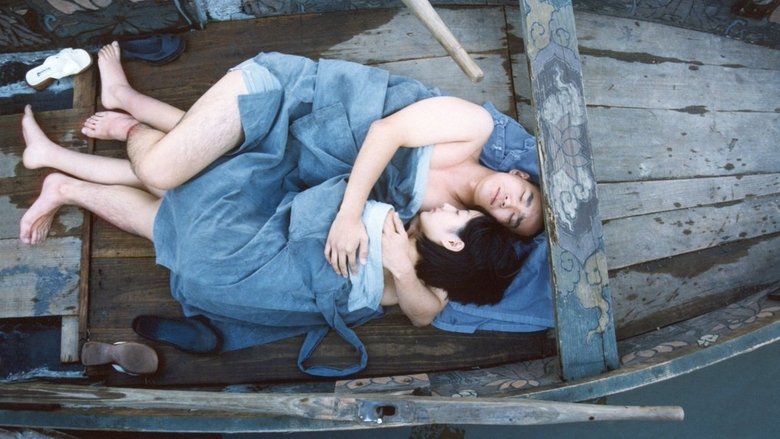
A meditative visual poem tracing a Buddhist monk's life through the rotating seasons, where the floating temple acts as a sanctuary for the soul's cyclical journey from innocence to sin and redemption.
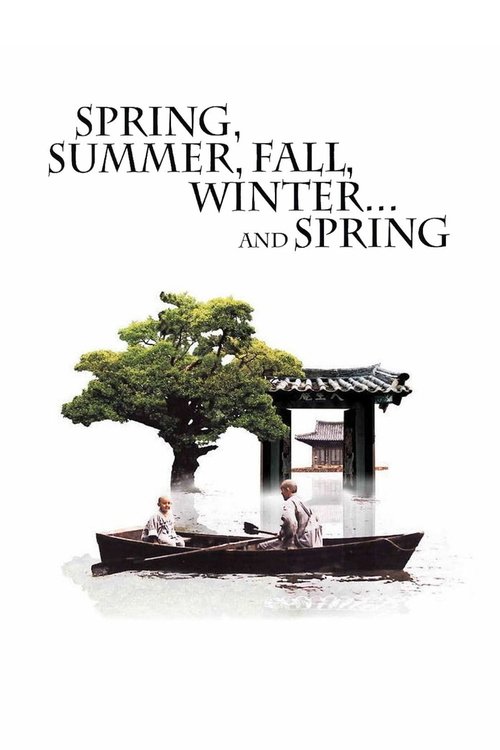
Spring, Summer, Fall, Winter... and Spring
봄 여름 가을 겨울 그리고 봄
"What you like, others will also like."
19 September 2003
South Korea
103 min
7.8
(1,146)
Director: Kim Ki-duk
Cast: Oh Young-soo, Kim Ki-duk, Kim Young-min, Seo Jae-kyeong, Kim Jong-ho
Drama
The Cyclical Nature of Life
Karma and Responsibility
Lust and Attachment
Redemption Through Suffering
Box Office:
$8,945,072
Spring, Summer, Fall, Winter... and Spring — Ending Explained
⚠️ Spoiler Analysis
Alternative Interpretations
While primarily viewed as a Buddhist parable, some critics interpret the film through a Christian lens, focusing on the concepts of sin, guilt, and the necessity of suffering for salvation. Another interpretation suggests the Master is not an enlightened being but a manipulative figure who allows tragedy to happen just to teach a lesson. Some viewers also see the film as a psychological study of isolation, where the lake represents the subconscious mind and the characters represent different facets of a single individual's struggle with their own impulses.
Explore More About This Movie
Dive deeper into specific aspects of the movie with our detailed analysis pages