Spring, Summer, Fall, Winter... and Spring
A meditative visual poem tracing a Buddhist monk's life through the rotating seasons, where the floating temple acts as a sanctuary for the soul's cyclical journey from innocence to sin and redemption.
Spring, Summer, Fall, Winter... and Spring

Spring, Summer, Fall, Winter... and Spring

봄 여름 가을 겨울 그리고 봄

"What you like, others will also like."

19 September 2003 South Korea 103 min ⭐ 7.8 (1,146)
Director: Kim Ki-duk
Cast: Oh Young-soo, Kim Ki-duk, Kim Young-min, Seo Jae-kyeong, Kim Jong-ho
Drama
The Cyclical Nature of Life Karma and Responsibility Lust and Attachment Redemption Through Suffering
Box Office: $8,945,072

Overview

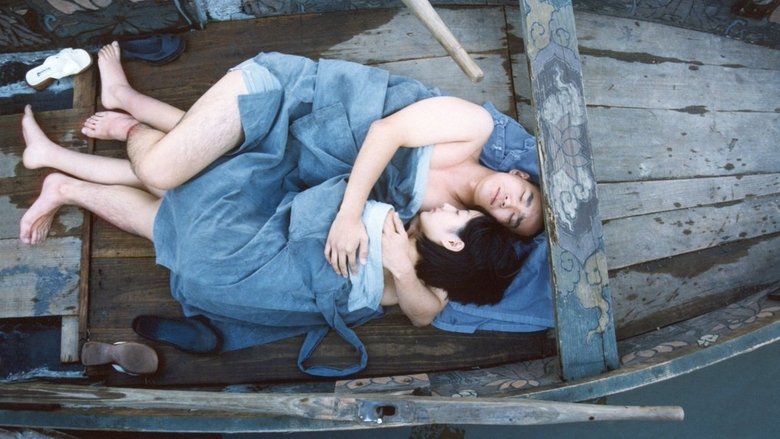
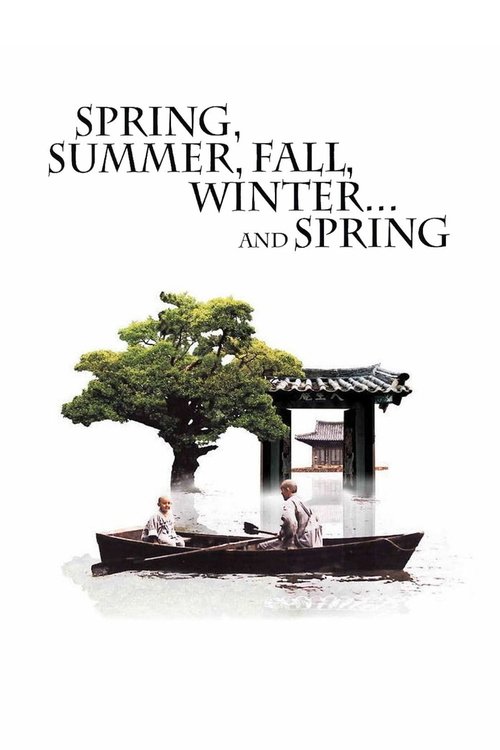
Set on a remote, tranquil lake in South Korea, the film follows the life of a Buddhist monk and his apprentice through five distinct chapters, each named after a season. The story begins in Spring, where a young boy learns the weight of karma after a playful act of cruelty towards animals. As the seasons progress, the apprentice transitions through the turbulent fires of youth, the consequences of worldly desire, and the harsh cold of middle age.

The film is characterized by its minimal dialogue and breathtaking cinematography, focusing instead on the visual language of nature and the rhythmic rituals of monastic life. The floating temple, accessible only by a single rowboat, serves as a microcosm for the human experience, isolated from the world yet subject to the universal laws of passion, suffering, and the inevitable return to a state of beginning.
Core Meaning

The core of the film explores the Buddhist concept of Samsara—the endless cycle of birth, suffering, death, and rebirth. Director Kim Ki-duk suggests that human nature is inherently prone to earthly desires and mistakes, but through discipline and penance, one can attain a higher state of awareness. The film posits that life is not a linear progression but a circular one, where every ending is merely the seed for a new beginning, and the burdens we create in our youth become the weights we must carry until we find the strength to transcend them.

Thematic DNA

The Cyclical Nature of Life 35%
Karma and Responsibility 25%
Lust and Attachment 20%
Redemption Through Suffering 20%

The Cyclical Nature of Life

Revealed through the seasonal structure, the film illustrates that human experiences—innocence, lust, anger, and wisdom—repeat across generations. The final chapter, '...and Spring,' mirrors the first, suggesting that the cycle of learning and sinning is perpetual.

Karma and Responsibility

The Master teaches the boy that every action has a weight. The physical stone tied to the boy's back in Spring becomes a metaphorical 'stone in his heart' that he must carry through adulthood until he performs the ultimate act of penance in Winter.

Lust and Attachment

The Summer segment shows how desire leads to attachment, which the Master warns will eventually lead to murder. This theme explores the conflict between spiritual detachment and the biological/emotional pull of the secular world.

Redemption Through Suffering

The film emphasizes that true enlightenment or peace isn't granted but earned through grueling physical and spiritual labor, such as carving the Heart Sutra with a murder weapon or dragging a statue up a mountain.

Character Analysis

The Old Monk / Master

Oh Young-soo

Archetype: Mentor
Key Trait: Infinite patience and mystical foresight.

Motivation

To guide his apprentice toward enlightenment while allowing him the freedom to make and learn from his own mistakes.

Character Arc

He remains largely static as a pillar of wisdom, though he ultimately chooses self-immolation to complete his own cycle and leave the world to his successor.

The Young Monk / Apprentice

Seo Jae-kyeong (Summer) / Kim Young-min (Fall) / Kim Ki-duk (Winter)

Archetype: Hero
Key Trait: Impulsive yet capable of deep repentance.

Motivation

Initially driven by curiosity and desire; later driven by a desperate need for redemption and spiritual clarity.

Character Arc

He transitions from a mischievous child to a lustful youth, a vengeful murderer, and finally a disciplined master who has attained peace through suffering.

The Girl

Ha Yeo-jin

Archetype: Temptress / Catalyst
Key Trait: Fragile and unknowingly disruptive.

Motivation

To find healing, which she ultimately finds through her connection with the young monk.

Character Arc

She arrives at the temple seeking a cure for a physical ailment and leaves after initiating the apprentice's fall from monastic grace.

Symbols & Motifs

The Floating Temple

Meaning:

Represents the human consciousness and the isolation required for spiritual growth. Its lack of fixed ground reflects the impermanence of existence.

Context:

The entire film is set on this raft-like monastery on Jusanji Pond, emphasizing the distance between the sacred and the profane secular world.

The Doors Without Walls

Meaning:

Symbolizes self-discipline and the internal nature of morality. The boundary exists only because the characters choose to respect it.

Context:

Both the Master and the apprentice use the doors to move between sections of the temple, even though they could easily walk around them, showing that spiritual laws are self-imposed.

Seasonal Animals

Meaning:

Each animal reflects the spiritual state of that chapter: the Puppy (innocence), the Rooster (lust), the Cat (calming of spirits), and the Snake (anger/rebirth).

Context:

A different animal resides at the temple during each season, acting as a silent witness to the monk's development.

The Stone

Meaning:

The physical manifestation of guilt and the heavy burden of one's past sins.

Context:

Used by the Master to punish the boy in Spring, and later dragged by the adult monk to the top of a mountain in Winter as an act of final atonement.

Memorable Quotes

음욕은 소유욕을 낳고, 소유욕은 살의를 낳느니라.

— The Master

Context:

Spoken to the teenage monk in Summer when his lust for the visiting girl begins to cloud his spiritual path.

Meaning:

This is the central warning of the film, explaining how unchecked desire naturally leads to violence and the destruction of the self and others.

네가 던진 돌에 그들이 죽었다면, 너는 그 돌을 평생 네 가슴에 품고 살아야 할 것이다.

— The Master

Context:

Said to the child monk in Spring after he ties stones to a fish, a frog, and a snake.

Meaning:

The Master explains the concept of karma; a single thoughtless act can result in a lifetime of psychological and spiritual weight.

Philosophical Questions

Is true enlightenment possible without experiencing sin?

The film suggests that the Master's wisdom comes from his own past mistakes (implied by his handling of the apprentice). It asks whether one can truly understand 'the way' without first being lost.

Can the cycle of human suffering ever be broken?

The ending is ambiguous. While the apprentice finds peace, the new child begins the cycle of cruelty again, questioning whether humanity as a whole can ever escape its base nature.

Alternative Interpretations

While primarily viewed as a Buddhist parable, some critics interpret the film through a Christian lens, focusing on the concepts of sin, guilt, and the necessity of suffering for salvation. Another interpretation suggests the Master is not an enlightened being but a manipulative figure who allows tragedy to happen just to teach a lesson. Some viewers also see the film as a psychological study of isolation, where the lake represents the subconscious mind and the characters represent different facets of a single individual's struggle with their own impulses.

Cultural Impact

The film is widely regarded as one of the greatest works of modern South Korean cinema, often appearing on lists such as the BBC's 100 Greatest Films of the 21st Century. It introduced international audiences to a more contemplative, Buddhist-inspired side of Korean film, contrasting with the 'extreme' cinema (like Oldboy) gaining fame at the time. Philosophically, it sparked debates about the intersection of Buddhist and Christian themes, with some critics noting the 'original sin' aspect of carrying the stone. Its influence is seen in the global appreciation for slow, meditative arthouse cinema that uses environment as a primary character.

Audience Reception

The film received near-universal acclaim from international critics, holding high scores on platforms like Rotten Tomatoes (94%) and IMDb (8.0). Audiences frequently praise its 'soul-soothing' visual beauty and its ability to convey deep emotion without words. Some criticism has been directed at the portrayal of the female characters, who often serve only as catalysts for the male characters' spiritual journeys. Overall, it is viewed as a masterpiece of 'pure cinema' that rewards patient viewers with a profound emotional experience.

Interesting Facts

  • The film was shot on Jusanji Pond, a man-made reservoir in Juwangsan National Park that is over 200 years old.
  • Director Kim Ki-duk personally played the role of the middle-aged monk in the Winter segment.
  • The floating monastery was a set built specifically for the film and was dismantled after production to preserve the environment.
  • Despite being one of the most famous Korean films internationally, it was not a major box office success in South Korea upon its initial release.
  • The film features very little dialogue; the Fall segment contains a sequence of nearly 20 minutes with no spoken words.

Easter Eggs

The Cat's Tail

In the Fall segment, the Master uses the tail of a cat as a brush to write the Heart Sutra on the wooden deck. This emphasizes the connection between the sacred text and the natural world.

The Return of the Actor

The young boy in the final '...and Spring' segment is played by the same actor (Kim Jong-ho) who played the boy in the first Spring segment, visually reinforcing the idea that the cycle is identical.

The Heart Sutra

The text the monk carves is the Prajnaparamita Sutra, which focuses on 'emptiness'—a core concept that the apprentice must learn to overcome his attachments.

⚠️ Spoiler Analysis

Click to reveal detailed analysis with spoilers

Frequently Asked Questions

Explore More About This Movie

Dive deeper into specific aspects of the movie with our detailed analysis pages

Comments (0)

Leave a comment

No comments yet. Be the first to share your thoughts!